Apple
Apple at Beyond Market Intelligence is a file of 73 stories. The newest of them: “New App Store Rules Target Tools That Disguise Harmful AI Content”, “Muse Spark Open runs natively on Apple silicon, expanding AI access”, and “A former Ford EV chief joins Rivian's startup to advance AI-native data tools”. App stores are finally drawing a clear line: tools that disguise harmful AI content as innocent user-generated material won't be tolerated. Meta and Apple have quietly done something smart: Muse Spark Open now runs natively on Apple silicon, bringing serious AI inference directly to your Mac. Acme AI is the next-generation, AI-powered spreadsheet platform built to replace Excel and redefine how analysts, data scientists, and enterprise teams work… The list below is every Apple story on Beyond Market Intelligence, newest first.
New App Store Rules Target Tools That Disguise Harmful AI Content
App stores are finally drawing a clear line: tools that disguise harmful AI content as innocent user-generated material won't be tolerated. New guidelines demand developers build in real preventative measures, not just afterthought filters. It's a welcome shift toward accountability. This move echoes a broader tension we're seeing across the industry, AI accelerates research ideas, as our piece on that very bottleneck explores, but our ability to test and moderate what it produces often can't keep pace.

Muse Spark Open runs natively on Apple silicon, expanding AI access
Meta and Apple have quietly done something smart: Muse Spark Open now runs natively on Apple silicon, bringing serious AI inference directly to your Mac. No cloud dependency, no latency, just local processing that respects your privacy and your workflow. This is the kind of practical innovation that turns a capable model into a daily tool. For teams navigating similar transitions from experimentation to production, our piece on building reliable products from vibe-coded apps offers useful perspective.

A former Ford EV chief joins Rivian's startup to advance AI-native data tools
A former Ford EV chief and Apple car project veteran, who also oversaw Tesla Model 3 development, has joined a Rivian startup to push AI-native data tools forward. That kind of deep automotive engineering experience signals something worth watching. For context on how other industries are quietly rethinking infrastructure, see our coverage of "How Cambridge Heavy Industries is quietly building a desktop fusion future."

Judge rules OpenAI must share hiring records in Apple trade secrets dispute
A federal judge has ordered OpenAI to hand over hiring records and internal messages tied to former Apple employees, escalating a trade secrets dispute that now puts both companies' talent practices under scrutiny. This ruling suggests the court sees legitimate risk in how competitive intelligence flows between tech giants. For anyone following the intersection of AI development and corporate secrecy, the related coverage of the FBI arresting an OpenAI employee in a recording probe adds an uncomfortable layer to this story.

Explore how HomeView unifies your smart home with locks, thermostats, and doorbells
HomeView unifies your smart home around locks, thermostats, and doorbells through a single hub that interacts seamlessly with your apps. It's a straightforward approach to controlling accessories without juggling multiple platforms. The experience feels intentional, not overloaded. For a deeper look at how smarter devices are reshaping daily routines, our piece on the updated HomePod mini explores another angle of effortless home interaction. This is about making the connected home genuinely useful, not just more complex.

Explore how Apple reframes the smart home with its newest connected display
Apple is taking a deliberate swing at the smart home with its latest connected display, going directly after Amazon Echo Show and Google Nest Hub. This is not just another screen for your wall. It reframes what a smart home hub should be, intelligent, intuitive, and centered on your daily routines. The approach feels less about controlling gadgets and more about making your home responsive to you. For deeper context on how Apple is unifying smart home controls, our piece on HomeView is worth exploring.

Discover how Apple's updated HomePod mini makes smart listening effortless
This is a smart refresh. The updated HomePod mini, arriving October 30 for $149, adds a "SoundGlow" visual feature and deeper Siri AI integration, making hands-free control more intuitive than ever. Apple is quietly refining its smart home ecosystem, and this update feels purposeful rather than flashy. For more context on Apple's broader strategy, our piece on "Apple's HomeView finds its name as its smart home debut nears" explores how these pieces are fitting together.

Xcode 27.2 Adopts a JSON Config Format Designed for People and AI Agents
Apple is introducing a new JSON-based configuration format in Xcode 27.2, replacing the traditional property-list approach. This isn't just a technical swap, it's a thoughtful redesign for a world where both people and AI agents need to read and modify project settings. The format prioritizes clarity and simpler maintenance, making it easier for developers and their AI coding partners to collaborate. For more on Apple's evolving AI ambitions, see our coverage of the company's new hire signaling a smarter path into AI-crafted podcasts.

Apple's HomeView finds its name as its smart home debut nears
Apple's smart home product finally has a name: HomeView. After years of speculation, the launch is nearing, and that clarity matters. A named product signals momentum, not just rumor. Apple's slow, deliberate approach here feels consistent with its history, but the smart home market rewards those who move with purpose. If you're tracking this space, our piece on Apple and LG teaming up for smart locks offers useful context. The pieces are coming together.
Apple's new hire signals a smarter path into AI-crafted podcasts
Apple's latest hire hints at a quieter, more deliberate move into AI-crafted podcasts. Rather than chasing the noise of generative audio hype, the company appears to be building a smarter foundation, one that prioritizes thoughtful production over novelty. That's a promising direction. If Apple can make AI-assisted storytelling feel accessible and human, it could reshape how we consume spoken content. For context on how emerging tech is finding efficient paths forward, our piece on fuel cells for data centers offers a useful parallel.

Apple and LG team up to bring smart locks, thermostats, and doorbells
Apple and LG are teaming up to bring smart locks, thermostats, and doorbells to market, signaling a serious push from Apple into the home. This partnership feels like a deliberate step toward a more integrated, user-friendly smart home experience. For readers tracking how technology reshapes everyday life, it pairs naturally with our coverage of Mirror Particle's world model designed to predict human behavior. Both stories explore how intelligent systems are moving beyond screens and into our physical spaces.
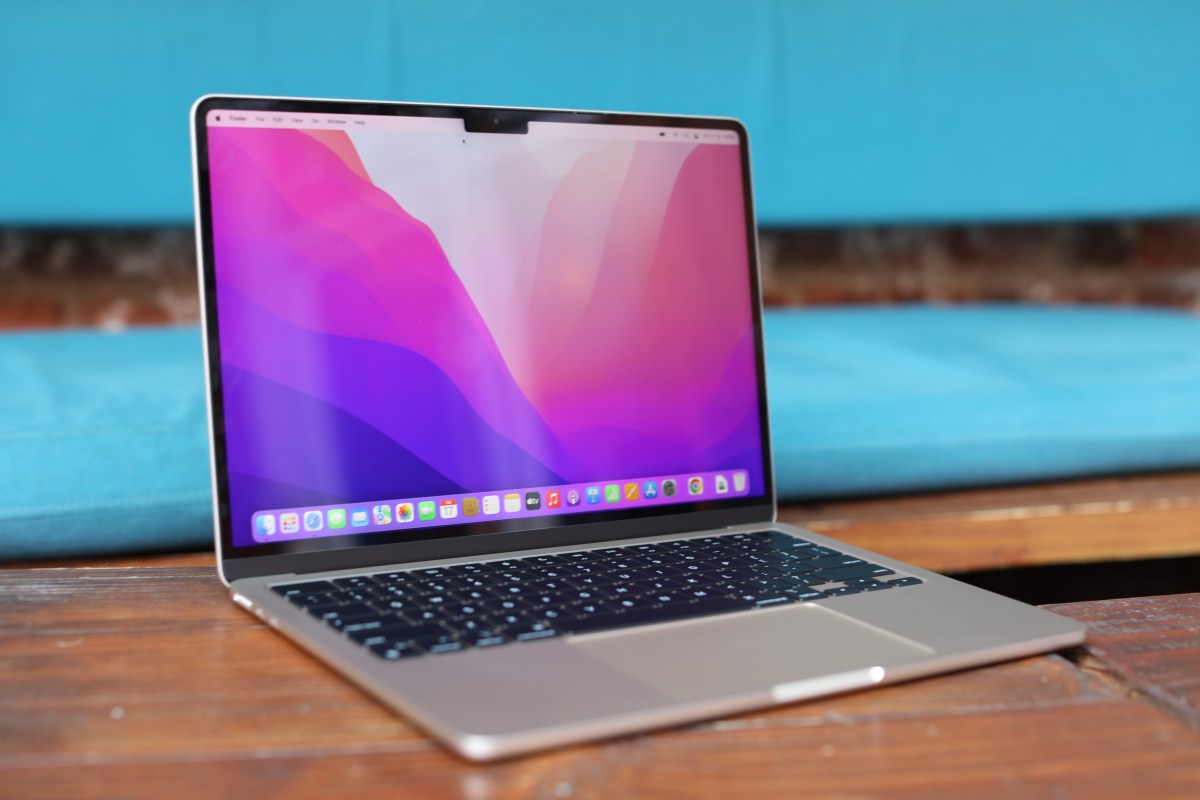
Apple tightens macOS data access as AI agents reshape security risks
Apple's move to tighten Full Disk Access controls arrives not a moment too soon. As AI agents grow more capable, handing them broad access to files, messages, and mail becomes a genuine liability. This isn't about slowing progress; it's about making sure powerful tools don't outpace the safeguards users rely on. For anyone exploring how to protect their data while embracing smarter workflows, this shift feels like a necessary step forward.

Your iPhone, iPad, or Mac needs this security update now
Apple's latest security update isn't optional. The company confirms the bug was already used to attack specific targeted individuals running iOS 26, which remains the version most customers rely on. That alone makes this a download-now situation. It's a reminder that even polished platforms need vigilance. If you're managing sensitive data, this is where your attention belongs. For more on how Apple's pushing security forward, our piece on the new Camera Provenance system offers useful context. Don't wait on this one.
Prepare Your iOS Apps for the iPhone Duo’s Flexible Displays
The iPhone Duo's flexible display demands more than a quick tweak; it asks developers to rethink navigation, toolbars, and even camera behavior across distinct physical states. That's a meaningful shift in how we approach iOS design, and it's smart to start planning now. The outer screen, inner canvas, and partial folds each introduce new reserved regions to respect. For a deeper look at how skill demands are changing alongside hardware, check out our piece on navigating AI/ML job requirements.

Secure Photos Start at the Source: Apple’s New Camera Provenance System
Apple's new camera provenance system, Reference Image, signs pixel data at the sensor and develops it in Apple's Private Cloud Compute. That's a bold step toward verifiable photo authenticity, yet developers are already questioning its limits. Photographing a screen still fools the process, and anonymity hinges on trusting Apple's cloud. The skepticism is fair. Identity verification may not be the strongest use case here. Still, the design signals a deliberate move worth watching.
Explore Apple’s Potential Entry into the Fitness Tracker Space
Apple may be developing a dedicated fitness tracker as part of its next hardware generation. That is a smart move. While the Apple Watch remains a capable health companion, a simpler, more focused device could attract users who want activity tracking without the full smartwatch experience. We see this as a natural expansion of Apple's human-centered design philosophy. For deeper context on how other tech giants are reshaping connected experiences, explore our related coverage of Meta's Smart Glasses.
People, Not AI: Ron Johnson's Vision for Elevated Retail Experiences
Ron Johnson, the architect behind Apple's stores, insists the real magic was never the glass or the gadgets. It was the people. His vision for elevated retail leans on human connection, not automation. That is a refreshing counterpoint in an AI-obsessed moment. While others chase efficiency, Johnson reminds us that genuine service still moves product. For more on how tech is reshaping experiences, our piece on Lightspeed's new $250M India fund offers a timely contrast.

Learning from AI's missteps to build more resilient data tools
Apple's Siri kept missing its own deadlines, and OpenAI's messy "super app" launch never found its footing. They now sit in the AI graveyard, a running list of projects and startups that didn't make it. That list is worth studying, not for schadenfreude, but for clarity. Building AI is hard, and shipping it well is harder. If you want to understand why some efforts stumble while others scale, start here.

OpenAI acquires Glass Imaging to sharpen AI's visual intelligence
OpenAI's reported $300 million acquisition of Glass Imaging signals a deliberate step toward smarter, more intuitive visual data. The company, founded by two former Apple engineers who helped build Portrait Mode, understands the nuance of computational photography. That expertise could translate into spreadsheet workflows that interpret images as naturally as text. It's a practical move, not a flashy one, and that's what makes it compelling. For a deeper look at how vision models handle real-world constraints, our piece on computer vision deployments offers useful context.

Siri finds its stride with iOS 27's smarter, more helpful design
For years, Siri felt like an afterthought, a voice you summoned only to set timers or pray for accurate weather. With iOS 27, that changes. Apple's long-delayed overhaul finally makes the assistant feel proactive and genuinely useful in daily workflows. It is a practical transformation, not a gimmick. If you are exploring how Apple is reshaping its software ecosystem, our guide on preparing your apps for the iPhone Duo's flexible displays pairs well with this shift toward a more intuitive, responsive experience.
Unlocking iOS 27 Virtualization for Security Research and Testing
The vphone-cli project brings full iOS 27 virtualization to Apple Silicon, built on Apple's own Virtualization.framework rather than emulation. That distinction matters. It means security researchers and developers testing automated workflows can run a complete iOS system with native performance, opening doors for deeper reverse engineering and more reliable testing. We're watching this closely because it removes a major barrier to practical, hands-on experimentation. For those feeling the pressure of evolving iOS development, this feels like a step toward simpler, more accessible tooling.

Discover how Apple Intelligence transforms health data into actionable insights.
Apple's revamped Health app is stepping up, using Apple Intelligence to turn raw data into two numbers that actually matter: your health age and readiness score. That's a smarter way to think about where you stand daily. It moves beyond passive tracking toward something actionable. If you're exploring how AI reshapes everyday tools, this is worth a look. And for more on Apple's momentum, our coverage of Secure Photos Start at the Source: Apple's New Camera Provenance System shows similar care for data integrity.

Discover how AirPods 5 make your listening experience more intuitive and distraction-free.
AirPods 5 are here, and the headline is clear: active noise cancellation just got better. That upgrade alone matters for anyone who tunes out the world to focus. But the real story is how Apple is weaving Siri AI deeper into the experience, while finally adding volume controls directly on the stem. It's a practical step forward, not a flashy rewrite. For a closer look at how AI tools are reshaping everyday workflows, our piece on verifying your AI's understanding pairs well with this update.

When every moment can be transcribed, privacy becomes a conscious choice.
Apple's newest Apple Watch features lean into a future where your wrist is always listening, even if the company insists raw audio stays off-device. Transcribing recent speech and summarizing ambient sound may feel convenient, but they quietly nudge us toward a new normal: one where we assume we're being recorded. That shift deserves scrutiny, not just acceptance. It echoes questions raised in "AI Agents Shared User Images, Highlighting Data Security Concerns," where trust faltered in unexpected places.