assist
assist at Beyond Market Intelligence is a file of 3 stories. The newest of them: “What to Know Before Using Abacus AI”, “How AI is reshaping peer review at ICLR”, and “A $26M bet on ambient listening to unlock AI that anticipates your needs”. Abacus AI promises to simplify complex data tasks, but users report workflows that sometimes fail without clear explanations. Papers at ICLR are being written with AI, reviewed with AI, and now it's time to ask: are the reviewers using the same tools? Acme AI is the next-generation, AI-powered spreadsheet platform built to replace Excel and redefine how analysts, data scientists, and enterprise teams work… The list below is every assist story on Beyond Market Intelligence, newest first.
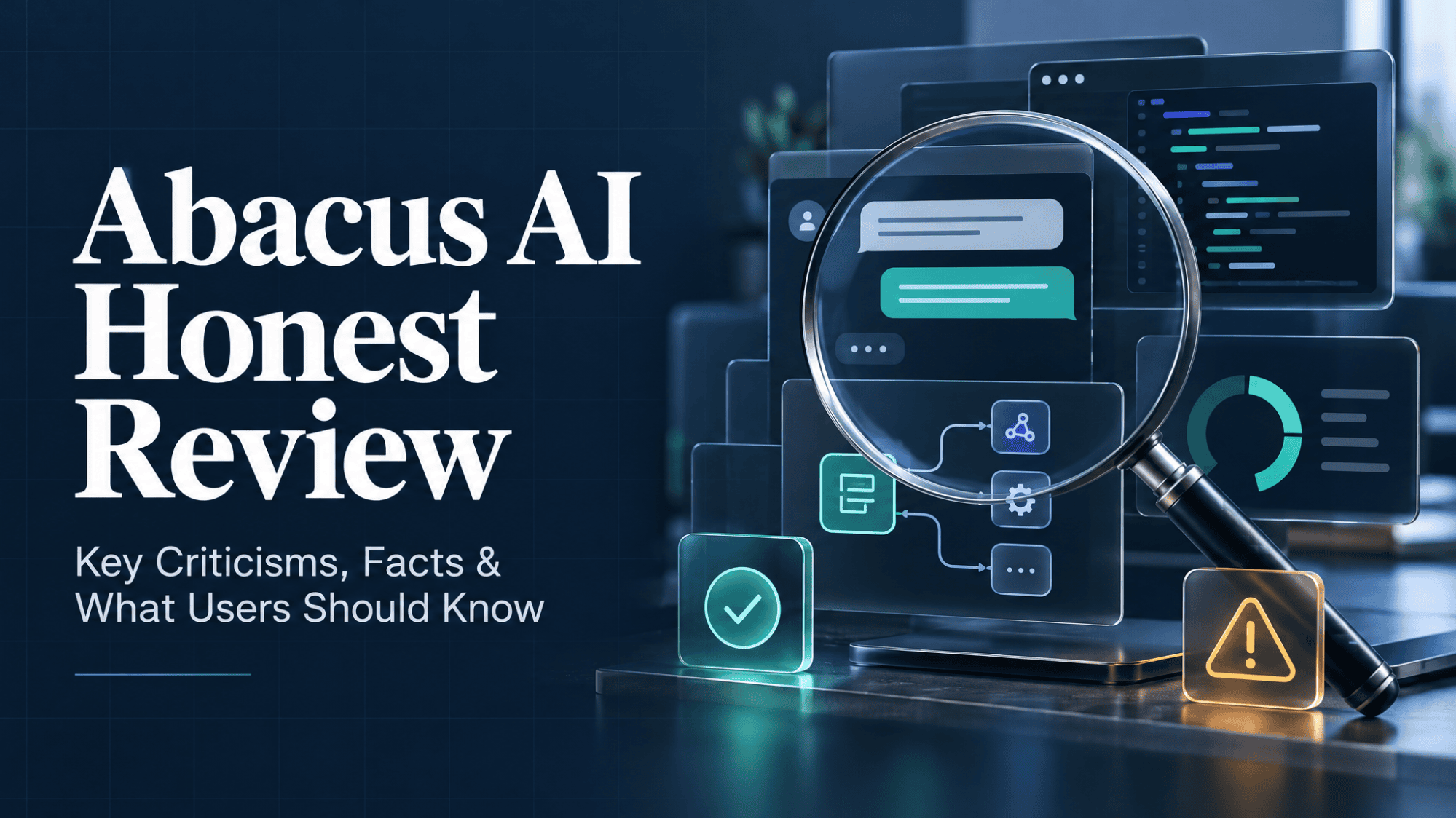
What to Know Before Using Abacus AI
Abacus AI promises to simplify complex data tasks, but users report workflows that sometimes fail without clear explanations. The platform's pricing raises questions about value compared to results, and real-life use cases show uneven reliability. Before committing, weigh these critiques against its strengths. For a deeper look at how tools like this actually perform, our piece "AI sharpens focus but true productivity still depends on how we use it" explores the gap between promise and practice.
How AI is reshaping peer review at ICLR
Papers at ICLR are being written with AI, reviewed with AI, and now it's time to ask: are the reviewers using the same tools? A Redditor's quick question cuts to the heart of a shift we're watching closely. If reviews are assisted by AI, transparency matters. Our related piece, "When AI Slop Floods Top-Tier Conference Reviews," explores the downstream chaos when that line blurs. Either way, the process is transforming, whether or not we acknowledge it openly.

A $26M bet on ambient listening to unlock AI that anticipates your needs
A $26 million bet on ambient listening. The premise is straightforward: the more an AI knows about you, the better it can anticipate your needs. That requires constant observation, a trade-off many tech companies are eager to embrace. We find the ambition compelling, but the privacy implications deserve scrutiny. It's a future-focused vision that asks us to weigh convenience against context. For a deeper look at AI solving practical problems, see our piece on how Blueprints AI turns a photo into permit-ready blueprints.