Automated evaluation
Beyond Market Intelligence keeps Automated evaluation in one place: 6 stories so far. The section currently leads with “When an AI judge agrees with itself, trust becomes the question”, “Why enterprises double down on AI automation after being burned”, and “When AI Judges the Evidence, Watch for the Bias in the Verdict”. When an LLM judge keeps agreeing with itself, the feedback loop feels reassuring. Enterprises that have watched an AI agent pass its evals and then fail in front of customers aren't retreating from automation, they're moving faster toward removing humans from deployment decisions. Acme AI is the next-generation, AI-powered spreadsheet platform built to replace Excel and redefine how analysts, data scientists, and enterprise teams work… The list below is every Automated evaluation story on Beyond Market Intelligence, newest first.

When an AI judge agrees with itself, trust becomes the question
When an LLM judge keeps agreeing with itself, the feedback loop feels reassuring. It isn't. This story follows a production incident where a model's self-approval masked real flaws, exposing a quiet danger in relying on AI to evaluate AI. It's a practical look at trusting your tools, not blindly. For anyone wrestling with similar doubts, the related piece on questioning your AI's understanding offers a useful parallel. Blind agreement is comfortable; genuine verification takes more work.
Why enterprises double down on AI automation after being burned
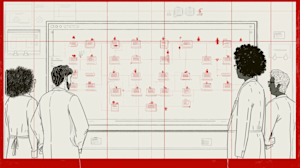
Enterprises that have watched an AI agent pass its evals and then fail in front of customers aren't retreating from automation, they're moving faster toward removing humans from deployment decisions. That's the counterintuitive core of the latest VB Pulse research. Confidence in automated evaluation is climbing, yet the share of companies burned by test-passing failures remains stubbornly near half. The lesson isn't that agents are unreliable; it's that a passing score marks the start of monitoring, not the end of it.
When AI Judges the Evidence, Watch for the Bias in the Verdict
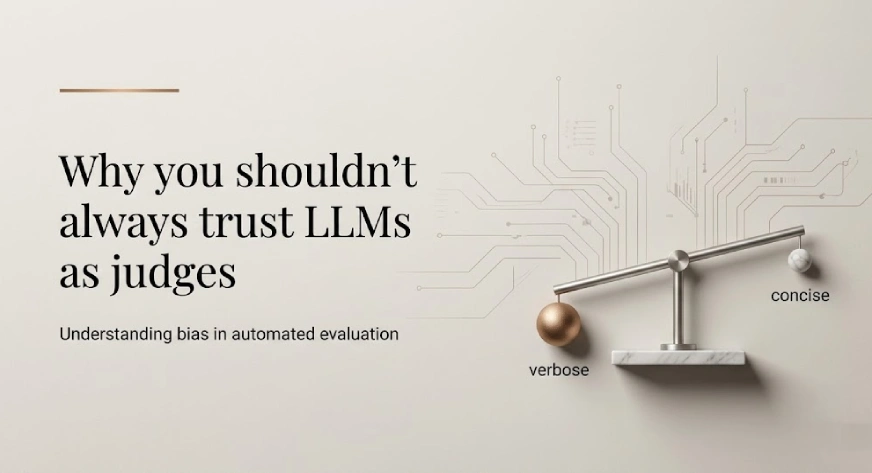
At a DHS 2026 workshop, Bhaskarjit Sarmah posed a challenge we should all take seriously: can we truly trust LLMs as judges? They are fast and cheap, but speed doesn't equal fairness. When we outsource evaluation, we inherit hidden biases that shape outcomes. This is a needed reality check for anyone automating judgment. For a deeper dive into how AI systems adapt, explore how AI agents learn by editing context, not model weights.
When Evaluations Fail, Trust in Automation Grows, Not Shrinks
Confidence in automated agent evaluation surged this July, nearly tripling to 13% across 108 enterprises – a shift largely driven by those yet to experience a “false-confidence” failure. Critically, the failure rate of agents passing evaluations but then causing customer issues remained unchanged at just under half. While trust is rising, enterprises are simultaneously increasing investment in human review workflows, hedging against evaluations that don’t always reflect real-world outcomes.
Your AI agent passed your tests. Then it failed your customer.
Enterprise AI is granting agents more autonomy than the evaluations meant to govern it can support. Half of organizations have shipped an agent that passed internal tests, then failed a customer. Only 5% fully trust the automated evaluations in use today. The most-cited weakness: evaluations align poorly with real-world outcomes. Yet two-thirds are already deploying on automated results alone, or engineering toward it. That gap between autonomy and assurance is where failures scale.
Your AI agents are passing tests but failing customers
Enterprise AI is granting agents more autonomy than the evaluations meant to govern them can support. Half of organizations have shipped an agent that passed internal tests, then failed a customer. Only 5% fully trust automated evaluation today. Yet two-thirds are moving toward zero-human deployment. That gap between trust and autonomy is the defining tension, and the market is responding. Tooling is fragmented, investment is shifting toward human review, and the next year will show whether assurance catches up to ambition.