banking
banking at Beyond Market Intelligence is a file of 7 stories. The newest of them: “Banks shift AI agent risk to customers as Citi halts rollout”, “Inside a Bank, Kubernetes Succeeded Where Culture Had the Hardest Work”, and “Revolut hits $115B valuation as US bank launch draws top-tier investors”. Citi has become the latest major bank to halt its personal finance AI agent rollout, shifting risk onto customers rather than owning the technology's limitations. Marcy Paramonova and Stéphane Cusin found that deploying Kubernetes inside a bank was the easy part. Acme AI is the next-generation, AI-powered spreadsheet platform built to replace Excel and redefine how analysts, data scientists, and enterprise teams work… The list below is every banking story on Beyond Market Intelligence, newest first.

Banks shift AI agent risk to customers as Citi halts rollout
Citi has become the latest major bank to halt its personal finance AI agent rollout, shifting risk onto customers rather than owning the technology's limitations. That's a troubling signal for an industry that needs more transparency, not less. While Citi pauses, other builders are pushing ahead, Vercel's new UI SDK helps agents create accessible interfaces, a reminder that thoughtful design matters. Banks should take note: trust isn't built by passing the buck.

Inside a Bank, Kubernetes Succeeded Where Culture Had the Hardest Work
Marcy Paramonova and Stéphane Cusin found that deploying Kubernetes inside a bank was the easy part. The harder work was cultural: building a community of practice, shared rituals, and bottom-up ownership where teams test ideas and keep what works. That approach earns trust in open source by running real workloads. For those curious how far practical adoption can go, Uber's AI agent booking just four rides last quarter offers a useful contrast.

Revolut hits $115B valuation as US bank launch draws top-tier investors
Revolut's $115 billion valuation signals more than just investor confidence, it reflects a strategic bet on what a modern financial platform can become. Glade Brook, Coatue, and T. Rowe Price led the share sale as the company prepares its US bank launch. That lineup of backers suggests serious institutional conviction. For those tracking how fintech evolves beyond legacy banking, this is a moment worth watching.
Beyond PD, LGD, and EAD: Measuring What Credit Risk Really Means
Start with a single loan. PD, LGD, and EAD each describe a different piece of the loss story, and together they shape how banks hold capital against the risk. That framing makes credit risk feel concrete rather than abstract, which is exactly how it should be taught. If you want another example of careful measurement, "Why classic data science skills still shape smarter AI evaluations" makes a similar case for fundamentals.

Empowering Collaboration: How Shared Standards Transform Engineering at [Bank Name]
Platform teams often get treated like infrastructure, but they're really the cultural backbone of engineering. At [Bank Name], shared standards aren't just process; they're the structure that lets open support sessions and super user awards take root. Developers depend on the platform, and the platform depends on them. That's a mutual loop, and it only moves forward when everyone commits to common ground. It's a practical, human way to build an engineering mindset.
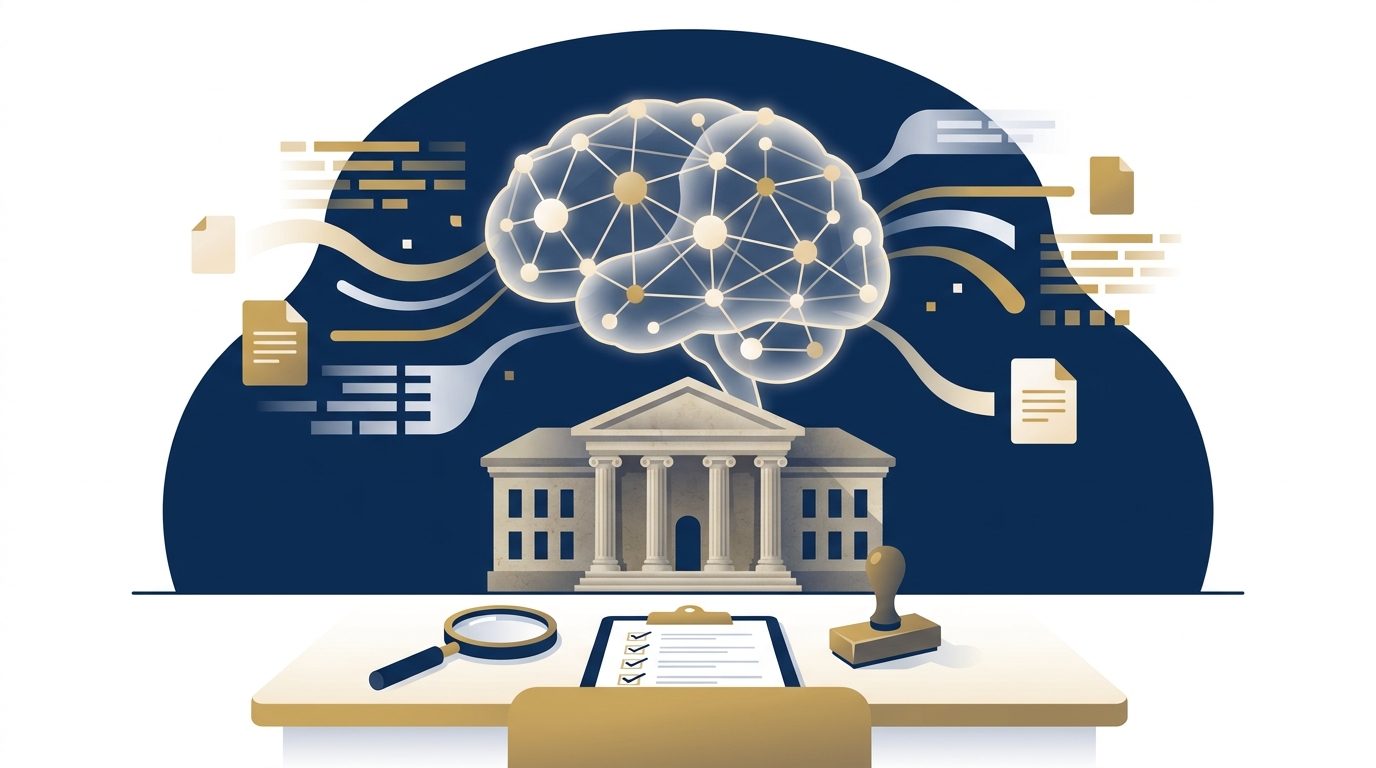
Validating LLMs: What Banking Model Rules Teach Us About AI Testing
Banks have spent decades refining model validation, but large language models don't fit neatly into those established frameworks. This piece examines what actually breaks when the rules shift from statistical models to generative systems, and more importantly, what survives the transition. It's a practical look at testing output quality where traditional assumptions no longer hold. For anyone wrestling with AI governance, this offers a grounded starting point.

Court restores climate nonprofits' access to frozen federal funds.
The federal courts just reaffirmed a simple principle: the Trump EPA cannot sideline $20 billion in climate funds on a whim. By ruling the agency's order to freeze those accounts unlawful, the appeals court has handed climate nonprofits their access back after more than a year of needless delay. That's a win for accountability, and it signals that arbitrary political interference won't stand. For anyone tracking how energy policy shifts shape our future, this is a moment worth exploring.