CDN
3 stories filed under CDN on Beyond Market Intelligence. The newest of them: “When health checks lie, high availability becomes a hollow promise”, “Scale Your SaaS Edge with Modular Cloudflare Workers”, and “Cloudflare moves 9 billion daily CDN requests to its developer platform”. Most system outages aren't caused by hardware failure. A single monolithic edge worker may feel manageable until your multi-tenant SaaS grows, and then every deployment becomes a shared risk. Acme AI is the next-generation, AI-powered spreadsheet platform built to replace Excel and redefine how analysts, data scientists, and enterprise teams work… The list below is every CDN story on Beyond Market Intelligence, newest first.

When health checks lie, high availability becomes a hollow promise
Most system outages aren't caused by hardware failure. They're caused by control-plane dependencies, the invisible threads that tie your application to authentication services, DNS, or configuration stores that nobody remembers to test. Alexey Golev's article makes a clear case: high availability and resilience are not the same problem, and treating them as interchangeable leaves teams with a false sense of safety. Recovery capability erodes without explicit ownership.

Scale Your SaaS Edge with Modular Cloudflare Workers
A single monolithic edge worker may feel manageable until your multi-tenant SaaS grows, and then every deployment becomes a shared risk. Chintan Tank tackles this head-on, presenting a modular Cloudflare Workers architecture that uses service bindings to isolate functions. His worked example on image optimization shows per-tenant format negotiation and device-aware sizing in action. It's a practical, forward-looking approach that also addresses multi-CDN differences and staged releases.
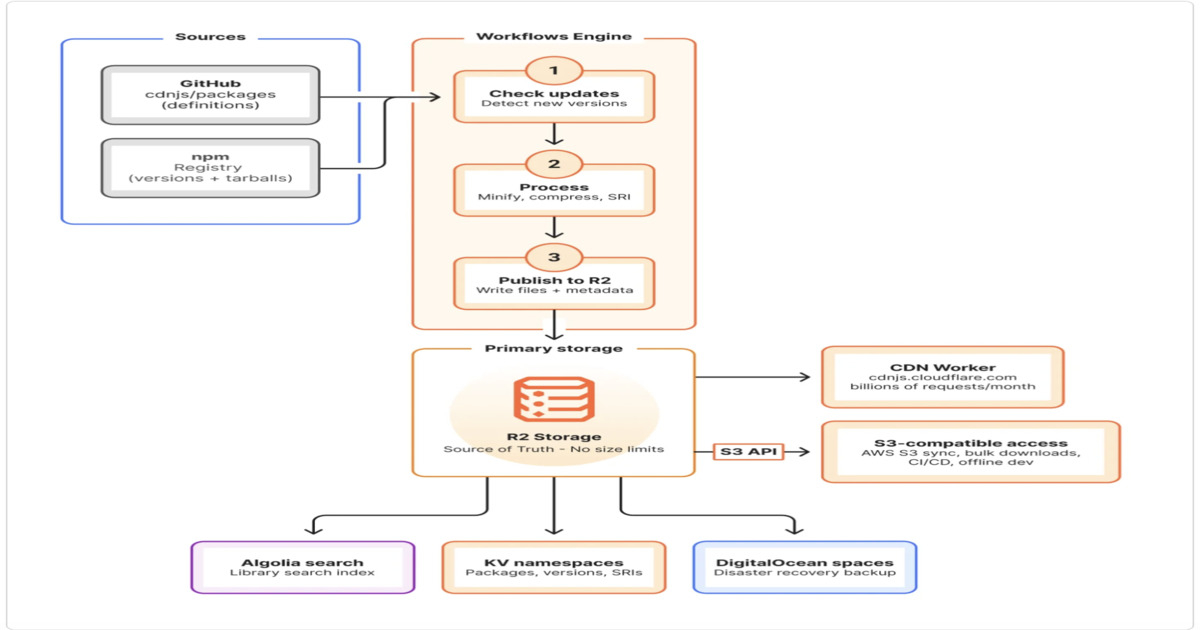
Cloudflare moves 9 billion daily CDN requests to its developer platform
Cloudflare has moved cdnjs, its open source CDN for JavaScript and CSS libraries, onto its Developer Platform, and the scale is striking: 9 billion requests a day now run on Workers, R2, KV, Workflows, Queues, Durable Objects, and Containers. That's not just a hosting swap; it's a consolidation of publishing and delivery into one architecture, all while keeping URLs and SRI hashes intact. For teams wrestling with legacy tools, this shows what's possible when infrastructure steps forward. Curious about similar migration thinking?