codebase
codebase at Beyond Market Intelligence is a file of 17 stories. The newest of them: “Instagram slims UI code by 50% with an AI-ready architecture”, “Unlock Your Codebase: Explore AI-Powered Knowledge Graphs for Seamless Development”, and “Streamline AI Projects: Balancing Research, Work, and Personal Pursuits”. Instagram Direct slimmed its Android UI code by 50% after migrating from the legacy View system to Jetpack Compose. Multi-file reasoning has long been the silent killer of AI coding workflows. Acme AI is the next-generation, AI-powered spreadsheet platform built to replace Excel and redefine how analysts, data scientists, and enterprise teams work… The list below is every codebase story on Beyond Market Intelligence, newest first.

Instagram slims UI code by 50% with an AI-ready architecture
Instagram Direct slimmed its Android UI code by 50% after migrating from the legacy View system to Jetpack Compose. That's not just a cleaner codebase, it's one built for AI. The new architecture is easier for AI coding agents to understand and modify, which cut token costs per session by 33%. This is how modern tools earn their keep. For more on managing rising token costs, see our piece on *Taming AI's Real-World Demands*.

Unlock Your Codebase: Explore AI-Powered Knowledge Graphs for Seamless Development
Multi-file reasoning has long been the silent killer of AI coding workflows. Graphify, launched in April 2026, tackles this head-on by turning codebases and unstructured data into queryable knowledge graphs. The recent parser upgrades and cross-file resolution improvements show real momentum, though community feedback rightly notes that daily integration still needs polish. We see promising architecture here, and we are watching closely. For more on how AI tools are reshaping developer expectations, check out our piece on navigating AI/ML job requirements.
Streamline AI Projects: Balancing Research, Work, and Personal Pursuits
Balancing research, a new corporate role, and personal projects is a lot, and the anxiety that comes with it is completely understandable. You are not alone in feeling that the advice out there is jumbled. Instead of chasing every new model, start by mapping each tool to a specific stage in your workflow. For deep ideation, your current GPT subscription is a solid anchor. For coding and architecture, Claude's models often excel.

Zig’s Creator Explains AI Ban and Shift to Codeberg for Quality and Community
Andrew Kelley's decision to ban AI contributions from Zig's codebase isn't a Luddite reflex; it's a calculated stand for quality. He argues automated submissions dilute the code and, just as critically, erode the human trust that holds open-source communities together. The move to Codeberg, driven by GitHub's failures and incentive mismatches, reinforces that same principle. It's a firm, thoughtful reminder that sustainable software needs more than working code.

How LinkedIn built context-aware AI agents for massive codebases
Ajay Prakash isn't just tinkering with AI agents; he's giving them a corporate memory. At LinkedIn, he tackles a familiar pain point: large codebases that leave agents lost. His answer is Contextual Agent Playbooks and Tools, built on MCP, which feed agents procedural know-how and runbooks directly. The 20% productivity gain with zero reliability loss is a compelling argument for context done right. For more on enterprise AI adoption, check out our related piece on navigating ethical considerations.
From Codebase to Dataset: Fine-Tuning AI on Your Own Projects
Turning a well-built React or Next.js project into a fine-tuning dataset is a puzzle worth solving, especially when you're aiming for quality over generic code dumps. The real challenge isn't just extracting files; it's crafting instructions that mirror how you'd actually ask for a component or a page. Pairing screenshots with code and preserving cross-file context are the hard parts, but they're where the value lives.

Replace Python bottlenecks with Rust through incremental, low-risk refactoring.
Rewriting a working system from scratch is a gamble most teams don't need to take. Lily Mara's approach is more pragmatic: swap out Python bottlenecks for Rust piece by piece, using PyO3 to bridge the gap. The result is function-level speedups that compound, without the operational weight of microservices. It's a measured path to performance that respects what already works. For more on how databases handle similar pressure, our piece on Perplexity's CobbleDB migration offers a useful parallel.
Build your own text-to-image model with Jasper Research's new cookbook.
Jasper Research just released a cookbook that walks through building a text-to-image model from scratch, and it's refreshingly honest about the messy middle. The guide shares full reasoning and intermediate results, so you're not just seeing polished outputs but the actual decision points. It also includes a 100M-image dataset and a tiny codebase, meaning you can train your own model without needing a supercomputer. If you've felt boxed in by black-box tools, this is an accessible entry into the mechanics.
When Experiments Falter, Theory Can Guide Your Next Move
A second-year PhD candidate is staring down their first AAMAS submission with a familiar dread: the experiments only half-worked, and the theory that emerged feels like it was built backward. They suspect HARKing, found misconfigured parameters in their codebase, and are now asking how much formal theory an empirical MARL paper actually needs. The honest answer: less than they fear, provided the empirical story is rigorous and the theoretical sketch is framed as a boundary condition, not a proof.

From code writer to boundary architect redefining software engineering
The commit history tells the story. Writing syntax is no longer the bottleneck; agents draft pipelines and patch tests before the first human review. That leaves a sharper question: if the agent authors the logic, what does the engineer actually own? The answer is the boundary itself. Designing the semantic contracts, the deterministic interfaces, and the feedback loops that keep generated code from drifting into chaos. That is the new equilibrium.
From Config Wrangling to Experiment Scaffolding: A PhD Reality Check
The instinct to keep the eval harness and metric definitions close is the right one. That layer is where your scientific judgment lives. Handing off the scaffolding while holding onto the core is a workable line, even if you keep crossing it. The detachment you describe is real. The fix is likely not more careful diff-reading. It is rebuilding a mental model of the system at a higher level, so you can reason about the numbers without needing the code memorized.
Code hosting meets AI collaboration with Cursor's new Origin platform
Cursor just planted a flag in the heart of its own ecosystem. Origin, a git-based hosting platform built directly into the editor, moves code management out of the browser and into the flow of work. It's a confident bet: teams that live in Cursor shouldn't have to leave to push, review, or merge. The early beta on Pro, Teams, and Enterprise plans signals a serious play, not an experiment.

Explore how AI assists workflows but leaves complex coding to humans.
Asgaut Mjølne Söderbom and Ola Hast have moved past continuous deployment and pair engineering, yet their latest experiment with Claude Code revealed a sharp boundary. They find AI excellent for many tasks, but not for the messy reality of brownfield coding. This episode digs into why human collaboration still carries the weight where AI vibes fall short. For more on questioning AI's limits, check out "Talking to My AI Clone Taught Me to Question the Tech."

When GitHub stumbles, Cursor Origin offers a stable path forward.
If you're weighing whether to trust a new code host with your team's source code, Monday offered a pointed reason to pay attention. Cursor launched Origin, its own code hosting platform, and within hours GitHub suffered a global degradation that crippled pull requests, APIs, and Copilot for nearly seven hours. The timing was coincidental, but the message wasn't: the agent era demands a forge built for how code is actually reviewed today. Origin's pitch is worth exploring, starting with its low-risk, GitHub-as-source-of-truth design.
How Spotify's AI Agent Standardizes Thousands of Code Repositories
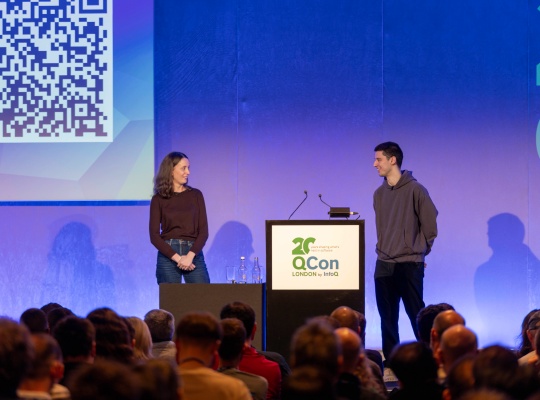
When Spotify set out to rewrite its entire codebase, it didn't just throw more engineers at the problem. Jo Kelly-Fenton and Aleksandar Mitic built Honk, an AI coding agent designed to handle fleet-wide migrations that would otherwise stall for months. Their approach decouples CI verification from the agent itself, a smart move that prevents bottlenecks before they start. It's a practical, forward-thinking look at how to standardize thousands of repositories without losing momentum.

Voice meets action: OpenAI brings GPT-Live's full duplex to Codex and desktop
Two weeks after debuting GPT-Live, OpenAI has brought its full-duplex voice control into Codex and the ChatGPT desktop app on macOS and Windows. That means developers can now orchestrate multi-threaded coding jobs, review pull requests, and debug applications using natural speech, hands-free. The architecture decouples the voice layer from heavier reasoning models, letting conversations flow while agents work asynchronously.

Explore how AWS Continuum automates security across your entire code lifecycle.
AWS Continuum enters a crowded field with a focused promise: automate the entire lifecycle of code security. The platform pairs penetration testing, code review, threat modelling, and vulnerability discovery into one integrated system. That is a practical step forward for enterprises drowning in manual triage. It is not about flashy tech; it is about closing gaps faster. For teams still wrestling with legacy workflows, this feels like a nudge toward a more proactive posture.