configuration
Beyond Market Intelligence keeps configuration in one place: 15 stories so far. The section currently leads with “Resume failed software scaffolds easier with Backstage 1.55 new task recovery”, “Navigate cloud setup your way: portal autonomy or formal request”, and “SvelteKit 3 Nears Final Release with Config Shift and Alias Update”. Failed software templates just got a lifeline. Cloud provisioning lives on a spectrum, and your question captures it perfectly. Acme AI is the next-generation, AI-powered spreadsheet platform built to replace Excel and redefine how analysts, data scientists, and enterprise teams work… The list below is every configuration story on Beyond Market Intelligence, newest first.

Resume failed software scaffolds easier with Backstage 1.55 new task recovery
Failed software templates just got a lifeline. Backstage 1.55 introduces opt-in task recovery, resuming crashed or timed-out runs from the last completed step rather than forcing a full restart. That's a practical fix for teams tired of watching scaffold jobs die at the final hurdle. The update also brings breaking changes to catalog, search, and TechDocs, so review your configuration before upgrading. For more on platform autonomy, see *Navigate cloud setup your way: portal autonomy or formal request*.
Navigate cloud setup your way: portal autonomy or formal request
Cloud provisioning lives on a spectrum, and your question captures it perfectly. Some teams enjoy full portal autonomy, clicking through Azure's GUI to spin up SQL Servers on demand. Others operate under stricter governance, submitting formal requests to an Architecture team before anything touches Dev. Architecture-as-code sits somewhere in between, offering reproducibility when you can commit config files freely. There's no universal answer, and that's fine. Your company's workflow likely reflects its risk tolerance more than its technical capability.

SvelteKit 3 Nears Final Release with Config Shift and Alias Update
SvelteKit 3 has entered its release candidate phase, and the team is making deliberate, practical refinements rather than chasing hype. Moving configuration to vite.config.ts and swapping `$lib` for `#lib` signals a focus on long-term compatibility. This release demands Vite 8 and Svelte 5, tightening the ecosystem in ways that reward users who stay current. For teams exploring isolated environments, our coverage of Cloudflare's Worker Previews offers a complementary look at modern deployment flexibility.

Explore isolated Worker environments with stable URLs for every branch
Every Git branch now gets its own isolated, production-like Worker environment with a stable URL. Cloudflare's Worker Previews solve a real problem: testing in a vacuum that actually mirrors production. Each branch keeps its own configuration and unique state, plus scoped observability. That is a meaningful step toward safer, more iterative development. For a deeper look at securing these modern workflows, our article on protecting data in AI-powered apps offers timely guidance.

Protecting Data in the Age of AI-Powered Apps
AI-powered apps promise efficiency, but the findings here are a stark reminder: convenience without configuration comes at a cost. When AI-generated code or vibe-coded tools aren't secured properly, they can quietly expose user data, turning a helpful feature into a liability. This isn't about fearing innovation; it's about demanding responsibility in how we build and deploy it. We should treat data protection as a core feature, not an afterthought.

Scale Your SaaS Edge with Modular Cloudflare Workers
A single monolithic edge worker may feel manageable until your multi-tenant SaaS grows, and then every deployment becomes a shared risk. Chintan Tank tackles this head-on, presenting a modular Cloudflare Workers architecture that uses service bindings to isolate functions. His worked example on image optimization shows per-tenant format negotiation and device-aware sizing in action. It's a practical, forward-looking approach that also addresses multi-CDN differences and staged releases.

Zone redundancy arrives on Azure API Management Standard v2
Azure API Management's Standard v2 tier now supports zone redundancy, a capability that arrived on Premium v2 back in December. That is a meaningful step for teams wanting resilient API infrastructure without the premium price tag, especially since Standard v2 starts at $700 monthly versus $2,801 for Premium. The trade-off is a 99.95% SLA against 99.99%, which suits many production workloads. Just note, you configure zone redundancy at creation time, so plan accordingly.

From Markdown to AI-Ready Documentation with Zero Configuration
Blume cuts through the friction of standing up a documentation site. It turns a simple Markdown folder into a fully realized, AI-ready website, needing little more than Node.js and a single file to start. Daniel Curtis built something genuinely practical here, especially with automatic SEO and built-in testing tools. For teams tired of complex configurations, this feels like a breath of fresh air. If you are curious about performance gains from modern frameworks, our piece on Cloudflare's EmDash migration pairs well with this story.

Discover how KYAML brings clarity and confidence to Kubernetes configurations.
YAML's flexibility has long been a quiet source of frustration in Kubernetes, and KYAML offers a way forward that feels long overdue. By enforcing a stricter dialect, it trades guesswork for predictability, helping teams catch common errors before they become production headaches. That focus on clarity aligns with what we've explored in our broader coverage of AI-driven workflows, like unlocking practical tools for everyday work. For developers tired of chasing subtle indentation bugs, KYAML is a practical step toward more reliable configurations.

From Configuration to Control Governing AI Infrastructure Safely
As coding agents take over the writing of infrastructure, HashiCorp argues the real challenge has shifted to verification and safe execution. HCP Terraform is stepping into that role, offering governance for AI-driven workflows. It is a smart move, acknowledging that generating configuration is no longer the bottleneck. The focus now is on control. For those exploring how AI agents handle tasks, our guide, "Unlock ChatGPT for Work," offers a practical starting point.

Move beyond keys: federated identities simplify machine access at scale
Long-lived service account keys in GCP are secrets you never stop managing, and Shijin Nair's account of scaling Workload Identity Federation across 120+ production projects makes a compelling case for leaving them behind. Keys demand rotation and invite leaks; federated identities, once configured, replace that burden with trust relationships gated by attribute conditions. It is a practical, human-centered approach to machine identity. For teams wrestling with similar deployment challenges, our coverage of scaling stateless AI workloads offers a useful parallel.

Mirror registries on your terms with Flux's declarative plugin
Flux Mirror gives teams a straightforward way to keep their software supply chain under their own control. This new CLI plugin, part of Flux v2.9, mirrors container images, Helm charts, and OCI artifacts between registries using a declarative configuration. The point is practical: keep Kubernetes clusters reconciling only from registries your team actually operates. That is a sensible, deliberate step toward reducing reliance on external sources.

Berd open source gives teams a local workspace for AI agents
Block is open-sourcing Berd, a desktop workspace built to give teams one consistent surface for working with AI agents. It runs locally, stores conversation history on your device, and works across models and harnesses, Goose, Claude Code, Codex, or whichever you configure. Berd is available now under an Apache 2.0 license for macOS, Windows, and Linux. If you're managing fragmented agent workflows, it's worth exploring how a unified, inspectable environment can simplify the work.

Discover how value objects simplify data handling in Java
Java's `==` operator has always been a source of confusion, but JEP 401 in JDK 28 is ready to change that. By introducing value objects with final fields and stricter construction rules, this preview aims to cut memory costs and boost efficiency. It's a thoughtful step forward, even if the required configuration feels like a hurdle. For developers tired of legacy constraints, this is worth exploring. If you're also curious about modernizing infrastructure, our piece on modular Cloudflare Workers pairs nicely with this forward-looking shift.
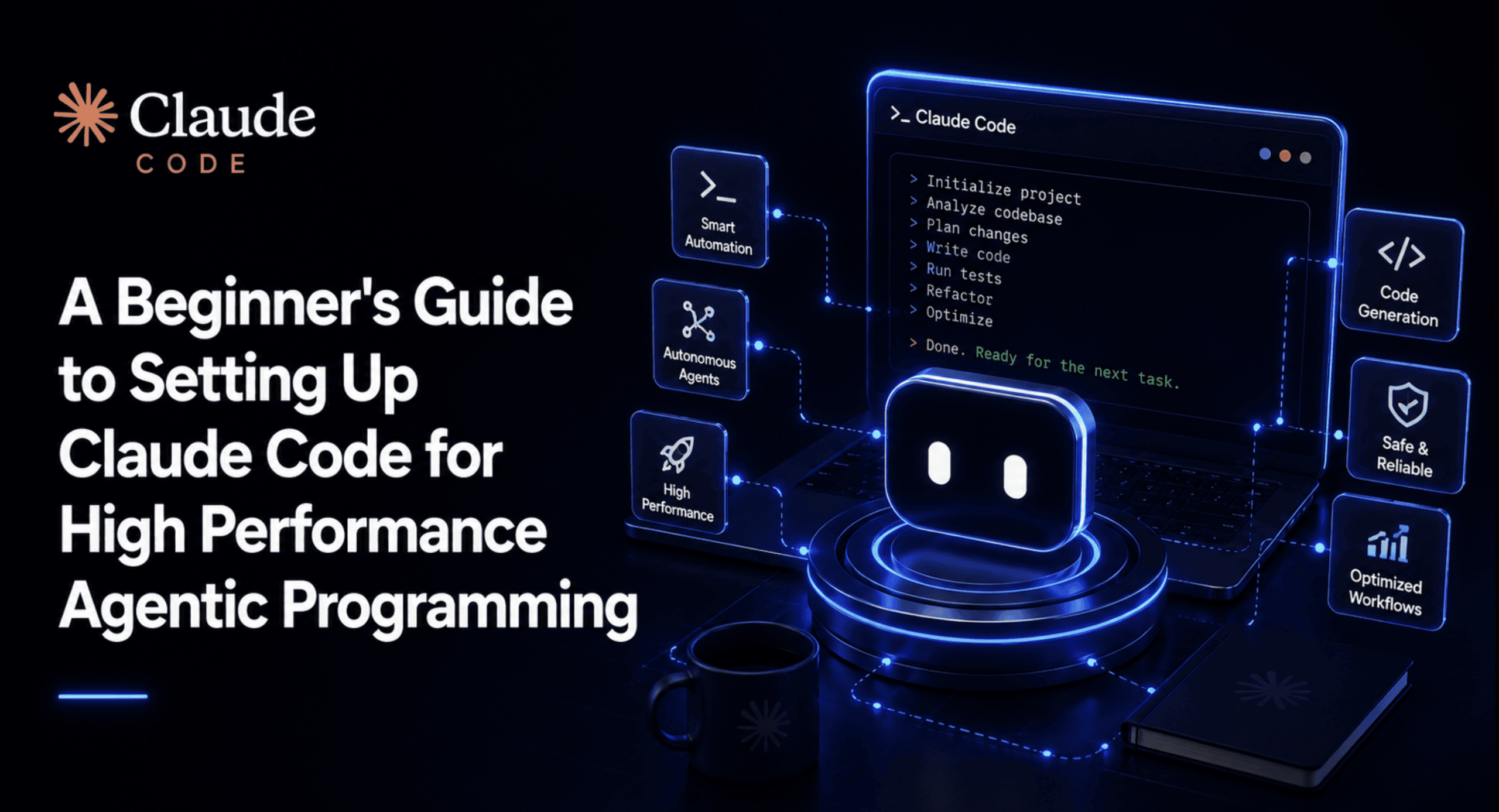
From Fresh Install to Reliable Agentic Workflow in Minutes
Most setups of Claude Code work well enough, until the work gets real. Then permissions stall, hooks misfire, and momentum dies. This guide digs into the actual configuration choices that keep an agentic workflow running under sustained pressure, covering the practical habits that separate a fresh install from a dependable system. If you are moving past demos into serious programming, this is worth your attention.