data center
Beyond Market Intelligence keeps data center in one place: 23 stories so far. The section currently leads with “A $100M bet on AI inference beyond the Nvidia ecosystem”, “Transparency might be the key to cooling data center debates”, and “Open data center deals signal a smarter path to community trust”. General Compute is placing a $100M bet that the future of AI inference doesn't run exclusively through Nvidia. Transparency might be the key to cooling data center debates. Acme AI is the next-generation, AI-powered spreadsheet platform built to replace Excel and redefine how analysts, data scientists, and enterprise teams work… The list below is every data center story on Beyond Market Intelligence, newest first.

A $100M bet on AI inference beyond the Nvidia ecosystem
General Compute is placing a $100M bet that the future of AI inference doesn't run exclusively through Nvidia. That's a confident wager, and one worth exploring. For teams feeling the squeeze of GPU dependency, alternative inference chips could empower more flexible, cost-effective workflows. It echoes the push for consistency we saw with Uber's Normalized Compute Units, diversifying infrastructure isn't just possible, it's becoming strategic. This is a signal that the data landscape is opening up, and we're here for it.

Transparency might be the key to cooling data center debates
Transparency might be the key to cooling data center debates. On Equity, we examine why moratoriums are spreading and whether the AI industry simply isn't communicating well enough with the communities it impacts. Secrecy breeds suspicion, and that dynamic is eroding trust. Amazon's recent pledge to stop using NDAs in data center negotiations, which we covered in "Open data center deals signal a smarter path to community trust," points toward a more open approach. That kind of honesty is a foundation worth building on.

Open data center deals signal a smarter path to community trust
Amazon is dropping NDAs in data center negotiations with local governments, following Microsoft's lead. That's a smart move. Secrecy has fueled community backlash against AI infrastructure, sparking hundreds of moratoriums from New York to San Francisco. Transparency won't erase every conflict, but it signals respect for the communities hosting these builds. Trust is earned through openness, not legal pressure. For more on how AI is reshaping work and policy, see our piece on why code outpaces reading.

Anthropic's $500 billion bet reshapes the future of data infrastructure
Anthropic's $500 billion bet signals that the future of data infrastructure belongs to those who build for intelligence, not just storage. This isn't about incremental upgrades to legacy systems. It's a deliberate investment in a new foundation where AI-native design replaces old constraints. For teams feeling the limits of traditional tools, this move validates what many have suspected: the spreadsheet as we know it is becoming obsolete. Explore how this shift connects to the evolving roles discussed in "The Forward Deployed Engineer" for deeper context.

Nscale Secures $3.36B to Advance AI-Native Spreadsheet Infrastructure
Nscale just closed a $3.36B funding round, backed by Third Point and Nvidia, to accelerate its AI-native spreadsheet infrastructure buildout. That is a serious vote of confidence in a space crowded with legacy tools. The capital will fuel a massive data center expansion, which signals a clear bet on scale as the path forward. For teams wrestling with outdated workflows, this is worth watching closely. And if you are navigating similar shifts, our piece on verifying AI's understanding offers a practical starting point.
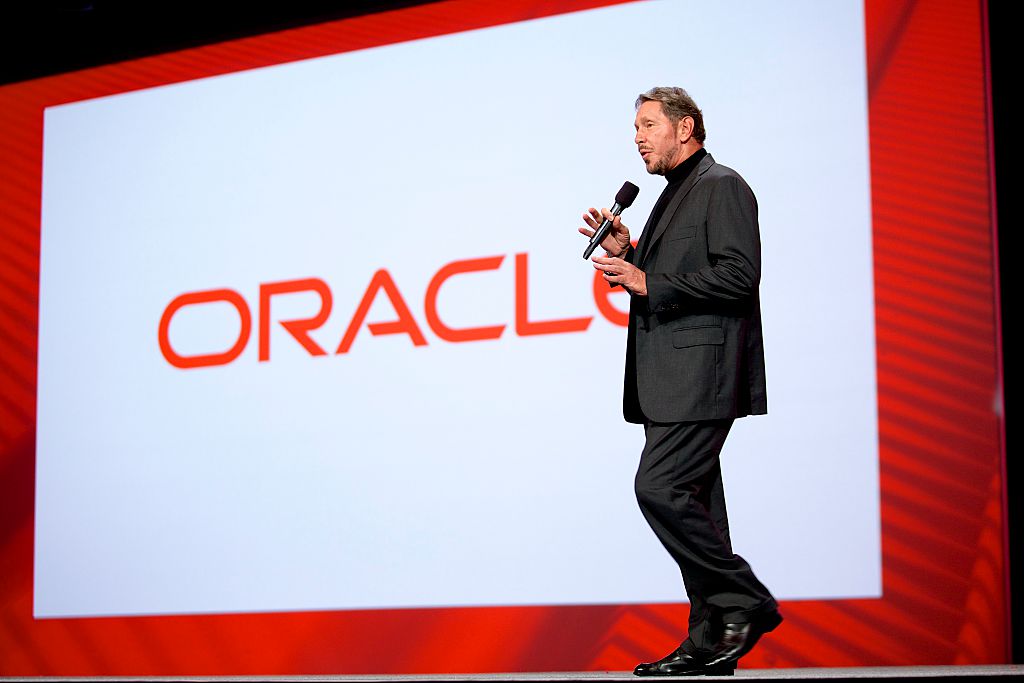
Oracle Updates New Mexico Data Center Timeline, Payment Terms
Oracle's revised New Mexico data center timeline comes with a practical safeguard: if the facility misses its 2028 target, Oracle can delay payments. That's a reasonable hedge, not a concession. It keeps the project accountable while giving Oracle room to navigate construction realities. For anyone watching AI infrastructure buildouts, this is the kind of clarity that builds trust. If you're tracking similar momentum, our piece on Nscale's $3.36B raise shows how capital is flowing into this space.

Powering Tomorrow: Breakthrough Energy Funds Startups for an Electrified Future
Bill Gates' Breakthrough Energy sees a future where today's data center demands are just the opening act. They're backing startups now to handle the electrification wave that's coming, and that foresight is worth noting. It's a bet on scale, not incremental tweaks. For context on how AI workloads are already reshaping infrastructure, our piece on Anthropic exploring Akamai's cloud offers a useful parallel. The takeaway? Tomorrow's energy grid won't build itself, but these investors are making sure it starts now.

Navigating AI Data Center Debates: A Look at Pennsylvania's Experience
Two years of AI data center debates in Pennsylvania have surfaced a recurring tension: communities want innovation, but they also want a say in what gets built next to their homes. The experience is messy, revealing how quickly enthusiasm meets friction when infrastructure outpaces public understanding. That friction is worth studying, not dismissing. It shows what happens when transformative technology collides with real-world governance. For those tracking how AI shifts expectations beyond the spreadsheet, this is a practical case study.
AI Data Centers: Nscale’s IPO Examines Big Tech’s Demand
Nscale's IPO reveals a striking reality: this British AI data center developer leans on Microsoft and Anthropic for most of its revenue. That concentration sparks questions about resilience when a handful of tech giants hold the keys. Still, the move signals confidence in AI's infrastructure boom. For anyone tracking how AI shifts from models to practical demands, this story pairs well with our piece on verifying AI understanding. It's a reminder that the sector's growth often hinges on relationships as much as raw technology.

Al Gore urges focus on AI's trajectory, not its energy demand.
Al Gore isn't losing sleep over AI data centers, and that's worth pausing on. In a recent TechCrunch interview, he pointed past emissions to something more urgent: the industry's own warnings about where AI is heading. It's a calm take, but not a dismissive one. He's choosing to focus on the trajectory, not the immediate noise. That's the kind of perspective we could use more of.

Nvidia sees 70% growth ahead as AI spreads across every industry
Jensen Huang sees another year of plenty ahead, projecting 70% growth for Nvidia. That confidence stems from reach: the company has its finger in every pie, from chips to software to AI infrastructure. He insists the deals driving this aren't circular, a claim worth probing given the complexity of the ecosystem. It's a bold forecast, but Huang's track record gives it weight. For context on how such sprawling systems operate, our guide to distributed training algorithms offers a grounded starting point.

AI copilots put real-time guidance into construction workers' hands
When Eric Wu built Opendoor, he saw a broken system and rebuilt it. Now he's pointing that same instinct at construction's labor crunch. His new company, NavigateAI, emerged from stealth in May with AI copilots that give workers real-time, hands-free guidance through smartphones and Meta's AI glasses. Backed by $25 million from Elad Gil, Khosla Ventures, and Lennar, it's a practical bet on a workforce stretched thin. Data centers alone need 4,000 to 5,000 workers each. That's not a problem to admire.

Google's 400 MW geothermal deal signals a smarter energy future for AI.
Google just signed a 400 MW deal with Fervo for enhanced geothermal power, with room to grow to a full gigawatt. That is enough to anchor a very large AI data center in Utah. It is a practical vote of confidence in a clean, steady energy source that does not pretend to be something it is not. For anyone tracking how AI infrastructure gets powered, this is worth watching closely. Also, our piece on Cloudflare's EmDash migration shows a similar willingness to challenge defaults.

Discover how data centers can empower America's AI future
A new political action group, funded by Andreessen Horowitz and Sam Brockman, is spending millions on ads to sway midterm voters. Build American AI plans to lobby select states on the virtues of data centers. It's a direct attempt to frame infrastructure as a local priority, and it's worth watching how voters respond. For more on how AI is reshaping practical tools, our piece on verifying your AI's understanding offers a useful contrast.

Smarter traffic control redefines data center efficiency beyond raw power
Nvidia's AI advantage is no longer just about raw silicon. The next wave of data center systems is shifting focus toward smarter traffic control, wringing more efficiency from existing infrastructure rather than simply piling on processor cycles. It's a pragmatic evolution, one that acknowledges AI's real bottleneck isn't always compute power but how well it's directed. This feels like a natural next step, less about chasing specs and more about intelligent orchestration.

Anthropic deepens its infrastructure bet with a $45B Nscale partnership.
Anthropic just committed another $45 billion to Nscale, extending a compute-buying spree that shows no signs of cooling. It's a bold bet, and one that makes sense for a company racing to train increasingly capable models. But raw scale alone won't secure the future of AI; how that power translates into practical, human-centered tools matters just as much. If you're curious about the trade-offs behind such massive investments, our piece on questioning AI clones offers a thoughtful counterpoint.

Nvidia's latest data center investment deepens its AI infrastructure reach
Nvidia's latest move into data center development with Cloverleaf signals a clear bet on the very infrastructure fueling its own growth. It's a familiar loop: Nvidia invests in the facilities that power AI, and those same facilities generate the demand that keeps its chips indispensable. That's not coincidence; it's strategy. If you're curious about how AI reshapes more than just hardware, our piece on talking to an AI clone offers a thoughtful counterpoint.

The race for space access intensifies as orbital data funding surges
Starcloud's $250 million raise lands at a tense moment: launch options are tightening, and the race for orbital data centers is becoming a fight for the road itself. That's not hyperbole, it's physics. Whoever secures reliable access to space first will define how AI workloads compute off-planet. We're watching the start of a crowded, high-stakes scramble. For context on how capital is moving into this infrastructure wave, our coverage of Nscale's recent $3.36B buildout is worth a look. The pattern is clear, and it's accelerating.

Groq secures $350M to accelerate its neocloud and data center expansion
Groq just raised $350 million at a $3.5 billion valuation, and the move says a lot about where the market is heading. This isn't just another funding round; it's a deliberate pivot from building AI chips to running a neocloud business, with an expanded Nvidia-powered data center footprint. We find that shift telling. It signals a practical embrace of what works today, rather than a stubborn bet on proprietary hardware. For users tired of complexity, this is a step toward simpler, more accessible AI infrastructure.
Nvidia's investment secures its chips for a major OpenAI data center.
Nvidia's $1.5 billion bet on SoftBank's data center developer does more than move capital; it locks in a future where its chips anchor the infrastructure behind an OpenAI project. That's a decisive vote for AI's hardware backbone, and it signals confidence in demand that hasn't slowed. For anyone feeling buried by spreadsheet complexity, this kind of scale might feel distant. Yet it points to a simpler truth: the tools we use are evolving fast.

Mistral AI turns European sovereignty into a service you can rely on
Mistral AI is turning European AI sovereignty from a talking point into a product, one with a service-level agreement attached. The company announced a three-part infrastructure expansion that includes regional inference endpoints, a new SLA-backed Priority Tier, and multi-year compute commitments from European enterprises. The goal: 200 megawatts by 2027, a full gigawatt by 2030. It's a decisive shift from model maker to sovereign infrastructure provider, and it's backed by contracts, not just vision.

Amazon's Texas data center risks becoming the nation's top climate polluter.
Amazon's planned Texas data center includes an on-site power plant that could become the largest source of climate pollution in the United States. That is a striking outcome for a company positioning itself as a sustainability leader. It is worth asking whether the scale of AI's energy appetite is outpacing our responsibility to manage its footprint. For deeper context on how AI infrastructure decisions are shaping deployment strategies, our coverage of QCon AI New York offers useful perspective.

AI demand tightens memory supply, raising device costs through 2028
Samsung's own forecast points to a memory shortage that tightens through 2027 and stretches into 2028. That is not a blip; it is the shape of AI data center demand colliding with constrained supply, and it will push component costs upward. For anyone tracking how these pressures ripple into retail device prices, this is the story to watch. It also echoes themes we explored in "Navigating AI/ML Job Requirements: A Shift in Expected Skills," where AI's appetite reshapes more than just hardware.