data centers
32 stories filed under data centers on Beyond Market Intelligence. The newest of them: “Nvidia opens its models so enterprises can run AI agents anywhere”, “Ambrosia Energy's new Texas factory will power off-grid data centers around the clock”, and “The next frontier in data storage launches from a gun”. Nvidia is opening its models so enterprises can run AI agents anywhere, in their own data centers or directly on devices. Ambrosia Energy is building a massive Texas factory to produce batteries that pair with solar panels, creating a clean power plant that runs around the clock. Acme AI is the next-generation, AI-powered spreadsheet platform built to replace Excel and redefine how analysts, data scientists, and enterprise teams work… The list below is every data centers story on Beyond Market Intelligence, newest first.

Nvidia opens its models so enterprises can run AI agents anywhere
Nvidia is opening its models so enterprises can run AI agents anywhere, in their own data centers or directly on devices. This is a pragmatic move. Companies want control, privacy, and the ability to deploy without cloud dependency. It's about making private AI agents a real, usable thing. For anyone feeling constrained by the limitations of closed systems, this is worth exploring. It also echoes a theme we saw when AI agents helped smart TV owners cut bloatware and reclaim control.

Ambrosia Energy's new Texas factory will power off-grid data centers around the clock
Ambrosia Energy is building a massive Texas factory to produce batteries that pair with solar panels, creating a clean power plant that runs around the clock. The goal is straightforward: keep off-grid data centers powered day and night, no fossil fuels required. It's a practical answer to a real constraint, and one more sign that clean energy infrastructure is moving from theoretical to industrial scale. For a deeper look at how innovation is reshaping entire supply chains, see our piece on Licube's lithium ambitions.

The next frontier in data storage launches from a gun
A gun big enough to launch data centers into space sounds like science fiction, but Longshot is building it. Their ambition is to make orbital data storage a reality, addressing the physical limits of earthbound servers. It's a bold, practical bet on a future where latency and land constraints no longer dictate our infrastructure. For context on how other companies are rethinking data control, see our coverage of how Facebook Puts Algorithm Control Directly in Your Hands.

Fuel cells offer data centers a more efficient path to power
Data centers are hungry for power, and fuel cells might be the most efficient way to feed them. This startup claims its technology delivers exceptional efficiency while cutting fuel costs, a compelling pitch when every megawatt counts. The timing is sharp, too, given that batteries now outprice gas turbines for backup power. Efficiency isn't just a perk here; it's the path forward for an industry scrambling to scale without burning through budgets.

As data centers surge, batteries now outprice gas turbines
Batteries have crossed a threshold that seemed unthinkable a decade ago: they now undercut natural gas turbines on price, even as data center demand surges. The economics flipped because scale did the work. What was once backup power is now the default choice for new builds. That shift deserves attention, especially as the fight over who pays for AI infrastructure heats up. Our piece on AWS clarifying its data center stance offers useful context on where this is headed.
The Real Question Behind AI Data Centers Is Who Decides
The fight over AI data centers usually gets framed as a binary choice: build or don't build. That misses the harder question underneath. Who pays, and who decides? The costs are deeply intertwined, and the answers shape everything that follows. Our coverage of AWS clarifying its data center stance shows how trust itself is on the table. We need a more honest conversation about control before we pour billions into the ground.

AWS clarifies data center stance, sets aside NDAs to rebuild trust
Amazon Web Services is done letting silence do the talking. This week, the company's CEO moved to reset the narrative around its data centers, setting aside non-disclosure agreements to rebuild trust with customers who have grown wary of how their infrastructure is handled. It is a direct, practical acknowledgment that transparency is no longer optional. For anyone tracking how cloud giants respond to skepticism, this is a meaningful step.

Google's space chip launch hints at orbital data centers requiring thousands of Starship flights
Google just sent its first advanced chip into orbit, and the message is clear: the future of data processing may live above our heads. If that sounds ambitious, consider the logistics, this path likely requires thousands of Starship flights to build orbital data centers. It's a bold bet on space infrastructure, and it reframes what "cloud computing" could mean. For more on how AI is reshaping digital workflows, read our piece on Photon's $4.5M bet on AI agents.

The AI boom splits climate tech's inner circle, and the rift is widening
The divide over AI is no longer theoretical. It's splitting climate tech's inner circle, and the rift is widening as data centers demand more power. Some founders and investors see opportunity; others see a distraction from the real work. We think that tension is worth watching closely. For more on how this pressure is reshaping priorities, our piece on Crusoe pausing Boom turbine deployment offers a useful example. The conversation isn't just about energy. It's about what the movement stands for.

Crusoe shifts focus, pausing Boom turbine deployment at data centers
Crusoe has quietly pulled back from Boom Supersonic's turbine deployment, pausing those plans at its data centers. It's a sensible recalibration, not a retreat from the bigger picture. The pressure on data center power is intensifying, and as recent coverage in our related piece on US data centers potentially rivaling entire nations in natural gas use shows, every infrastructure choice carries weight. Crusoe's shift suggests a sharper focus on near-term priorities, which is exactly the kind of clarity this moment demands.

Morphotonics Secures €40M to Transform Data Center Displays
Morphotonics just secured €40M to tackle one of the most stubborn bottlenecks in data center design: the displays that operators rely on every day. With backing from 3M Ventures, Innovation Industries, BOM, and Invest-NL, this deeptech player is positioning itself where infrastructure meets usability. That matters because as AI workloads grow, so does the demand for clearer, more efficient interfaces. We see this as a practical bet on making data centers more human-centered.

The hidden cost of AI: data centers set to surpass national energy demand.
The AI boom is rewriting America's energy map in real time. Projections now show U.S. data centers guzzling more natural gas by 2035 than Germany and Japan combined. That is a staggering leap, and it should make us pause. This isn't about scaring anyone away from innovation; it's about facing the infrastructure reality head-on. If we're going to empower this digital transformation, we need to plan for the power it demands.

Massachusetts tightens clean energy rules for data center growth
Massachusetts just became the third state in as many months to impose new clean power rules on data centers. That's a clear signal: the era of unchecked energy consumption for digital infrastructure is closing. We support the move. It's a practical step toward aligning growth with environmental responsibility. For a deeper look at how the industry is adapting, our piece on Crusoe pausing its Boom turbine deployment offers useful context. This is about building a sustainable path forward, not just building bigger.

Fusion startups find new urgency as AI data centers strain the grid
Realta Fusion is the latest startup to catch a utility's attention, and that's no accident. The grid is straining under the weight of new AI data centers, so power providers are finally treating fusion as a practical answer rather than a distant dream. It's a smart move, born of necessity, and it signals a welcome shift toward solutions that actually scale. If you're wondering how AI's rapid growth is reshaping technical expectations, our piece on navigating AI/ML job requirements offers a useful parallel.

Android apps face memory limits as AI demand reshapes hardware
Google is drawing a line in the sand for Android memory use, and it's a direct response to the hardware squeeze AI data centers have created. Lower-cost phones are feeling the pinch first, which makes this a practical move, not a flashy one. We see this as a necessary constraint that could actually push developers toward smarter, leaner apps. It's a trade-off worth watching.

Amazon expands Nvidia partnership to transform cloud data infrastructure.
Amazon just tripled its order of Nvidia chips, adding 2 million GPUs to its data centers over the next two years. That's a bold bet on surging demand, and it signals something bigger than raw compute. This extended partnership isn't just about buying more silicon; it's about building the infrastructure for a smarter, more accessible data future. If you're curious how AI models actually make sense of that complexity, our piece on paragraph structure offers a practical look at the mechanics.

Explore how hidden server chips can expose your enterprise data to risk.
Thousands of enterprise servers are sitting exposed to hardware-level compromise through vulnerabilities in their Baseboard Management Controllers. These specialized processors, built for remote out-of-band administration, have become a silent attack surface that too many teams overlook. This isn't a theoretical risk; it's a present danger that demands immediate attention. If you're responsible for server infrastructure, this is the moment to reassess your security posture.

How urine could help address data center water consumption
Jason Kelce's joke about cooling data centers with urine is funny because it isn't that far-fetched. The idea challenges our reliance on potable water for industrial heat management, and that's a conversation worth having. It's not about literally rerouting restrooms, but about questioning the assumptions baked into our infrastructure. If we're serious about sustainable computing, we need to explore every viable alternative.

Why TerraPower's reactor is built for the AI data center race
TerraPower's nuclear reactor is quietly reshaping the race to power AI data centers, and its edge isn't just in the science. It's a strategic advantage that could turn the tide for deals others find hard to close. While rivals scramble, this plant offers something steadier. If you're tracking momentum in this space, our piece on Crusoe shifting focus is worth a look. For now, TerraPower's approach feels less like hype and more like a deliberate step forward.
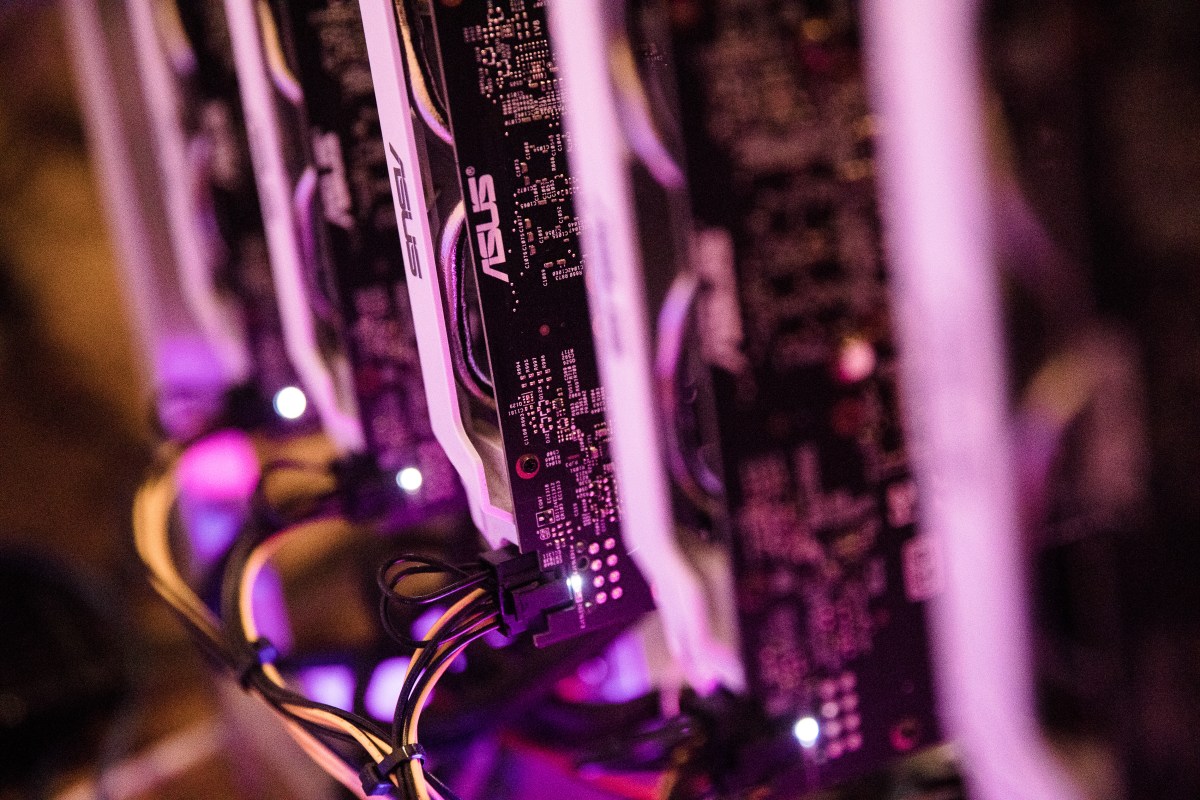
Compute is AI's biggest cost. Finally, a way to price it.
Hundreds of billions of dollars flow into data centers and GPUs each year, yet compute remains the industry's biggest cost without a clear pricing mechanism. Silicon Data is stepping in to fix that, giving Wall Street a way to value and hedge AI infrastructure. It's a necessary evolution for an industry spending at scale. For deeper context on how AI tools shape decision-making, our piece on verifying AI's understanding offers a timely parallel. The buildout is real; pricing it was long overdue.

Hollow-core fiber brings 30% faster data to modern networks
Relativity Networks just closed a $22 million round to push hollow-core fiber into data centers, a technology that moves data 30% faster than conventional fiber. It's a rare bet on a design that swaps glass for air, and the payoff is speed where milliseconds matter. We're watching this space closely, especially as AI workloads strain infrastructure. For more on how data centers are evolving, our piece on Crusoe shifting focus from Boom turbines offers useful context. This is practical innovation, not hype.
Hyperscalers face rising costs as natural gas prices forecast to triple.
Natural gas prices could triple in parts of the U.S., and that forecast should give hyperscalers serious pause. The companies powering the AI boom are making long-term bets on gas to keep data centers running, but if those costs climb as projected, the financial fallout could be staggering. It's a risky position for an industry built on efficiency. For context on how these energy strategies are shifting, Crusoe's recent pivot away from Boom turbine deployment shows the landscape is already changing.

Explore how portable modular data centers can transform AI infrastructure.
Runware is betting that the future of data centers fits in a pod. This week, the AI infrastructure company unveiled Sonic Inference Pod, a modular data center designed to answer a simple question: can portability redefine how we deploy compute? It's a bold move, and one that feels less like a gimmick and more like a response to real friction. Traditional infrastructure is heavy and rigid. Exploring a modular path could empower teams to meet AI's demands with unexpected agility.

Texas pauses data center growth to rethink energy demands
Texas has long been the default answer for data center developers chasing cheap power and light regulation. But the governor's call for audits signals that even the most business-friendly state has limits. Growth without scrutiny eventually hits a wall, and Texas just found its own. It's a reminder that infrastructure booms don't fail quietly; they strain until someone blinks. For context on how quickly energy demand is reshaping tech decisions, our piece on Crusoe pausing its Boom turbine deployment shows even startups are recalibrating.