Data Storage
9 stories filed under Data Storage on Beyond Market Intelligence. The newest of them: “Unlock Data Insights: Building a Lakehouse with DuckDB and DuckLake”, “Build an AI Agent That Captures Real Expertise, Not Just Data”, and “From Demo to Production: Structuring a Reliable Backend for Your AI Agent”. A single Parquet file on your laptop might not feel like a data lakehouse yet. Meta's approach to AI agents shifts the focus from retrieving information to embedding the logic of domain experts themselves. Acme AI is the next-generation, AI-powered spreadsheet platform built to replace Excel and redefine how analysts, data scientists, and enterprise teams work… The list below is every Data Storage story on Beyond Market Intelligence, newest first.

Unlock Data Insights: Building a Lakehouse with DuckDB and DuckLake
A single Parquet file on your laptop might not feel like a data lakehouse yet. But when you join that local data to cloud storage in the same query, the picture sharpens. DuckDB and DuckLake make this transition straightforward, not theoretical. It is a practical path from isolated files to a unified analytics layer. If you are tired of wrestling with complex infrastructure, this walkthrough feels like a breath of fresh air.

Build an AI Agent That Captures Real Expertise, Not Just Data
Meta's approach to AI agents shifts the focus from retrieving information to embedding the logic of domain experts themselves. By designing an "organizational second brain" for compliance, Meta shows how an agent can capture decision-making processes, not just documents. That distinction matters. It suggests a path toward systems that truly think alongside us in fields like security and finance. For a deeper look at how conversational agents are evolving, our related coverage in "Meta's Muse AI Agent Gains Ground in Conversational Performance" is worth exploring.

From Demo to Production: Structuring a Reliable Backend for Your AI Agent
Turning a demo LangGraph agent into something that can actually hold onto real booking data is where the practical work begins. Building a proper backend for that transition is a useful look at moving from proof-of-concept to something dependable. The focus stays on structure and persistence, not hype. For readers interested in how AI handles complexity at a deeper level, our piece on paragraph structure in LLMs offers a complementary perspective worth exploring.
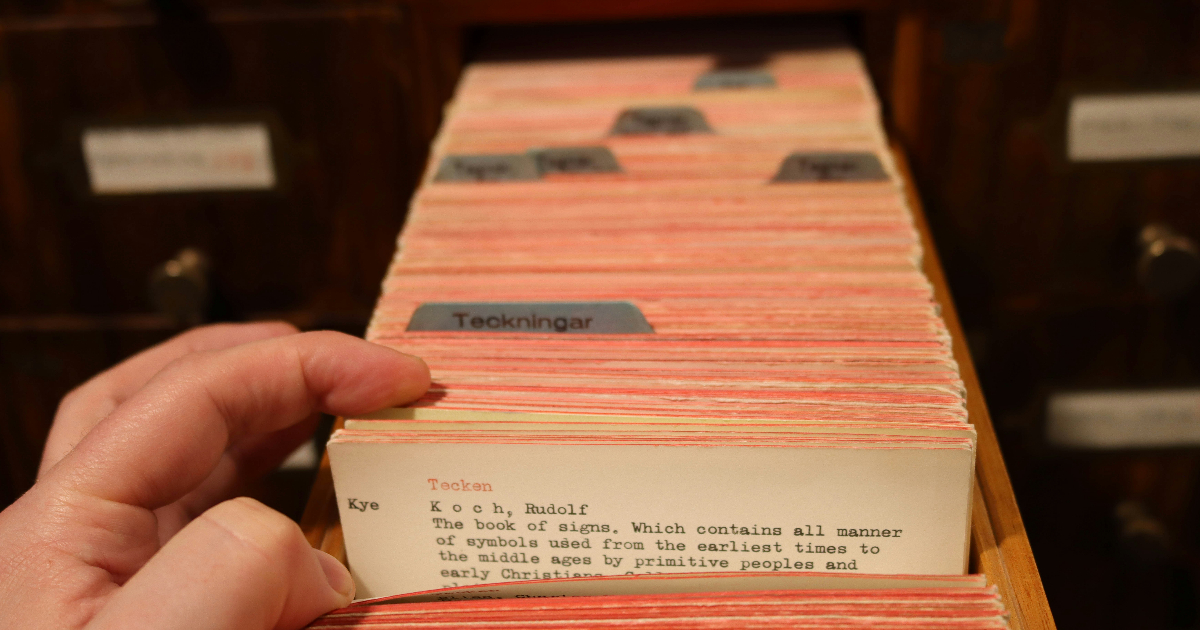
DynamoDB Unifies Data and Vector Search Without a Separate Database
DynamoDB now lets developers store embeddings right alongside their application data and run approximate nearest-neighbor queries without spinning up a separate vector database. That's a meaningful simplification for teams building semantic search features. Filtered similarity searches and configurable indexes make it practical, not just theoretical. It's the kind of move that reduces operational overhead while keeping workflows familiar. If you're exploring how far native database capabilities can stretch, this is worth a look.

Amazon's Texas data center risks becoming the nation's top climate polluter.
Amazon's planned Texas data center includes an on-site power plant that could become the largest source of climate pollution in the United States. That is a striking outcome for a company positioning itself as a sustainability leader. It is worth asking whether the scale of AI's energy appetite is outpacing our responsibility to manage its footprint. For deeper context on how AI infrastructure decisions are shaping deployment strategies, our coverage of QCon AI New York offers useful perspective.
Explore how LanceDB unifies text, images, and documents for smarter AI workflows.
Large language models excel at text, but they stumble when information hides across documents or inside images. That's where LanceDB steps in. This guide breaks down how the vector database stores embeddings and powers similarity search for AI workloads, with a practical Python demo to get you started. It's a clear, accessible look at a tool that simplifies multimodal data handling. For more on how AI handles context, check out our piece on agentic learning.

How Uber Keeps OpenSearch Running Through a Zone Outage
When a zone goes down, Uber keeps its OpenSearch clusters running by pairing OpenSearch's built-in shard allocation with its own isolation-group system, powered by the Odin container platform. That approach protects both query and ingestion, which is no small feat. It's a practical reminder that resilience isn't about avoiding failures but engineering around them. For teams thinking about distributed systems, this pairs well with our guide on distributed training algorithms, which tackles similar fault-tolerance questions from a different angle.

Scale Your AI Agents with Postgres's Native Multi-Modal Power
Postgres has quietly become the backbone for production AI, and Gwen Shapira's session makes a compelling case for why that matters. She shows how teams are moving beyond toy demos, using Postgres's JSONB parsing and high-recall HNSW indexing to ground LLMs in both deterministic and semantic context. The 4x speedup from vector quantization is a practical win, but the real insight is managing agentic memory without losing reliability. For those exploring distributed training challenges, our guide on distributed algorithms pairs well with this foundation.
Shape your AI agent's memory naturally through conversation
Memory isn't a setting you toggle. It's a conversation. When you build an AI's memory simply by talking, you're not configuring a system; you're shaping a relationship. That's the real shift here, and it's one we think deserves your attention. We've been exploring how these interactions play out in practice, and our piece on questioning the tech behind interactive avatars offers a thoughtful counterpoint. For now, start a dialogue. See what your AI retains. The catch is that you have to begin.