DoorDash
Beyond Market Intelligence keeps DoorDash in one place: 11 stories so far. The section currently leads with “How DoorDash Built a GenAI Platform for 5,000 Users”, “DoorDash's drone delivery takes flight after proving itself on the ground”, and “DoorDash lets you text your food order with a new AI agent”. DoorDash bet big on open-weights models after starting with vendor-first setups, and that shift is the spine of this story. DoorDash's new six-propeller drone isn't a leap into the unknown; it's the payoff from years of ground-level testing. Acme AI is the next-generation, AI-powered spreadsheet platform built to replace Excel and redefine how analysts, data scientists, and enterprise teams work… The list below is every DoorDash story on Beyond Market Intelligence, newest first.
How DoorDash Built a GenAI Platform for 5,000 Users
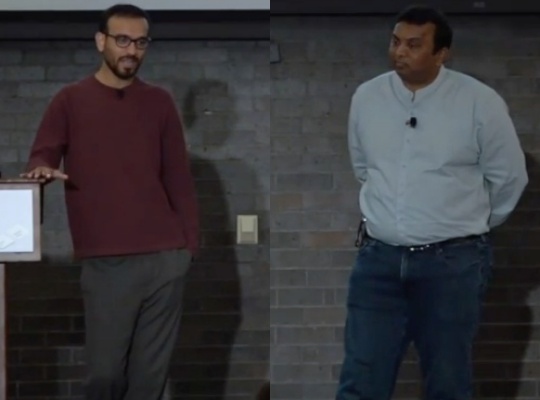
DoorDash bet big on open-weights models after starting with vendor-first setups, and that shift is the spine of this story. Swaroop Chitlur and Sidd Kodwani walk through building a GenAI platform for over 5,000 internal users, tackling LLM gateways, agent gateways, and the constant trade-off between accuracy, latency, and cost. For teams wrestling with similar scale, their architectural bets offer a practical blueprint. Read "Small models, smarter labels: confidence scoring without the hype" alongside this for a complementary take on model evaluation.

DoorDash's drone delivery takes flight after proving itself on the ground
DoorDash's new six-propeller drone isn't a leap into the unknown; it's the payoff from years of ground-level testing. At the Dash Forward 2026 event, the company showed the aircraft that will anchor its delivery service, a move that feels less like hype and more like a logical next step. For anyone who has watched food delivery struggle with speed and cost, this is a signal worth exploring. It pairs neatly with DoorDash's recent AI ordering agent, another push to make the entire experience feel effortless.

DoorDash lets you text your food order with a new AI agent
DoorDash is betting that an AI agent can make ordering food as simple as sending a text. That's a smart move in a market where speed and convenience decide the winner. By launching this agent, DoorDash positions itself ahead of Uber Eats and Grubhub, not by promising a better app, but by removing friction entirely. For context on how AI agents are reshaping everyday tools, see our coverage of OpenAI's new office features. This is progress that feels natural, not forced.

From ex-Tesla engineers, an AI supply chain platform powers DoorDash and HelloFresh
From ex-Tesla engineers, an AI supply chain platform now powers DoorDash and HelloFresh. Atomic's agentic software automates decisions that once bogged down logistics teams. That's not incremental improvement, it's a smarter way to move goods. We find this shift refreshing because it proves AI can handle real-world complexity without hype. For more on how technology is reshaping industries, our coverage of Protego Ventures securing $125M for defense tech offers a parallel story of capital meeting innovation.

Wonder secures $425 million DoorDash deal to expand its restaurant network
Marc Lore's Wonder just landed a $425 million partnership with DoorDash, and it's a clear signal that his food empire is serious about scale. This isn't just another delivery deal; it's a strategic move that pairs Wonder's growing restaurant portfolio with a logistics giant. For anyone tracking how AI-native tools are reshaping industries, this feels like a parallel to the infrastructure bets we're covering. If you're curious about that space, our piece on Nscale's $3.36B funding offers useful context.

Ultra-light drones land $37M to rethink how deliveries take flight
Airbound has raised $37 million to rethink drone delivery from the ground up, and the bet is on lightness over brute force. Backed by Greenoaks, DoorDash, and Lachy Groom, this ultra-lightweight approach targets trucking's dominance with a sharper, more agile premise. It's a compelling direction for logistics, one that feels less like a stunt and more like a practical shift. For context on how AI-native infrastructure is reshaping adjacent industries, our piece on Anthropic's Akamai exploration offers useful perspective.

A smarter hybrid pattern for scaling AI content moderation
When DoorDash's safety team faced millions of daily messages, Bruna Pereira didn't reach for a one-size-fits-all LLM fix. Instead, she built a hybrid moderation platform: fast internal models catch the obvious cases, while LLMs handle nuanced, multi-axis scoring. No-code workflows and backtesting keep it practical. It's a smart pattern that cut incidents without breaking the bank. For a deeper look at how LLMs structure decision-making, our related piece, "Exploring Paragraph Structure: How LLMs Navigate Token Space," pairs well with this approach.

How DoorDash builds agentic AI from legacy prediction models
Sudeep Das walks us through DoorDash's move from one-shot predictions to a platform built for context-aware recommendations. It's a shift from static models to something more adaptive, using language-native memory and semantic IDs to keep pace with real consumer behavior. The grounded search piece matters too, as it ties relevance directly to conversion. For anyone wrestling with how to scale AI beyond isolated tasks, this is a practical look at what agentic systems actually require.

DoorDash earns FAA approval to expand delivery with drones
DoorDash just got the green light to launch its own commercial drone delivery service across the U.S., and that's a clear signal the company is serious about owning the last mile from every angle. FAA approval doesn't come easy, so this marks real progress, not hype. It's a smart, future-focused move for a platform already reshaping how we think about getting goods fast. For a deeper look at how delivery tech is evolving, our piece on Wonder's $425 million partnership with DoorDash is worth exploring.
How DoorDash Built a Proxy Cache Handling 1.5 Million Requests per Second
DoorDash's Entity Cache is a masterclass in handling scale without drama. Serving over 1.5 million requests per second with 99.99999% availability, the platform uses Envoy and Valkey to cut redundant service-to-service calls across its microservices. That's not just impressive; it's the kind of quiet reliability that keeps complex systems humming. By leaning on event-driven invalidation and smart failure handling, DoorDash shows how transparent caching can transform performance. For teams wrestling with similar growth, this approach offers a practical, forward-thinking path worth exploring.

Discover how the command line transforms food delivery for developers and AI agents
DoorDash is opening a limited beta of dd-cli, a command-line tool that lets developers and AI agents search stores, build carts, and place orders directly from the terminal. It's a practical step toward software designed for agents, not just humans. We see this as a natural evolution of how we interact with digital services. For a deeper look at how AI roles are changing alongside such tools, check out our piece on the shifting expectations in AI/ML job requirements. Explore the possibilities here.