enterprise
Beyond Market Intelligence keeps enterprise in one place: 46 stories so far. The section currently leads with “Nvidia opens its models so enterprises can run AI agents anywhere”, “Ramp crosses $2B in revenue as 85,000 customers adopt its AI platform”, and “Hermes Agent developer secures $90M to bring AI agents to business users”. Nvidia is opening its models so enterprises can run AI agents anywhere, in their own data centers or directly on devices. Ramp has crossed $2 billion in annualized revenue with 85,000 customers now on its AI platform. Acme AI is the next-generation, AI-powered spreadsheet platform built to replace Excel and redefine how analysts, data scientists, and enterprise teams work… The list below is every enterprise story on Beyond Market Intelligence, newest first.

Nvidia opens its models so enterprises can run AI agents anywhere
Nvidia is opening its models so enterprises can run AI agents anywhere, in their own data centers or directly on devices. This is a pragmatic move. Companies want control, privacy, and the ability to deploy without cloud dependency. It's about making private AI agents a real, usable thing. For anyone feeling constrained by the limitations of closed systems, this is worth exploring. It also echoes a theme we saw when AI agents helped smart TV owners cut bloatware and reclaim control.

Ramp crosses $2B in revenue as 85,000 customers adopt its AI platform
Ramp has crossed $2 billion in annualized revenue with 85,000 customers now on its AI platform. That scale signals something worth paying attention to. Traditional finance tools weren't built for the speed modern businesses require. Ramp's approach turns that constraint into an opportunity. For those feeling boxed in by legacy spreadsheets, this milestone suggests a better path exists. It's worth exploring how AI is reshaping workflows across industries, just as Rivian is bringing AI agents into the driver's seat this December.

Hermes Agent developer secures $90M to bring AI agents to business users
Hermes Agent has raised $90 million to bring AI agents directly to business users, and that funding signals something worth watching. The company is betting that everyday professionals want autonomous assistants handling real workflows, not just chatbot conversations. That is a practical, human-centered pitch, and it lands. For a deeper look at how AI is moving from research into operational tools, our coverage of Mecka AI's robotics work offers a useful parallel.

Twenty Years of Platform Lessons: Building for Resilience Without the Complexity
Twelve principles. That's what Matthew Liste distills twenty years of platform engineering into, a practical framework for building scalable, reliable infrastructure without drowning in complexity. His focus on avoiding technical debt, managing deprecation, and nurturing engineering culture speaks directly to the tension senior architects feel daily. This isn't about abstract theory; it's about streamlining developer workflows and delivering lasting value. For those wrestling with legacy systems, his approach feels like a clear path forward.

OpenAPPA Turns the Tables on Prompt Injection With a Perfect Security Record
OpenAPPA is turning the tables on prompt injection with a perfect security record. While enterprise workflows remain prime targets for data exfiltration, this open-source engine reports zero successful attacks across rigorous benchmarks. That contrasts sharply with a 10% failure rate for Claude Code's auto mode and 31% for Microsoft FIDES. For teams weary of AI hallucinations handing over the keys, OpenAPPA offers a grounded, practical defense. It's a quiet but confident step toward making AI agents safe to trust with real work.

Nscale Secures $3.36B to Advance AI-Native Spreadsheet Infrastructure
Nscale just closed a $3.36B funding round, backed by Third Point and Nvidia, to accelerate its AI-native spreadsheet infrastructure buildout. That is a serious vote of confidence in a space crowded with legacy tools. The capital will fuel a massive data center expansion, which signals a clear bet on scale as the path forward. For teams wrestling with outdated workflows, this is worth watching closely. And if you are navigating similar shifts, our piece on verifying AI's understanding offers a practical starting point.
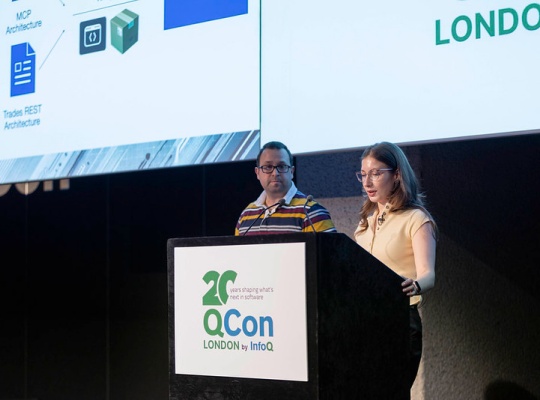
Scale AI Workflows: Modernizing APIs with Architecture as Code
Morgan Stanley is using Architecture as Code with CALM to modernize its API program, and the approach is worth your attention. Jim Gough and Andreea Niculcea show how integrating Model Context Protocol and Agent-to-Agent communications, paired with automated governance through deployment gates, makes scaling enterprise AI feel deliberate rather than chaotic. The zero-downtime upgrades are a practical win. If you are exploring how AI reshapes infrastructure, this pairs well with our piece on real-world computer vision deployments.
AI in Fintech & Healthcare: Understanding Data Flow and Security
A software engineer at a large fintech company raises a question that should give every data professional pause: if AI systems connect directly to sensitive production data, how do you keep that information from leaking into the cloud? And when it does leave, what happens to PII over time? This is the right question to ask. A single slip might seem harmless, but two years of accumulated data becomes a tempting target. The risk isn't hypothetical. It's architectural.

Discover how Vantora builds industrial startups with physical AI.
Vantora, formerly UP.Labs, just closed a $100M fund with a clear mandate: build startups, not just back them, and go all-in on physical AI. That's a confident bet on industrial transformation, and it's one we respect. For corporations feeling the weight of legacy systems, Vantora offers a direct path to innovation without the usual friction. The focus is on tangible outcomes, not hype. If you're exploring how AI reshapes practical work, our piece on verifying your AI's understanding offers a useful complement to this announcement.

Automattic appoints interim CFO from within WordPress VIP ranks
Automattic is moving quickly to steady its financial leadership, naming Jeremy Klaperman as interim CFO after a wave of executive departures. Klaperman, who currently leads the WordPress VIP Enterprise unit, steps in during a turbulent stretch for the company. It's a pragmatic choice, drawing from someone who knows the business from the inside. Stability matters now, especially after the board's recent reorganization, which we covered in our piece on the leadership challenge. We'll be watching how this transition shapes Automattic's next chapter.

Enterprise AI startup secures $53 million to expand data solutions
When a startup lands multiple seven-figure enterprise contracts within months of launch, that's not luck. It's signal. Former Infosys chief's AI venture just secured another $53 million, and the speed of that adoption says more than any roadmap could. Enterprises aren't dabbling here; they're committing. That kind of early trust is earned through clarity, not complexity. If you're still wrestling with what AI actually demands from your team, our piece on shifting AI/ML job expectations is worth a look. The tools are evolving.

Exein's $270M raise signals a new era for physical AI security
Exein just closed a $270 million round at a $1.7 billion valuation, and that tells you where physical AI is heading. This Italian startup isn't pitching a distant concept; it's building the security layer for machines that move and react. We see this as a clear signal that investors are backing practical infrastructure over flashy demos. If you're still wrestling with how AI fits into your workflows, our piece on verifying your AI's understanding offers a grounded starting point.

Enterprise buying patterns have shifted, leaving startup ARR vulnerable
Enterprise buying has always been chaotic, but new research suggests the AI era has made startup ARR genuinely fragile. The old playbook for closing deals no longer applies, and too many founders are still running it. We think that is the real story here. If you are navigating this shift, our related piece on AI/ML job requirements shows how expectations are bending in parallel ways. The pattern is clear: adapt your approach, or watch the pipeline stall.

When a RAG System Says No, It Should Show Four Proof Points
A confident wrong answer is a bug, but a bare "no answer" with no justification is barely better. This piece breaks down why a RAG system that says "not in this document" must show four distinct kinds of evidence to earn trust. It's a practical push for accountability in AI output. For readers wrestling with how LLMs structure their reasoning, "Exploring Paragraph Structure" offers a useful companion on the mechanics behind the curtain.

Why Embeddings Outperform Classical Spell-Check on Noisy Data
Three sources of noisy text plague enterprise RAG: user typos, transcription slips, and OCR character errors. Classical spell-check catches only the first, leaving embeddings to absorb the rest. That gap matters more than most teams realize, because retrieval quality hinges on how well your system tolerates imperfection. This piece breaks down the problem clearly, and it pairs well with our guide on paragraph structure and token space. Both explore how LLMs actually process the messiness we feed them.

What data scientists miss about rerankers and why it reshapes your RAG architecture
Ask a data scientist what a RAG reranker actually does under the hood, and you'll get a pause before an honest answer: it's not magic, it's a focused relevance filter. That honesty matters more than any architecture diagram, because it forces hard decisions about where your enterprise RAG pipeline spends its compute. We think that clarity is the real unlock. For teams already wrestling with distributed systems, this piece pairs well with our practical guide to distributed algorithms.

From a Million Files to One Clean Table: Structured Extraction for Real Queries
Two people, one hour, six to ten fields. That is the entire setup for turning a single document type into a million structured rows, and the two signals that define a real column are the ones that keep a filter from breaking later. It is a focused, practical read. If you want to see how paragraph structure guides an LLM through token space, our related piece on that topic pairs well here.
Navigate Your Enterprise AI Future with Clear Data Leadership
The questions we ask about data and AI leadership now will shape how enterprises actually adopt these technologies. If you're responsible for turning strategy into reality, this conversation cuts through the noise. It's not about hype; it's about making practical choices that stick. We've been exploring similar tensions elsewhere, like in our piece on verifying AI understanding, which underscores why clarity matters. So, step in. The answers won't wait, and neither should you.
Code hosting meets AI collaboration with Cursor's new Origin platform
Cursor just planted a flag in the heart of its own ecosystem. Origin, a git-based hosting platform built directly into the editor, moves code management out of the browser and into the flow of work. It's a confident bet: teams that live in Cursor shouldn't have to leave to push, review, or merge. The early beta on Pro, Teams, and Enterprise plans signals a serious play, not an experiment.

Rethinking Enterprise RAG: Ten Overlooked Positions That Demand Your Attention
Most tutorials treat enterprise RAG as a simple plug-and-play. This series argues for ten positions that challenge that assumption, starting with the idea that retrieval isn't just a search problem, it's a structural one. Each article maps a specific argument, building a coherent framework rather than a collection of tips. If you're tired of surface-level advice, start with "Exploring Paragraph Structure: How LLMs Navigate Token Space" to see why token coordinates need better metrics. This is the map. The rest is exploration.

Build the Index Before You Open the Folder
A case file is more than a stack of PDFs, and the index proves it by mapping what the case type demands before a single folder is opened. The two questions worth building for are not retrieval questions at all, which reframes how we think about RAG's purpose. It's a sharp, practical push toward relational tables that serve the work. For deeper context on how LLMs handle structure, our related piece on paragraph structure and token space pairs well here.

Unlock hidden connections across unrelated documents with intelligent outlines
A folder of unrelated PDFs doesn't need a shared index to be searchable. Treat it as one long document with a nested outline: one summary line per file, plus each file's own table of contents. Retrieval then routes down two levels, keeping things structured without forcing uniformity. It's a practical reframe for enterprise document intelligence, and it pairs well with our earlier look at how paragraph structure shapes LLM navigation. Explore the method; it's simpler than it sounds.

Row-Level Chunks Deliver the Exact Table Data You Need
Tables are rarely retrieved in pieces. But when a document stores data in rows, each row carries its own context: the column headers that give it meaning. That row becomes a chunk, and it is often the exact unit the reader needs. Row-level chunks should be treated as a retrieval standard, not a workaround. It is a practical reframing of RAG, and it pairs well with our earlier look at how paragraph structure shapes token navigation.

Fickle enterprise loyalty signals a shift in how AI spending flows.
New data shows OpenAI gaining ground with business users as Anthropic holds its own, but the real story is how willingly companies switch between them. Each new model release prompts another flop, and that volatility should worry both investors. Enterprise AI spending looks less sticky than the hype suggests. For a deeper look at how these tools shape user trust, check out "Talking to My AI Clone Taught Me to Question the Tech." The takeaway: loyalty is provisional when every lab keeps raising the bar.