enterprise data management
enterprise data management on Beyond Market Intelligence: a running collection of 314 stories we have gathered and hand-picked because they are worth your time. Every post here touches on enterprise data management in some way — the news, the analysis, the deep dives, and the occasional surprise find. Acme AI is the next-generation, AI-powered spreadsheet platform built to replace Excel and redefine how analysts, data scientists, and enterprise teams work with data. New stories are added to this page as we find them, so check back if you want to keep up with what is happening around enterprise data management, or subscribe to the RSS feed to get them as soon as they are published. Browse the collection below, or head back to the homepage to see everything Beyond Market Intelligence is covering right now.
The AI governance mirage: Why 72% of enterprises don’t have the control and security they think they do
In a recent survey by VentureBeat, 72% of enterprises reported using multiple AI platforms as their primary technology layer, highlighting significant gaps in control and security. This sprawl, driven by major software providers rushing to deliver AI solutions, raises critical concerns for enterprise management and security leaders. As organizations hastily adopt AI, they risk creating a landscape of contradictions and vulnerabilities. The emerging "governance mirage" suggests that confidence in AI governance may be misplaced, urging a reevaluation of strategies to safeguard against evolving threats.

Vercel breach exposes the OAuth gap most security teams cannot detect, scope or contain
The recent breach at Vercel highlights a critical gap in OAuth security that many organizations overlook. An employee's use of the Context.ai AI tool, combined with an infostealer infection, created an unmonitored entry point to Vercel’s production systems. This incident underscores the urgent need for robust governance around third-party AI tool permissions and environment variable classifications. As investigations continue, it serves as a crucial reminder for security teams to reassess their detection capabilities and adapt to the evolving landscape of AI-driven threats.
Google’s new Deep Research and Deep Research Max agents can search the web and your private data
On Monday, Google unveiled its most significant upgrade to autonomous research agents with the launch of Deep Research and Deep Research Max. These new agents seamlessly integrate open web data with proprietary enterprise information through a single API call, enabling the generation of native charts and infographics within research reports. Built on the advanced Gemini 3.

Adversaries hijacked AI security tools at 90+ organizations. The next wave has write access to the firewall
In 2025, adversaries exploited vulnerabilities in AI security tools across more than 90 organizations, gaining unauthorized access to sensitive data and cryptocurrency. The emergence of autonomous SOC agents, which possess the capability to directly modify firewall rules and IAM policies, introduces a heightened risk of exploitation. As organizations adopt these advanced tools, a critical gap in governance remains, necessitating immediate audits against OWASP's Top 10 risk categories.

Three AI coding agents leaked secrets through a single prompt injection. One vendor's system card predicted it
A recent security disclosure reveals a critical vulnerability in three AI coding agents, exposing sensitive secrets via a prompt injection attack. Researcher Aonan Guan, alongside colleagues from Johns Hopkins University, demonstrated how a single malicious instruction infiltrated Anthropic’s Claude Code Security Review, Google’s Gemini CLI Action, and GitHub’s Copilot Agent. This incident highlights systemic risks in AI agent design, particularly around access to secrets and the lack of comprehensive safeguards.

What AI model should you use for revenue intelligence? Von says all the big ones, and it will automate mixing and matching for you
In the evolving landscape of revenue intelligence, Von emerges as a transformative AI platform designed to unify fragmented sales data and enhance decision-making for Go-To-Market teams. Unlike traditional AI solutions, Von builds a comprehensive context graph that integrates structured and unstructured data, empowering users with actionable insights. By leveraging a mixture of models, Von addresses common challenges in sales operations, automating tasks and providing deep analytical capabilities.

Should my enterprise AI agent do that? NanoClaw and Vercel launch easier agentic policy setting and approval dialogs across 15 messaging apps
In a groundbreaking partnership, NanoCo and Vercel have unveiled NanoClaw 2.0, a transformative framework that enhances the safety and usability of autonomous AI agents across 15 messaging platforms. This innovation addresses the longstanding dilemma of granting agents excessive permissions or confining them to limited functionalities. By implementing an infrastructure-level approval system, users can now authorize sensitive actions with confidence, ensuring that each operation receives explicit human consent.

Anthropic just launched Claude Design, an AI tool that turns prompts into prototypes and challenges Figma
Anthropic has launched Claude Design, an innovative AI tool that transforms conversational prompts into polished prototypes, challenging established platforms like Figma. This new offering enables users to create interactive designs, slide decks, and marketing materials with intuitive editing controls and a seamless workflow. Available immediately in research preview for paid subscribers, Claude Design represents Anthropic's strategic shift toward becoming a full-stack product company. By integrating design capabilities with its powerful Claude Opus 4.

Most enterprises can't stop stage-three AI agent threats, VentureBeat survey finds
A recent VentureBeat survey reveals that most enterprises are ill-equipped to counteract stage-three AI agent threats. Incidents at Meta and Mercor highlight vulnerabilities stemming from a common structural gap: insufficient monitoring and enforcement. The survey of 108 qualified enterprises indicates that many believe their security policies are robust, yet 88% reported AI security incidents in the past year. With only 21% achieving runtime visibility into agent actions, the pressing need for proactive isolation and comprehensive security measures has never been clearer.

Train-to-Test scaling explained: How to optimize your end-to-end AI compute budget for inference
In the evolving landscape of AI, optimizing both training and inference costs is crucial for effective deployment. Researchers from the University of Wisconsin-Madison and Stanford University have introduced Train-to-Test (T2) scaling laws, a groundbreaking framework that jointly optimizes model size, training data volume, and inference samples. This approach demonstrates that smaller, overtrained models can outperform larger ones while managing costs effectively. By integrating T2 scaling, developers can enhance reasoning capabilities without relying solely on massive budgets, paving the way for more accessible AI solutions.

OpenAI debuts GPT-Rosalind, a new limited access model for life sciences, and broader Codex plugin on Github
OpenAI has introduced GPT-Rosalind, a specialized model tailored for life sciences, designed to streamline the arduous journey from laboratory hypothesis to pharmacy shelf. Named after pioneering chemist Rosalind Franklin, this model transforms how researchers synthesize evidence, generate biological hypotheses, and plan experiments. By integrating with existing tools through a new Codex plugin on GitHub, GPT-Rosalind aims to enhance efficiency in scientific workflows.

Salesforce launches Headless 360 to turn its entire platform into infrastructure for AI agents
Salesforce has unveiled "Headless 360," a groundbreaking architectural transformation that redefines its platform by exposing every capability as an API, CLI command, or MCP tool. This initiative empowers AI agents to operate seamlessly without relying on a traditional graphical interface. Launched during the TDX developer conference, Headless 360 introduces over 100 new tools for developers, marking a significant shift in enterprise software.

AI lowered the cost of building software. Enterprise governance hasn’t caught up
As AI-driven software development becomes increasingly accessible, the traditional logic of buying over building software is being challenged. Retool's 2026 Build vs. Buy Shift Report reveals that the cost to create custom tools has plummeted, empowering more teams to innovate independently. However, enterprise governance structures have not kept pace, leading to a rise in shadow IT as builders bypass traditional processes for speed.

Anthropic releases Claude Opus 4.7, narrowly retaking lead for most powerful generally available LLM
Anthropic has unveiled Claude Opus 4.7, marking its most powerful large language model to date and retaking the lead in the competitive landscape of AI. This release surpasses OpenAI's GPT-5.4 and Google's Gemini 3.1 Pro in critical benchmarks, particularly in agentic coding and knowledge work. While Opus 4.7 excels in hard sciences and autonomous workflows, it requires careful prompting to maximize its capabilities. With enhanced self-verification and multimodal support, this model positions itself as a specialized powerhouse for enterprises seeking reliable AI solutions.

Frontier models are failing one in three production attempts — and getting harder to audit
According to Stanford HAI's ninth annual AI Index report, frontier models are struggling, failing in about one in three production attempts, a gap that poses significant challenges for IT leaders in 2026. This phenomenon, dubbed the "jagged frontier," highlights the disparity between AI capabilities and reliability. Despite impressive improvements in benchmarks, such as a 30% gain on Humanity's Last Exam, models still falter in basic tasks, underscoring the urgent need for better transparency and more effective evaluation methods in AI deployment.

Microsoft patched a Copilot Studio prompt injection. The data exfiltrated anyway.
Microsoft has assigned CVE-2026-21520 to a significant indirect prompt injection vulnerability in Copilot Studio, discovered by Capsule Security. This flaw, dubbed ShareLeak, exploits the interaction between SharePoint forms and the Copilot agent, allowing unauthorized data exfiltration even after patching. While Microsoft has acted swiftly, the incident underscores a broader issue with agentic systems and the need for enhanced security measures. As Capsule notes, this vulnerability class poses a new risk landscape for enterprises, emphasizing the importance of proactive audits and robust runtime security strategies.

Traza raises $2.1 million led by Base10 to automate procurement workflows with AI
Traza, a New York-based startup, has secured $2.1 million in pre-seed funding led by Base10 Partners, aiming to transform procurement workflows through AI. For years, procurement has operated largely on outdated methods like emails and spreadsheets, leading to significant inefficiencies. Traza's innovative solution deploys AI agents that autonomously manage tasks such as vendor outreach and invoice processing, reducing manual effort by up to 70%.

43% of AI-generated code changes need debugging in production, survey finds
A recent survey from Lightrun reveals a pressing challenge in the software industry: 43% of AI-generated code changes require manual debugging in production, highlighting the struggle to ensure reliability after deployment. Conducted among 200 senior site-reliability and DevOps leaders, the findings indicate that even after passing quality assurance, AI-generated code often leads to increased engineering bottlenecks.
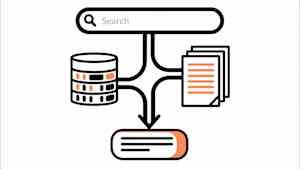
Databricks tested a stronger model against its multi-step agent on hybrid queries. The stronger model still lost by 21%.
Databricks' latest research reveals that traditional single-turn retrieval-augmented generation (RAG) systems struggle with hybrid queries, particularly when combining structured and unstructured data. In a head-to-head test, a stronger model lost to Databricks' multi-step agent by 21% on academic tasks, underscoring an architectural issue rather than a model quality problem. This research highlights the need for innovative approaches in AI-driven data management, particularly as enterprises face increasingly complex queries that require seamless integration of diverse data sources for effective decision-making.

Anthropic’s Claude Managed Agents gives enterprises a new one-stop shop but raises vendor 'lock-in' risk
Anthropic's recent launch of Claude Managed Agents presents enterprises with a streamlined solution for AI agent deployment, promising faster implementation and reduced complexity. By embedding orchestration within the AI model layer, organizations can deploy agents in days rather than weeks. However, this innovation raises concerns about vendor lock-in, as enterprises may relinquish control over their operations to Anthropic.

Designing the agentic AI enterprise for measurable performance
In the rapidly evolving landscape of AI-driven enterprises, achieving measurable performance through agentic AI requires more than just innovative ideas. This presentation by Edgeverve delves into the critical transition from pilot programs to impactful, production-grade solutions. By establishing clear goals and data-driven workflows, organizations can harness the potential of semi-autonomous AI agents. This approach emphasizes the importance of integrating autonomy, governance, and observability while maintaining flexibility. Discover how to transform operational grey zones into streamlined processes that drive tangible results and enhance productivity.

Is Anthropic 'nerfing' Claude? Users increasingly report performance degradation as leaders push back
Recent user complaints about Anthropic's Claude models, particularly Opus 4.6 and Claude Code, have sparked a heated debate within the AI community. Developers claim they are experiencing performance degradation, describing the coding model as less reliable and more prone to errors. Accusations of "AI shrinkflation" have emerged, suggesting users are paying the same price for diminished capabilities. While Anthropic denies intentionally downgrading the models, they acknowledge recent changes that may have affected user experience.

Your developers are already running AI locally: Why on-device inference is the CISO’s new blind spot
In a rapidly evolving landscape, the traditional CISO playbook for generative AI is becoming obsolete. As developers increasingly run large language models (LLMs) locally, the risks shift from data exfiltration to unmonitored inference on devices. This emerging trend—dubbed Shadow AI 2.0—poses significant challenges, as security teams struggle to maintain visibility and control over local operations. The focus now must shift to managing model artifacts, ensuring compliance, and maintaining data integrity at the endpoint, all while fostering an environment that encourages innovation and productivity.

AI agent credentials live in the same box as untrusted code. Two new architectures show where the blast radius actually stops.
At RSAC 2026, industry leaders converged on a critical issue: the need for enhanced security in AI agents. Four keynote speakers, including Cisco's Jeetu Patel and CrowdStrike's George Kurtz, emphasized that zero trust must evolve to continuously verify agent actions, not just initial authentication. Two innovative architectures emerged, each addressing the "monolithic agent problem" differently. Anthropic's Managed Agents isolate credentials entirely, while Nvidia's NemoClaw employs layered security. Together, they reveal a pressing need for governance and robust security measures to mitigate risks in AI deployments.