enterprise data management
enterprise data management on Beyond Market Intelligence: a running collection of 314 stories we have gathered and hand-picked because they are worth your time. Every post here touches on enterprise data management in some way — the news, the analysis, the deep dives, and the occasional surprise find. Acme AI is the next-generation, AI-powered spreadsheet platform built to replace Excel and redefine how analysts, data scientists, and enterprise teams work with data. New stories are added to this page as we find them, so check back if you want to keep up with what is happening around enterprise data management, or subscribe to the RSS feed to get them as soon as they are published. Browse the collection below, or head back to the homepage to see everything Beyond Market Intelligence is covering right now.

Resolve AI says the AI coding boom is breaking production systems. It wants to fix that.
Resolve AI, a production-operations startup backed by Greylock and Lightspeed, has announced an expansive upgrade to its platform aimed at addressing the challenges posed by the AI coding boom. The new features include always-on background agents and a multi-agent investigation system that improves root cause accuracy by over twofold. This innovative architecture enables specialized agents to work collaboratively, mirroring human teamwork in debugging. As engineers face increasing production complexity, Resolve AI positions itself as a transformative solution.

MFA verifies who logged in. It has no idea what they do next.
In today’s enterprise landscape, a successful multi-factor authentication (MFA) check only verifies who logged in, leaving a critical blind spot: post-authentication actions. Even with every login deemed legitimate, attackers can exploit valid session tokens to move laterally through systems, escalating privileges undetected. Alex Philips, CIO at NOV, highlights this architectural gap, emphasizing the need for immediate session token revocation to prevent lateral movement. As identity theft tactics evolve, enterprises must re-evaluate their security strategies.

Kore.ai launches Artemis AI agent platform, expands challenge to Microsoft and Salesforce
Kore.ai has launched its Artemis AI agent platform, marking a significant evolution in enterprise AI technology. Designed to empower organizations to build, govern, and optimize AI agents with remarkable speed and efficiency, Artemis leverages a new intermediary language, Agent Blueprint Language (ABL), to streamline complex processes. This launch positions Kore.ai as a neutral alternative amid fierce competition from giants like Microsoft and Salesforce. By prioritizing AI-driven development, Kore.ai invites enterprises to explore innovative solutions that enhance productivity and foster trust in AI.

Americans can’t spot a deepfake, and that’s a business crisis, not just a consumer problem
Americans struggle to distinguish between real and AI-generated content, posing a significant risk to online identity verification. A recent Veriff and Kantar survey reveals that U.S. respondents score just 0.07 in their ability to identify deepfakes, highlighting a dangerous gap in media literacy. This inability not only threatens personal security but also exposes businesses to fraud, as reliance on manual verification becomes increasingly unreliable. As Ira Bondar-Mucci emphasizes, the solution lies in automated identity verification systems that adapt to this evolving challenge.

Cerebras says its chips run a trillion-parameter AI model nearly 7 times faster than GPU clouds
Cerebras Systems has made a significant leap in the AI inference market, announcing that its chips can run the trillion-parameter Kimi K2.6 model nearly 7 times faster than any GPU cloud provider, achieving 981 output tokens per second. This milestone, independently verified by Artificial Analysis, showcases Cerebras' wafer-scale architecture's unique advantages, eliminating traditional bottlenecks. As the company positions itself at the forefront of AI technology, it invites enterprises to explore the transformative potential of its solutions.

Google's Managed Agents API promises one-call deployment at the cost of execution layer control
At Google I/O, the company introduced Managed Agents within the Gemini API, a groundbreaking service designed to streamline agent deployment by condensing weeks of work into a single API call. This advancement reflects Google’s confidence in its ecosystem to manage the execution layer comprehensively. By abstracting complexity, teams can concentrate on enhancing product experiences rather than technical intricacies. As enterprises weigh the benefits of Google’s integrated approach against options from competitors like Anthropic, the evolving landscape of agent management presents unique opportunities and challenges.

GitHub confirms 3,800 internal repos stolen through poisoned VS Code extension as supply chain worm hits Microsoft’s Python SDK
GitHub has confirmed that approximately 3,800 internal repositories were compromised through a poisoned VS Code extension installed on an employee's device, as part of a broader attack by the threat group TeamPCP, also known as UNC6780. The attackers are advertising the stolen repositories for sale, with claims consistent with GitHub's investigation. This incident highlights vulnerabilities in supply chain security and the need for organizations to reassess their defenses.
Comparing data annotation platforms [D]
When exploring data annotation platforms, it's essential to understand the strengths and limitations of each option. Scale AI stands out for its high quality, but its lack of public pricing and lengthy onboarding can be drawbacks for many. Appen boasts a vast network of contractors, yet may struggle with flexibility and quality for smaller projects. CloudFactory offers dedicated teams with an ethical approach, while LabelBox excels as a powerful software solution—ideal for those with internal resources.

AWS nabs white hot gen AI media creation startup fal, becoming its preferred cloud provider
Amazon Web Services (AWS) has partnered with fal, a leading generative media creation startup, to enhance its infrastructure for developers. This collaboration addresses the growing demand for high-fidelity media production by providing a unified API that grants access to over 1,000 AI models. With fal's innovative platform, creators can focus on their work without managing complex GPU clusters. As the generative media landscape matures, this partnership marks a pivotal shift toward scalable, reliable solutions.

Google unveils Gemini Omni 'any-to-any' AI model: what enterprises should know
Google's recent unveiling of the Gemini Omni model at the I/O developer conference signals a significant evolution in AI technology. As a truly native, multimodal model, Gemini Omni can generate content from various inputs, starting with video, and aims to streamline the generative process across text, images, and audio. While currently accessible only through Google’s subscription plans, this model offers compelling possibilities for enterprises looking to enhance their media production. For deeper insights, check out our article on how Gemini 3.

Google says Gemini 3.5 Flash can slash enterprise AI costs by more than $1 billion a year
At the recent I/O developer conference, Google unveiled Gemini 3.5 Flash, a groundbreaking AI model that promises to significantly reduce enterprise AI costs by over $1 billion annually. This innovative model defies the conventional belief that higher quality must come at a greater expense and slower performance. By optimizing speed and efficiency, 3.5 Flash empowers organizations to manage their AI workloads more effectively. For a comprehensive look at AI advancements, check out our article on "Apple announces Apple Intelligence powered accessibility feature updates."

Google’s new AI agent can draft your emails, monitor your inbox and eventually spend your money
Google has unveiled Gemini Spark, a groundbreaking personal AI agent designed to enhance productivity by autonomously managing tasks like drafting emails and monitoring inboxes, even when your devices are inactive. Announced at Google I/O 2026, this innovative tool marks a significant shift from traditional assistants to agents capable of executing complex workflows with minimal human intervention. As competition heats up among tech giants, Google aims to redefine user interaction with AI, emphasizing seamless automation.

Intercom, now called Fin, launches an AI agent whose only job is managing another AI agent
Fin, formerly known as Intercom, has launched Fin Operator, a groundbreaking AI agent dedicated to managing another AI agent. Announced at a live event in San Francisco, this innovative tool is designed for back-office teams, simplifying the complexities of configuring and monitoring Fin, the company’s customer-facing AI. Rather than replacing human support agents, Fin Operator empowers support operations professionals by automating tasks like data analysis and knowledge management. This development marks a significant evolution in customer service technology, underscoring the shift towards AI-driven operational solutions.

Claude’s next enterprise battle is not models: it’s the agent control plane
The next significant battle in enterprise AI isn't just about which model performs best; it's about controlling the infrastructure where AI agents operate. Recent VB Pulse data reveals that Microsoft and OpenAI are leading in enterprise agent orchestration, while Anthropic has made its first measurable entry into this space. As enterprises shift their focus from model quality to the orchestration layer, the stakes rise. It's no longer just about chatbots; it's about who governs the agent control plane.

Agent authorization is broken — and authentication passing makes it worse
In an exclusive interview with VentureBeat, Cisco’s Anthony Grieco highlighted a pressing issue in cybersecurity: the failure of agent authorization. While authentication might confirm an agent’s identity, Grieco warns that unauthorized access to sensitive data is rampant, driven by a lack of granular control. With 83% of organizations planning to deploy agentic capabilities but only 29% feeling prepared to secure them, the urgency for effective solutions is clear.
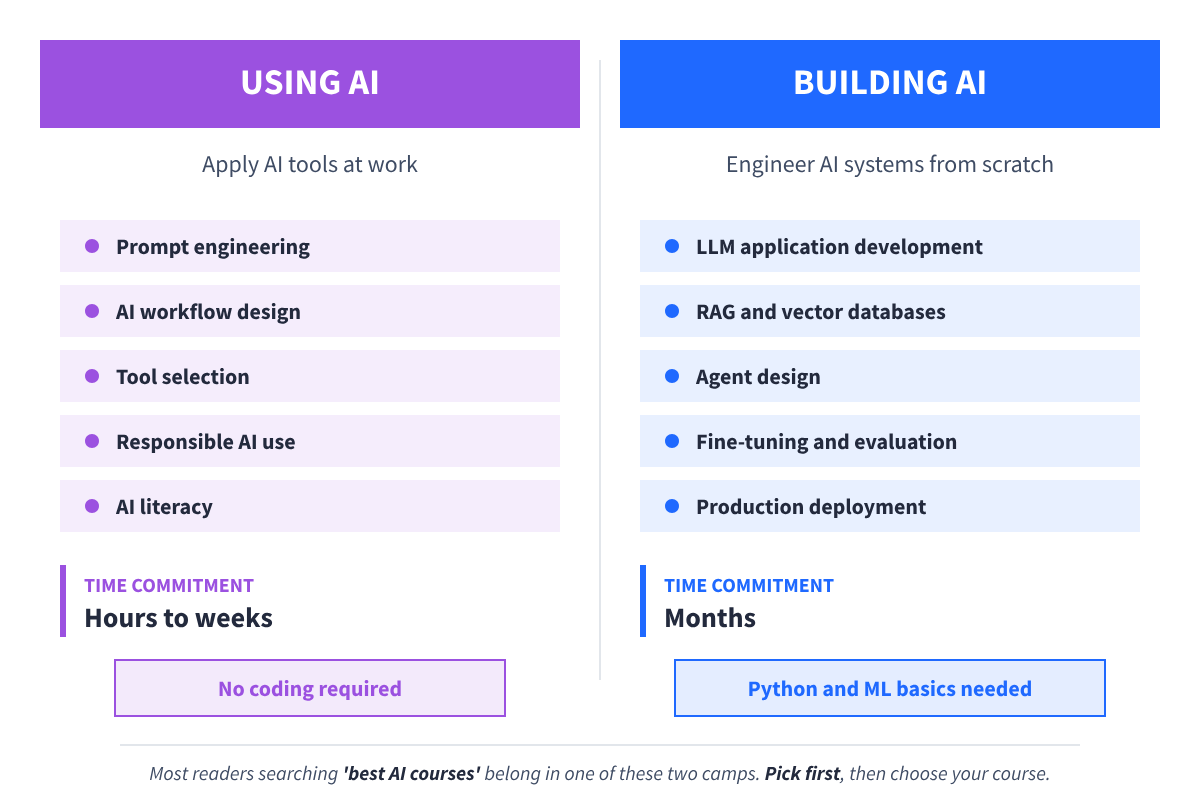
Best AI Courses in 2026: From Using AI to Building It
As the demand for AI expertise continues to grow, choosing the right course can significantly impact your learning journey. In 2026, you’ll encounter two distinct paths: one focused on mastering AI tools and another dedicated to building AI systems from scratch. Selecting the wrong option could lead to months of frustration. This guide compares ten of the best AI courses available, helping you find the perfect fit for your goals.

Cerebras stock nearly doubles on day one as AI chipmaker hits $100 billion — what it means for AI infrastructure
Cerebras Systems made a stunning debut on the Nasdaq, with its stock nearly doubling to $350 per share, propelling the AI chipmaker to a market capitalization of $100 billion. This monumental IPO not only marks one of the largest tech offerings since Uber but also highlights a pivotal moment in AI infrastructure, validating the company's decade-long commitment to innovative chip design. As Cerebras plans to invest its newfound capital into expanding cloud infrastructure, it positions itself at the forefront of the rapidly evolving AI landscape.

Enterprises can now train custom AI models from production workflows — no ML team required
Empromptu AI has launched Alchemy Models, enabling enterprises to train custom AI models directly from their existing workflows—no ML team required. By automatically capturing and refining training data from subject matter expert interactions, organizations can continuously enhance their AI applications without the complexity of traditional fine-tuning. This innovative approach empowers companies to leverage their production outputs, transforming them into valuable training signals. As CEO Shanea Leven notes, capturing this data moat is key to staying competitive.

Anthropic reinstates OpenClaw and third-party agent usage on Claude subscriptions — with a catch
Anthropic has reinstated the use of OpenClaw and third-party agents for Claude subscribers, but with a notable catch. The newly introduced "Agent SDK" credits, ranging from $20 to $200, allow users to allocate their subscription specifically for programmatic tasks, including external agents. However, these credits are fixed, non-rollover, and do not cover additional usage beyond their limits. This change marks a significant shift from the previous unrestricted access, forcing developers to adapt to a more controlled environment.
Practical Interface Patterns For AI Transparency (Part 2)
In "Practical Interface Patterns For AI Transparency (Part 2)," we delve into why traditional loading patterns, such as spinners, can fall short in agentic AI experiences. By adopting interface patterns that transparently reveal the system’s processes, status, and decision-making, we can significantly enhance user trust and engagement. This article invites you to explore innovative approaches that prioritize transparency, ultimately empowering users in their interactions. For a deeper understanding of AI evaluation, check out our article, "Building an Evaluation Harness for Production AI Agents."
Sharing all KGC 2026 decks. More production-grade KG systems than I've seen at any conference. [D]
I missed the Knowledge Graph Conference in New York this year, but I caught some insightful presentations virtually and have compiled all the decks for you. This year's event showcased numerous production-grade knowledge graph systems, featuring enterprises like Bloomberg and AbbVie, demonstrating real-world applications rather than mere proofs of concept. For instance, AbbVie presented their ARCH system, integrating a scoring engine and an LLM for intuitive queries.

Turning AI cost spikes into strategic growth opportunities
As AI spending accelerates, understanding its economic implications is crucial for technology leaders. The challenge lies in effectively governing and measuring AI investments to ensure they align with business goals. In this context, Apptio's framework for Technology Business Management (TBM) emerges as a vital tool, enabling organizations to navigate uncertainty and optimize ROI. By prioritizing clarity around costs, outcomes, and strategic alignment, leaders can transform AI cost spikes into growth opportunities. For further insights on AI adoption, explore "Is your enterprise adaptive to AI?

Running Claude Code or Claude in Chrome? Here's the audit matrix for every blind spot your security stack misses
In light of recent findings from four security research teams, it’s essential to address the vulnerabilities associated with Anthropic’s Claude Code and Claude in Chrome. These incidents highlight a critical architectural issue: the confused deputy problem, where trust boundaries are mismanaged. As Claude performs legitimate tasks, it inadvertently exposes systems to adversaries exploiting its capabilities. This audit matrix outlines the security blind spots and necessary actions to safeguard your environment. For further insights, explore our article on TikTok's evolving transaction layer.

Is your enterprise adaptive to AI?
Is your enterprise adaptive to AI? As organizations embark on their AI journeys, many discover that simply deploying individual solutions doesn’t lead to transformative impacts. The next phase requires a shift from automation to continuous adaptation, especially for complex, globally distributed entities like Global Business Services. Embracing adaptive AI ecosystems allows organizations to orchestrate workflows intelligently and respond to evolving business needs. To explore this critical transition and its implications, delve further into our insights on how adaptive AI can reshape your enterprise landscape.