Europe
Beyond Market Intelligence keeps Europe in one place: 11 stories so far. The section currently leads with “Germany backs Tesla's assisted driving rebrand for wider EU adoption”, “Lucid Explores European Robotaxi Future with Mobility Platform Bolt”, and “NeurIPS venue logistics raise questions about author access and choice”. Germany's transport minister sees the name change as enough of a step forward to push for Europe-wide adoption of Tesla's assisted driving software. Lucid's move to explore a European robotaxi future with Bolt signals a deliberate, measured step into autonomous mobility. Acme AI is the next-generation, AI-powered spreadsheet platform built to replace Excel and redefine how analysts, data scientists, and enterprise teams work… The list below is every Europe story on Beyond Market Intelligence, newest first.

Germany backs Tesla's assisted driving rebrand for wider EU adoption
Germany's transport minister sees the name change as enough of a step forward to push for Europe-wide adoption of Tesla's assisted driving software. That's a pragmatic move, one that treats clarity as a gateway rather than a concession. It acknowledges that what we call a tool shapes how we trust it. For anyone exploring how AI is redefining everyday workflows, this rebrand signals a practical shift, one worth watching closely.

Lucid Explores European Robotaxi Future with Mobility Platform Bolt
Lucid's move to explore a European robotaxi future with Bolt signals a deliberate, measured step into autonomous mobility. The partnership is promising, but the lack of vehicle orders shows this is an early exploration, not a sprint. That's the right approach. Pairing Lucid's engineering with Bolt's ride-hailing reach could reshape urban transit, yet patience will define success. For more on how autonomy is spreading, our piece on Waymo opening robotaxis to teens in Nashville offers a useful contrast.
NeurIPS venue logistics raise questions about author access and choice
The Sydney pass sellout exposed a fairness gap that deserves real scrutiny. NeurIPS asked authors to select a preferred venue, yet that choice apparently guarantees nothing. If Sydney becomes the "main" location while other sites get treated as afterthoughts, we're not solving logistical problems; we're creating a tiered experience. The better approach seems obvious: distribute the conference experience evenly across all locations. Otherwise, we're asking unlucky attendees to accept a diminished experience simply because demand outpaced supply. That's not a strategy, it's an accident.
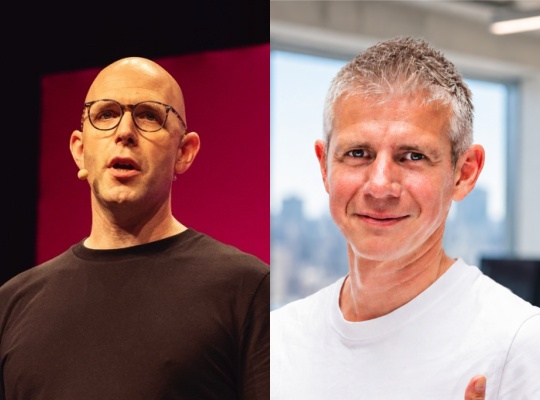
Three Clouds, One Architecture: Engineering Resilient Financial Systems
Form3's journey from a single cloud to a triple active multi-cloud architecture is a masterclass in practical engineering. Ross McFarlane and Kevin Holditch don't just walk through cross-cloud networking and distributed databases with CockroachDB and NATS; they tackle the messy reality of regional disaster recovery expectations across the UK, Europe, and US markets. It's a grounded look at complexity done right. For a deeper dive into scaling infrastructure, our piece on Modal's sandbox rebuild offers a useful parallel.

Explore how TechBBQ reframed human agency in the age of AI.
At TechBBQ, the question hung in the air long after the panels ended: who is actually in control of AI? Investors, founders, and operators from across Europe gathered to confront this head-on, trading the usual product hype for a sharper focus on human agency. It's a refreshing pivot. We're moving past what AI can do and toward how we steer it. For a deeper look at how we can verify these systems, our piece "Verify Your AI's Understanding" offers a practical starting point.

Sweden's startup ecosystem thrives through focus, collaboration, and resilience
Sweden's startup scene keeps surprising, and Sophia Bendz, general partner at Cherry Ventures, stopped by Equity to explain why. She's got a front-row seat to how the country turned its tech talent and collaborative culture into one of Europe's most dynamic ecosystems. It's not just about the big wins; it's the steady, deliberate groundwork that makes the difference. For more on how global money is moving, check out "Lightspeed Accelerates India AI Investments with New $250M Fund."

Stockholm's AI surge shows how smart tools build real momentum
Lovable just raised $400 million at a $13.3 billion valuation, roughly doubling its worth in eight months. That's not a fluke; it's a signal. Stockholm is minting momentum across sectors, from Legora's legal AI to Neko Health's ambitious care model. On the latest Equity episode, Sophia Bendz joins us to unpack what's fueling this wave. For a grounded counterpoint on where this tech leads us, revisit "Talking to My AI Clone Taught Me to Question the Tech."

Uber's €825M GDPR fine signals new accountability for automated systems
Uber's latest regulatory headache is a big one: the Dutch Data Protection Authority has slapped the ride-hailing giant with a €825 million fine, the second largest ever issued under Europe's GDPR. The penalty stems from automated driver suspensions, a practice that clearly clashes with the transparency and fairness Europe demands. For a company built on data, this is a stark reminder that automation without human oversight carries real costs. It's a bold move, and one that signals regulators are watching closely.

Waymo expands Dallas robotaxi access, inviting more riders to explore autonomous travel
The waitlist is gone. Waymo has opened its robotaxi service to everyone in Dallas, a decisive move in its push to scale self-driving technology across the U.S., U.K., and Europe. This isn't just another city launch; it's a signal that the company believes its system is ready for broader, unscripted use. We're watching a deliberate expansion, not a test. For a deeper look at how this momentum fits into the wider investment surge, check out our piece on AI-native companies driving major capital interest.

A European media network raises $1.6 million to expand its live show format.
Europe just got its own TBPN-style live show, and the guest list is already competitive. On Monday, the network locked in a $1.6 million seed round backed by Powerhouse Capital, Axel Springer SE, LadBible, and angel investors from OpenAI and DeepMind. That firepower signals serious momentum. With this fresh capital, the network is rolling out its largest expansion yet. It's a confident move that invites discovery, not hype.

OnePlus pauses global expansion, signaling a shift in smartphone strategy
OnePlus is pulling back from the U.S. and European markets, and its Indian operations could wind down by 2027. That's a significant retreat for a brand once known for flagship value. It signals how brutal the global phone market has become. For users, it's a reminder to weigh longevity when choosing a device. If you're exploring alternatives, our piece on a smartphone option for intentional living offers a thoughtful counterpoint. Change is coming, and it's worth watching where it lands.