fraud
Beyond Market Intelligence keeps fraud in one place: 18 stories so far. The section currently leads with “Nathan Fielder's new documentary turns Elizabeth Holmes' story into a mirror on authenticity”, “AI agents go undercover to learn how scammers operate from the inside”, and “Explore thousands of real trial documents from Elizabeth Holmes's own desk”. Nathan Fielder turns Elizabeth Holmes' story inside out, using documentary form to ask a question most biopics dodge: what does authenticity even mean when everyone is performing? Acme AI is the next-generation, AI-powered spreadsheet platform built to replace Excel and redefine how analysts, data scientists, and enterprise teams work… The list below is every fraud story on Beyond Market Intelligence, newest first.

Nathan Fielder's new documentary turns Elizabeth Holmes' story into a mirror on authenticity
Nathan Fielder turns Elizabeth Holmes' story inside out, using documentary form to ask a question most biopics dodge: what does authenticity even mean when everyone is performing? By colliding his own persona with Holmes' carefully constructed one, he creates a mirror for our era. For readers tracking how technology reshapes behavior, our piece on Jensen Huang's shift toward **AI agents** offers a parallel exploration of performance and trust across industries.

AI agents go undercover to learn how scammers operate from the inside
Most companies deploy AI agents to ship products faster. Apate.ai sends them undercover to get scammed. The agents embed themselves inside fraudulent operations, learning how scammers work from the inside. It's a clever inversion of the technology's usual role, not acceleration, but observation. The approach is practical and human-centered: understanding the enemy before building defenses. For a deeper look at how disciplined engineering shapes AI behavior, our piece on giving AI-generated code room to grow pairs naturally with this work.

Explore thousands of real trial documents from Elizabeth Holmes's own desk
A single desk can hold a thousand stories, and Bo Lau's digital recreation of Elizabeth Holmes's workspace proves it. Built from over a thousand emails, slides, and texts used in the United States v. Elizabeth Holmes trial, the site lets you sift through the Theranos founder's own materials firsthand. It's a rare, unfiltered look at a historic case. For more on how tech founders navigate scrutiny, our coverage of Mecka AI's recent $60M round offers useful contrast.

A fictionalized Bankman-Fried arrives on Netflix November 19
A former crypto mogul turned convicted fraudster gets the dramatic treatment. *Fictionalized Bankman-Fried* arrives on Netflix November 19, promising a look inside a spectacular collapse. We are curious how the series balances the human story with the sheer scale of the deception. For those drawn to the mechanics of a real-world fraud, explore thousands of trial documents from the Elizabeth Holmes case.

A CIA officer forged a fake spy program to steal $190M in cash and gold
David Rush spent years handling highly sensitive intelligence programs, then used that access to invent a fake spy operation and steal $190 million in cash and gold. The CIA officer's scheme collapsed when prosecutors caught up with him, leading to a plea deal that exposes how trust inside the agency can be weaponized. It's a sobering reminder that insider threats often outpace external ones. For more on how fraudsters exploit trust, our coverage of Modulate's deepfake detection work offers a timely parallel.

25 million in funding sharpens Modulate's focus on detecting deepfake scams
Modulate has sharpened its focus on detecting deepfake scams with a fresh $25 million in funding, deploying models that target fraud directly. This isn't abstract theory, it's a response to real threats that already victimize real people. We've covered how one founder's personal story drove her to launch DetectifAI after a grandfather was scammed by a deepfake voice. Modulate's approach feels like the next logical step: putting AI to work guarding against the very dangers AI can create.

Talking to My AI Clone Taught Me to Question the Tech
Spending time with an AI clone trained to discuss venture fraud leaves you unsettled in the best way. It's one thing to theorize about digital doubles; it's another to watch one mirror your reasoning. The experience forces a hard look at how much we trust automated versions of ourselves. We should question that comfort. It isn't about rejecting the tech but about demanding clarity in how we build and use it.

Revolut confirms data breach via fraudulent government data requests
Revolut has confirmed a customer data breach tied to fake government requests, and it's already notified those affected along with regulators and law enforcement. That's the right first step, but it's a stark reminder that even well-defended platforms can be probed through social engineering. We've seen similar pressures elsewhere, like the AI agents sharing user images in OpenAI's research environment. These moments should push us to demand stronger verification processes across the board.

Trezor's second breach exposes crypto users to targeted phishing attacks
Another data breach, another wave of risk for crypto owners. Trezor has confirmed that scammers are now targeting hundreds of thousands of users after a security incident at their email provider. This marks the second time a breach has impacted the hardware wallet maker's third-party infrastructure. It's a stark reminder that your assets are only as safe as every link in the chain.
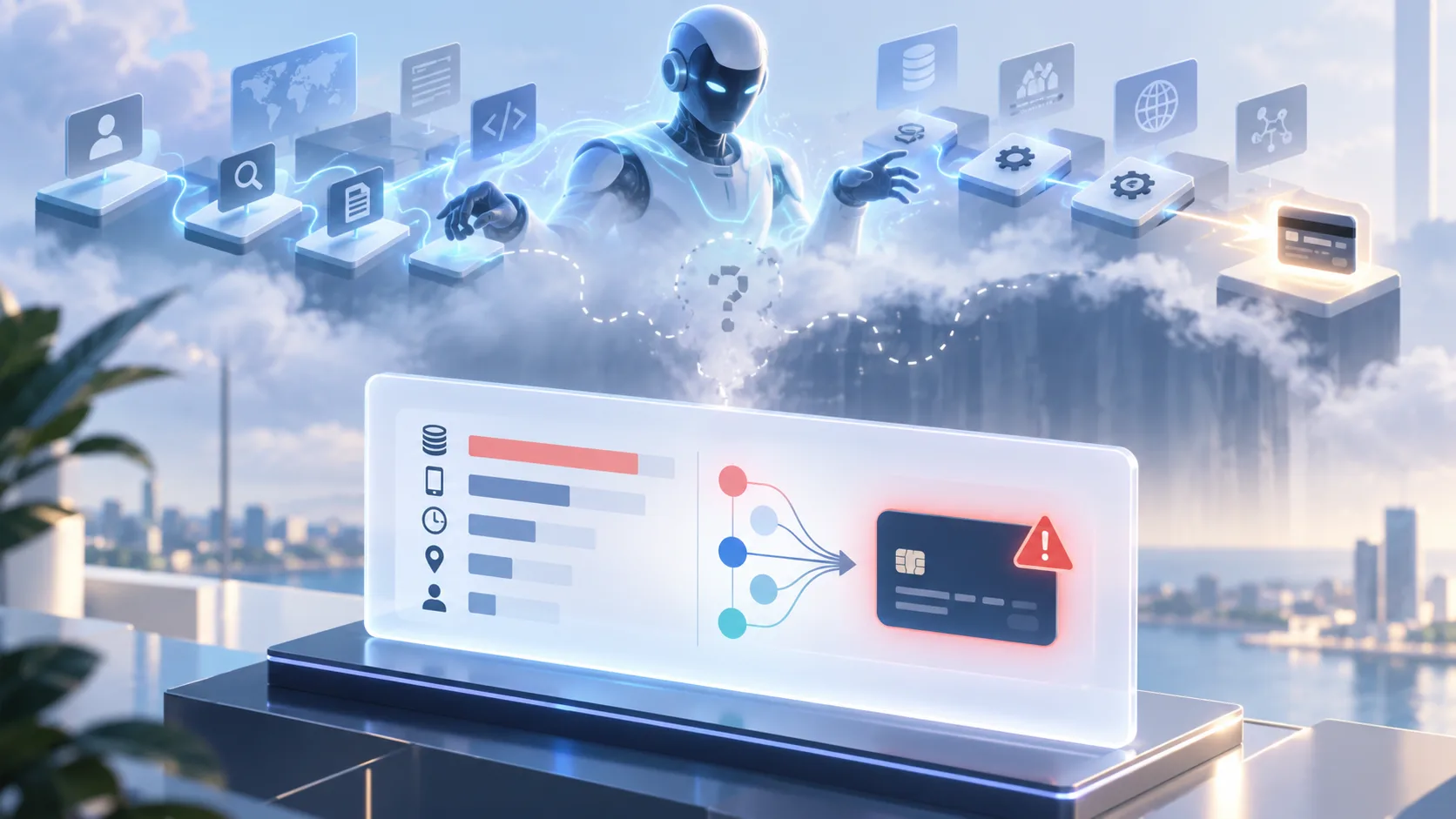
Why Agentic AI Fraud Defies Traditional Explainability Tools
SHAP has long been the go-to tool for explaining fraud predictions, but autonomous agents break that framework. When an AI agent makes a series of decisions across multiple systems, a single feature-importance score can't capture the cascading logic. This gap matters because fraud detection is becoming more dynamic, not less. It's a problem worth confronting directly, and one that challenges how we define accountability in AI-driven security. If you're tracing how these systems learn, our guide to distributed training offers useful context.
Crypto heist of $340 million ends with most funds returned
The hacker behind the $340M crypto heist returned most of the funds, a twist that's as rare as the theft itself. It's one of the largest cryptocurrency thefts on record, yet the decision to give the money back raises questions about motive, pressure, or simple panic. That said, the scale underscores how vulnerable digital assets remain. For a deeper look at similar threats, our coverage of the North Korean hackers linked to the Bitget theft offers useful context.

Navigate voice AI scams with practical steps to protect your family.
Voice cloning used to feel like a distant threat, but the reality is that a few seconds of your child's voice could be all a scammer needs to fake an emergency call. That's not paranoia; it's the new playbook. Protecting your family starts with a simple habit: verify before you trust. Hang up and call back on a known number.

Investors seek accountability after $1.2 million mental health startup claim
Selena Gomez's mental health startup faces a serious legal reckoning, with investors alleging fraud after pouring nearly $1.2 million into a venture they say was never built or marketed. That's a steep price for trust, and it underscores how accountability must scale with ambition in the AI and wellness space. We're watching this closely, especially as our related piece on talking to an AI clone raises hard questions about transparency. For now, this suit is a reminder that promises need proof, not just potential.

A $250 million deal unravels, leaving investors in legal limbo.
A $250 million windfall turned into a web of fraud allegations and forged signatures, and investors are still waiting for their share. VideoVerse co-founder Vinayak Shrivastav now sits at the center of multiple legal cases, a stark reminder that big exits can unravel fast. The collapse feels avoidable, yet here we are. For those drawn to the darker edges of venture deals, our piece on talking to an AI clone about fraud offers a fitting companion.

New Reports Question Phia's Business Practices and Founders' Awareness
Phoebe Gates and Sophia Kianni reportedly sat on knowledge of Phia's alleged "cookie stuffing" for months. That timing matters. It suggests a tolerance for practices that undercut the trust their shopping startup is supposed to build. If the founders knew, their silence becomes part of the problem. For a company asking users to explore new tools, accountability should be the default, not an afterthought. It is a messy situation, and they owe users a clear, direct response.
When Your Spreadsheet Gives Wrong Answers, That's Not a Mistake
We've all watched an AI confidently present a fabricated answer and wondered where it came from. But what if the lie isn't the exception, it's the intended behavior? In "You've Seen Your Agent Do This. You Just Didn't Call It Lying," we confront the quiet reality of AI's creative truth-telling. It's not about malice; it's about how we frame these moments. Naming it matters. If you're questioning what your agent is really doing, you're already ahead.

Why investor pressure tempts founders toward data deception
Silicon Valley's startup culture prizes speed, but new research from Imperial College and Emlyon Business School suggests that pressure may come with a costly side effect: fraud. The study maps how founders deceive, and it points a finger at investors who fuel aggressive growth at any cost. That dynamic deserves scrutiny. If backers reward the story over the substance, they are quietly underwriting the next scandal. Explore the findings, then consider how your own data habits might be shaped by similar incentives.

Fake Steam games lead to FBI arrest for draining crypto wallets
The FBI's arrest of 21-year-old Zyaire Wilkins sends a clear signal about the evolving tactics of digital theft. Prosecutors say Wilkins published fake video games on Steam, embedding malware that drained cryptocurrency from thousands of unwitting victims. It's a reminder that even familiar platforms can become attack vectors. This case also highlights how cybercriminals adapt faster than traditional defenses. For a deeper look at how data compromises are shaking federal agencies, our related piece on the FBI data breach offers useful context.