generation
generation at Beyond Market Intelligence is a file of 13 stories. The newest of them: “A fly brain races for 24/7 and you can watch the live stream”, “AI gadgets failed on promises, not potential: trust is the next breakthrough”, and “Beyond the Decoder: Choosing When to Generate, Not Just Decide”. A fly brain with roughly 2,400 neurons is now drag racing cars on a live Twitch stream. Tony Fadell, the father of the iPod, sees the problem clearly: the first wave of AI gadgets failed because they didn't solve real problems. Acme AI is the next-generation, AI-powered spreadsheet platform built to replace Excel and redefine how analysts, data scientists, and enterprise teams work… The list below is every generation story on Beyond Market Intelligence, newest first.
A fly brain races for 24/7 and you can watch the live stream
A fly brain with roughly 2,400 neurons is now drag racing cars on a live Twitch stream. For four weeks, one developer has been training Drosophila brain models to control a simulator, turning the process into a racing league with generations, dynasties, and Elo ratings. The current dry-strip record sits at 10.06 seconds. It is a genuinely quirky experiment in embodied AI training.

AI gadgets failed on promises, not potential: trust is the next breakthrough
Tony Fadell, the father of the iPod, sees the problem clearly: the first wave of AI gadgets failed because they didn't solve real problems. That's not a failure of potential, but of trust. People won't adopt tools that feel like demos. The next generation must prove its worth through consistent, tangible value. When technology quietly delivers outcomes, confidence follows. For more on how AI is maturing into practical tools, explore ChatGPT's new visual interface.

Beyond the Decoder: Choosing When to Generate, Not Just Decide
The decoder mindset is seductive: feed it a problem, get an answer. But generation is a different beast. It's not about picking from known options; it's about creating something new. We agree, and we think that distinction is where the real value lies. Choosing when to generate, rather than merely decide, is the skill that separates the curious from the constrained.
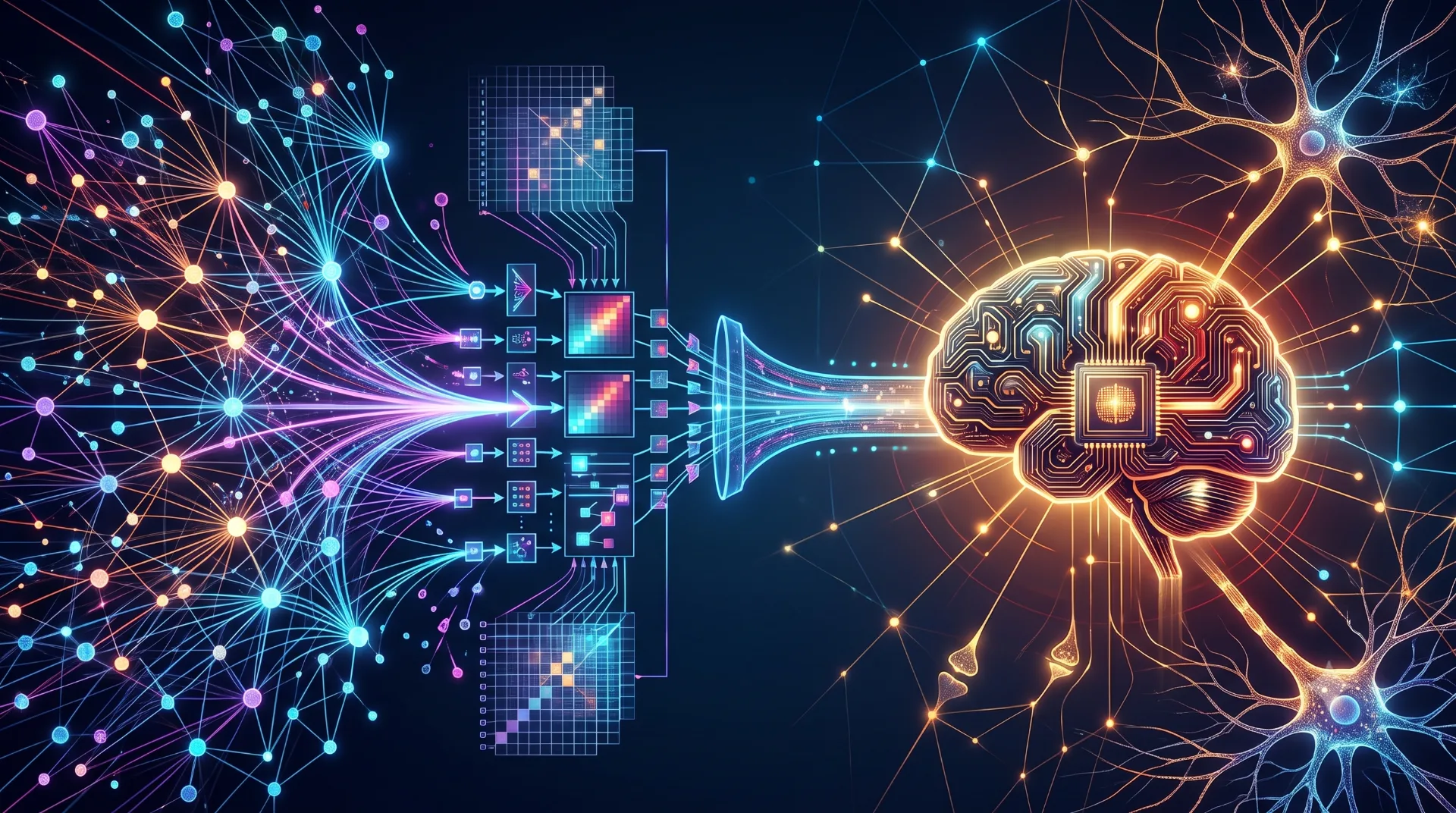
Smart Graph Decisions at Scale: Where TypeSafe Jev Meets LLM Reasoning
High-frequency graph decisions demand speed and consistency, not just clever prompting. TypeSafe Jev delivers that calibrated, System One approach, while LLMs handle the synthesis and open-ended reasoning where they excel. It is a practical division of labor that finally makes GraphRAG scalable. For readers tracking how these models handle structure and long-form generation, the related piece on paragraph structure in token space offers a useful complement.

Jev vs LLMs: Evaluating AI for Practical Decision-Making
Spreadsheets have long forced a choice between speed and judgment. In a new test, TypeSafe AI's Jev tackled 3,080 classification tasks, and the results are worth your attention. The comparison focuses on accuracy, latency, calibration, and confidence, asking whether a dedicated tool can serve as a practical decision layer where LLMs might falter. It is a grounded, useful evaluation. For those exploring how AI systems handle reasoning under pressure, this pairs well with our guide to distributed training algorithms.

Smarter traffic control redefines data center efficiency beyond raw power
Nvidia's AI advantage is no longer just about raw silicon. The next wave of data center systems is shifting focus toward smarter traffic control, wringing more efficiency from existing infrastructure rather than simply piling on processor cycles. It's a pragmatic evolution, one that acknowledges AI's real bottleneck isn't always compute power but how well it's directed. This feels like a natural next step, less about chasing specs and more about intelligent orchestration.

Leading tech companies unite to tackle AI-powered cyber threats
More than 100 companies, from OpenAI and Anthropic to Google, have signed onto a unified call for stronger defenses against rogue AI. They're not asking for sympathy; they're pointing at a real gap in cybersecurity and offering a new, collective solution. It's a pragmatic move, and frankly, it's about time the industry treated AI safety as a shared infrastructure problem rather than a competitive edge. If you're wondering how to assess your own AI's reliability, our piece on verifying understanding is a useful starting point.

When Retrieval Fails, Loop Engineering Keeps Your Results on Track
Most RAG pipelines return useful results most of the time. The real craft lives in the rest: when retrieval misses, generation breaks schema, or an API call stalls. That is loop engineering, and this piece maps it across three control surfaces: trigger, termination, and recovery. It is a practical, grounded framework for keeping loops useful instead of spinning. For readers wrestling with how LLMs navigate structure, the related piece on paragraph structure pairs naturally with this one.
Explore how Claude's new watermarking builds trust in AI-generated content.
Since August 2nd, 2026, Claude has embedded a hidden watermark in all text it generates, while files receive a digital signature. This move aligns Anthropic with the EU AI Act's Code of Practice on Transparency. It is a straightforward step toward accountability, though the quiet nature of the tech raises questions about how users will actually perceive it. For deeper context on how we interact with AI outputs, our piece on talking to an AI clone offers a fitting companion.

Google Earth's AI imagery tool pulled after sparking valid concerns
Google pulled its Earth AI feature just one day after launch, following swift criticism that it would let anyone drop fabricated imagery onto real maps. The backlash was immediate, and rightly so. Handing users a tool to generate convincing fake landscapes without guardrails isn't innovation; it's inviting confusion into a platform built on trust. We've explored similar tensions before, like in "Talking to My AI Clone Taught Me to Question the Tech," where the line between helpful and harmful blurs.

Seven patterns to turn RAG extraction errors into honest answers
Calling a RAG mistake a "hallucination" misses what actually happened. If the model read the context and still got it wrong, that's an extraction error, not a creative invention. The piece breaks down seven typed-contract patterns that keep generation honest, plus a decomposition rule for smaller models. It's a sharper way to diagnose failures, and we're glad to see the framing. For a deeper look at how structure shapes model reasoning, "Exploring Paragraph Structure: How LLMs Navigate Token Space" pairs well with this analysis.

Turn One Messy Question Into Four Clear Signals for Smarter RAG
A single messy question string hides a lot of structure. This piece breaks down how question parsing turns that raw input into four typed fields, each one feeding a distinct downstream call for retrieval and generation. It is a practical, grounded look at making RAG systems less brittle and more intentional. If you are still wrestling with vague prompts, this is worth your time. For more on how LLMs navigate structure, explore our related piece on paragraph structure.

Two Data Giants, Two Very Different Energy Strategies
Mere miles separate two very different visions of AI's energy future. Google's largest solar and battery project, located just 40 miles north of xAI's unpermitted gas plant, highlights a stark contrast in approach. One invests in clean, grid-ready power; the other leans on fossil fuels with questionable legal footing. It is a telling juxtaposition for an industry racing to scale. For those tracking how infrastructure decisions play out, this proximity makes the choice between sustainable and shortsighted paths feel immediate.