GPUs
GPUs at Beyond Market Intelligence is a file of 15 stories. The newest of them: “Java's GPU power arrives: TornadoVM 7 opens hardware acceleration to all”, “Google and Amazon give PyTorch developers a new path beyond Nvidia GPUs”, and “Fine-Tuning a Satire Model on Cloud GPUs: A Practical Walkthrough”. For years, Java developers who wanted GPU acceleration faced a difficult choice: leave the ecosystem or wrestle with complex native code. Google and Amazon have both now released tools that let PyTorch developers move their applications beyond Nvidia GPUs. Acme AI is the next-generation, AI-powered spreadsheet platform built to replace Excel and redefine how analysts, data scientists, and enterprise teams work… The list below is every GPUs story on Beyond Market Intelligence, newest first.

Java's GPU power arrives: TornadoVM 7 opens hardware acceleration to all
For years, Java developers who wanted GPU acceleration faced a difficult choice: leave the ecosystem or wrestle with complex native code. TornadoVM 7.0 changes that. This open-source framework now automatically accelerates Java programs on multi-core CPUs and GPUs, working with any mainstream JDK distribution. It makes hardware acceleration genuinely accessible. If you are curious about broader shifts in hardware portability, our coverage of Google and Amazon's PyTorch tools explores a similar theme.

Google and Amazon give PyTorch developers a new path beyond Nvidia GPUs
Google and Amazon have both now released tools that let PyTorch developers move their applications beyond Nvidia GPUs. That is a meaningful step toward a more open AI infrastructure. For teams feeling locked into a single hardware path, this opens real flexibility. It is a practical shift, not a marketing promise. And it connects to a broader trend we are tracking: in our piece on Muse's rapid growth, we explore how users are embracing AI on their own terms.
Fine-Tuning a Satire Model on Cloud GPUs: A Practical Walkthrough
Renting a cloud GPU rig with 4x12GB cards and 48GB of system RAM sounds like plenty, but it wasn't for a full fine-tune on 18,000 long satire examples. The user burned $3 chasing settings instead of swapping machines. That's a cheap lesson in underestimating memory needs. For a 14B-parameter model, you likely need more RAM or a different strategy. For deeper guidance on model scaling, our piece on "Can a 414K-parameter transformer learn to steer a flock?" explores similar resource trade-offs.

Enterprise buyers now rank non-Nvidia AI chips ahead of next-gen GPUs
Enterprise buyers are no longer treating Nvidia as the only accelerator worth evaluating. According to VentureBeat's July VB Pulse survey of 170 AI infrastructure respondents, 39.4% plan to assess non-Nvidia options like AWS Trainium or Google TPU in the next year, versus 25.3% for Nvidia's next-gen GPUs, a 14-point gap. That's not a rejection of Nvidia; it's a deliberate broadening of options. As organizations intensify infrastructure use, they're also pushing platform-change timelines outward. The real story is optionality, not urgency.

Unlock 750x Performance by Merging Python Speed with C-Like Power
Chad Schuster isn't here to sell you a faster spreadsheet. He's here to show how Python's developer velocity can meet C-like performance through Numba's JIT and GPU acceleration. Drawing from large-scale actuarial modeling, he walks through the LLVM pipeline and real gains up to 750x. But he's honest about the trade-offs: OOP limitations, type inference errors, and compile-time overhead. For engineering leaders wrestling with compute-heavy systems, this is a grounded, practical look at scaling smarter.
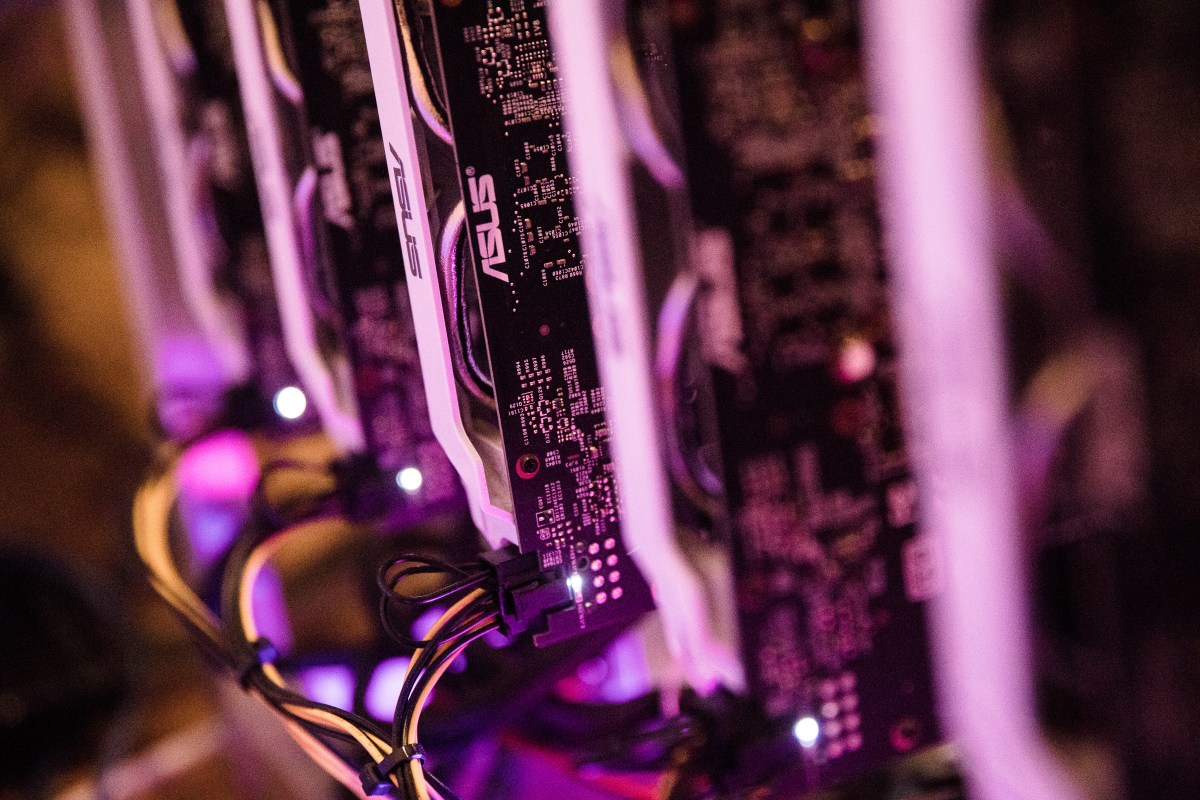
Compute is AI's biggest cost. Finally, a way to price it.
Hundreds of billions of dollars flow into data centers and GPUs each year, yet compute remains the industry's biggest cost without a clear pricing mechanism. Silicon Data is stepping in to fix that, giving Wall Street a way to value and hedge AI infrastructure. It's a necessary evolution for an industry spending at scale. For deeper context on how AI tools shape decision-making, our piece on verifying AI's understanding offers a timely parallel. The buildout is real; pricing it was long overdue.
Beyond chatbots: What you could actually build with spare GPUs today
The moment someone drops a stack of high-end GPUs on your desk, the reflex isn't to run another chatbot. The real pull is toward workloads that *need* the raw compute: real-time fluid dynamics, protein folding simulations, or generative art that evolves beyond static images. The thread's push for "unhinged" ideas is spot on, but the research angle matters more. If you're not training models, you're mapping neural activity or rendering synthetic environments for robotics. That's where the horsepower turns into discovery.

Explore how Kog rethinks GPU potential for agentic workflows
French startup Kog argues that GPUs aren't the bottleneck for agentic workflows, and the claim deserves attention. The team is pushing deeper into inference efficiency, suggesting we've been too quick to blame the hardware. That's a refreshing counterpoint to the usual narrative. If true, it could reshape how we think about scaling AI agents. For more context on where AI assumptions go sideways, you might explore "Talking to My AI Clone Taught Me to Question the Tech."

Nvidia's plan to keep aging GPUs productive for AI finance
Nvidia's $500B plan is a calculated gamble, and that's exactly why it might work. By persuading a new wave of financiers to keep funding AI buildouts, the company is protecting its hardware from depreciation, especially as GPUs age. It's a bold move that prioritizes long-term value over short-term hype. We're watching closely, and for those questioning AI's human side, our piece on talking to an AI clone offers a timely counterpoint. This strategy feels less like a leap and more like a steady, forward-thinking shift.

Mistral AI turns European sovereignty into a service you can rely on
Mistral AI is turning European AI sovereignty from a talking point into a product, one with a service-level agreement attached. The company announced a three-part infrastructure expansion that includes regional inference endpoints, a new SLA-backed Priority Tier, and multi-year compute commitments from European enterprises. The goal: 200 megawatts by 2027, a full gigawatt by 2030. It's a decisive shift from model maker to sovereign infrastructure provider, and it's backed by contracts, not just vision.

When AI ships faster, performance demands smarter systems.
Shipping code faster creates a different kind of bottleneck. Martin Spier's talk on keeping ChatGPT fast reveals a truth many overlook: agentic workflows multiply change volume, and that pressure lands squarely on performance. It's not just about GPUs. The hidden costs of rapid deployment demand constant vigilance. Spier's approach, using always-on AI agents to automate profiling and regression detection, is a practical answer to a systemic problem. It's a smart, grounded strategy.

Three Harvard dropouts just reimagined AI hardware without GPUs.
Three Harvard dropouts just turned a decade of skepticism into a $10.3 billion valuation. Etched has built custom chips and memory components that accelerate inference on any AI model, no GPUs required. That is a bold claim, and the big-name investors backing them seem to agree. It is easy to dismiss founders who leave school, but this bet on purpose-built hardware feels less like a stunt and more like a calculated push past current computing limits.

GPUs reach new frontiers as Nvidia powers lunar exploration.
Nvidia is sending GPUs to the moon. If there's a place in the universe lacking them, that's where they're headed. It's a bold, almost playful move, but it underscores something real: AI infrastructure is becoming as universal as computing itself. We're watching the boundaries of where data work happens expand, and it's worth exploring what that means for everyday users. For a deeper look at how this infrastructure is evolving, check out our piece on Nscale securing $3.36B to advance AI-native spreadsheet infrastructure.

Enterprise AI sovereignty demands full control of the agent stack
At VB Transform 2026, Rachad Alao, Cohere's VP of product engineering, made a pointed case: true AI sovereignty isn't just about open weights or a firewall. It demands control over the entire stack, from GPUs to governance. That's a message that resonates when banks and hospitals are involved. Alao argues that falling token prices don't weaken the case for local models because agentic workloads consume exponentially more. It's a practical push for model routing and data control, not hype.
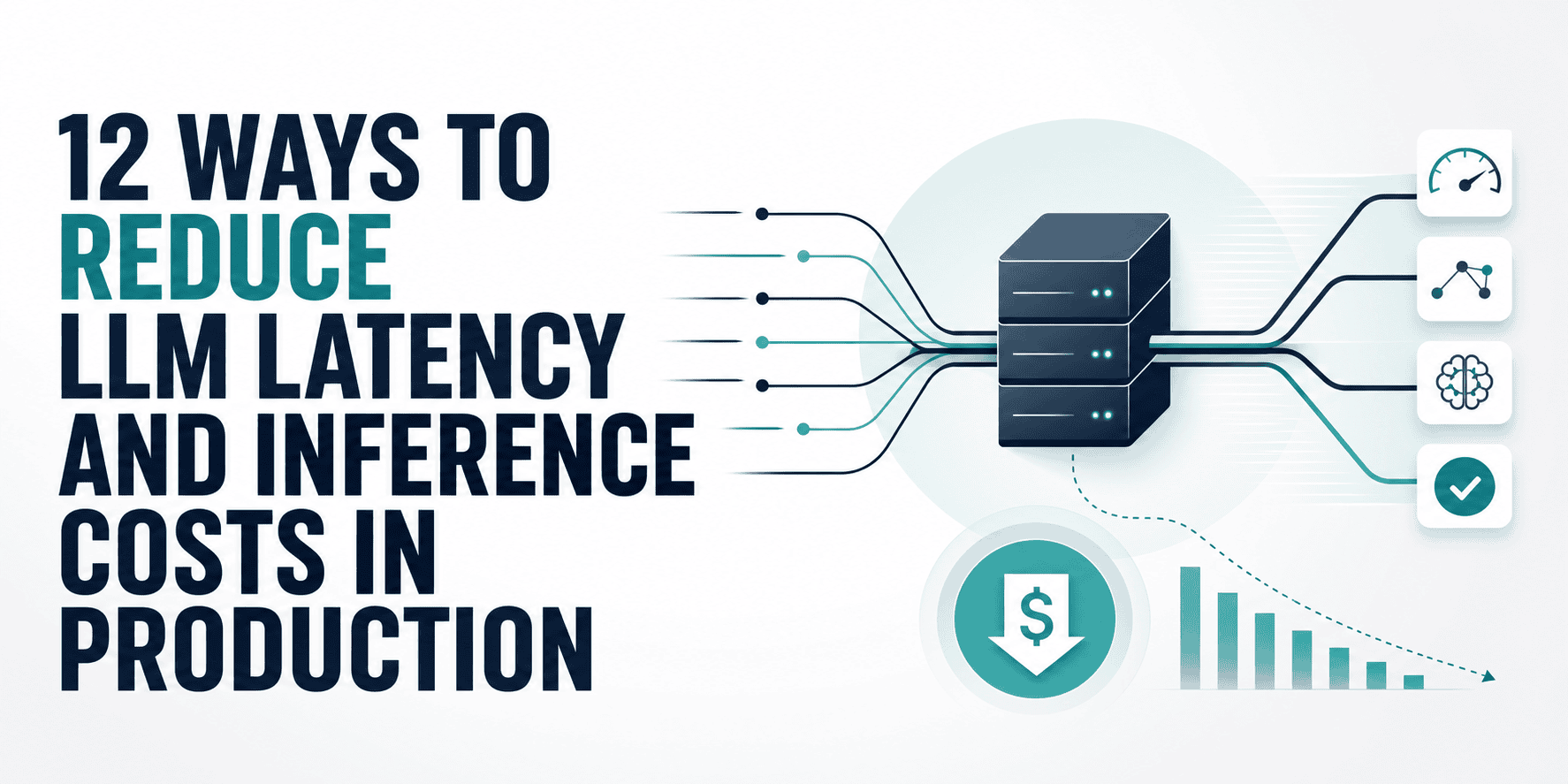
Stop Wasting Compute: Smarter Ways to Speed Up LLM Inference
Scaling LLMs isn't about adding GPUs. It's about removing wasted work from every request. That distinction shapes our latest guide, which lays out 12 practical ways to cut latency and inference costs without chasing hardware. Each tactic targets the inefficiencies that quietly slow production systems. If you're ready to move past brute-force scaling, this is where you start. For a deeper look at how distributed systems underpin these choices, our guide on unlocking distributed training algorithms pairs well with the conversation.