Graph Database
3 stories filed under Graph Database on Beyond Market Intelligence. The newest of them: “Explore how recursive CTEs simplify graph traversal in SQL.”, “Build a Knowledge Layer Where Every Query Traverses a Living Graph”, and “HubSpot Rebuilds Access Control with a Rule Engine for Smarter Governance”. Most of us treat SQL as a tool for flat tables, but recursive CTEs unlock something far more interesting: the ability to traverse relationships directly in your database. Most retrieval systems treat query wording as the failure point, but this approach argues otherwise: retrieval quality should be a property of the system, not the question's phrasing. Acme AI is the next-generation, AI-powered spreadsheet platform built to replace Excel and redefine how analysts, data scientists, and enterprise teams work… The list below is every Graph Database story on Beyond Market Intelligence, newest first.

Explore how recursive CTEs simplify graph traversal in SQL.
Most of us treat SQL as a tool for flat tables, but recursive CTEs unlock something far more interesting: the ability to traverse relationships directly in your database. This guide shows how to navigate hierarchies, detect cycles, and even calculate degrees of separation without leaving SQL. It's a practical, empowering look at a hidden capability. If you're ready to move beyond simple queries, this is your entry point.

Build a Knowledge Layer Where Every Query Traverses a Living Graph
Most retrieval systems treat query wording as the failure point, but this approach argues otherwise: retrieval quality should be a property of the system, not the question's phrasing. By rebuilding the knowledge layer with graph traversal on every query, bitemporal edges, and two-threshold entity resolution, the architecture shifts the burden from user precision to systemic design. It's a pragmatic, future-focused move. For a deeper look at how structure shapes AI navigation, our related piece on paragraph structure in LLMs pairs well here.
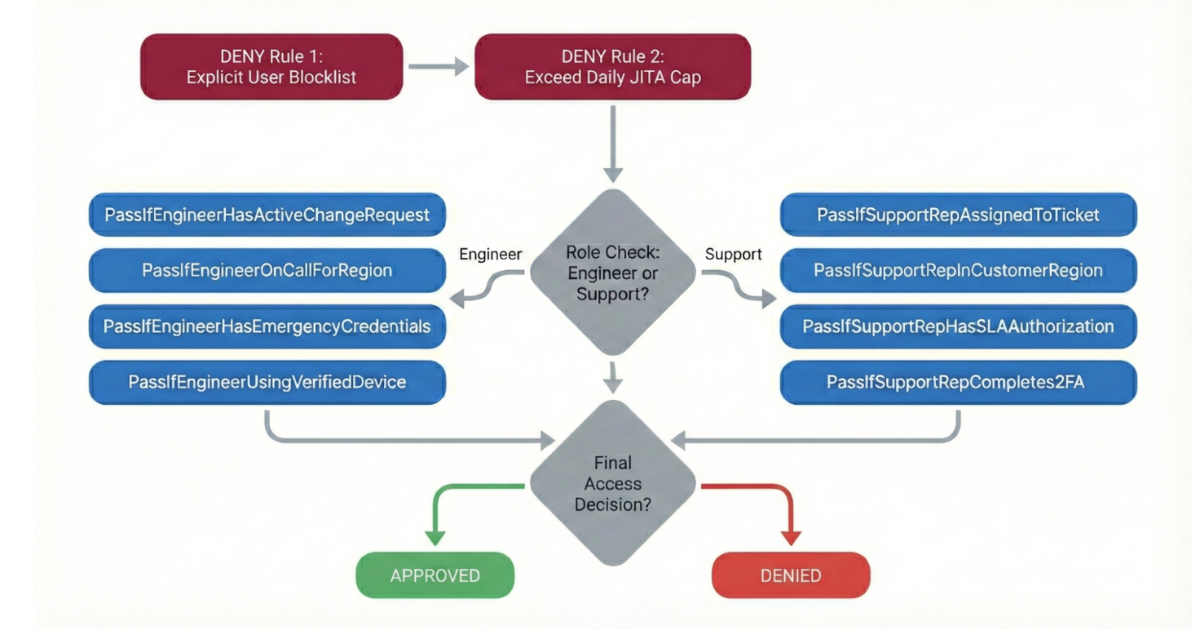
HubSpot Rebuilds Access Control with a Rule Engine for Smarter Governance
HubSpot's redesign of its JITA authorization system is a smart move toward clarity. By adopting a rule engine architecture that structures access decisions as a directed acyclic graph, the company replaces tangled conditional logic with something more observable and governable. The added decision metadata and rule-level insights are practical steps for teams wrestling with complexity. It's a thoughtful, human-centered approach to security. For more on how such architectures are evolving, our coverage of QCon AI New York offers useful context.