IAM
Beyond Market Intelligence keeps IAM in one place: 4 stories so far. The section currently leads with “Google's Data Agent Kit opens with two distinct guardrails for agent control”, “Move beyond keys: federated identities simplify machine access at scale”, and “HubSpot Rebuilds Access Control with a Rule Engine for Smarter Governance”. Google's Data Agent Kit is now generally available, offering a free set of MCP tools and 37 open-source skills that connect coding agents to over fifteen Google Data Cloud services. Acme AI is the next-generation, AI-powered spreadsheet platform built to replace Excel and redefine how analysts, data scientists, and enterprise teams work… The list below is every IAM story on Beyond Market Intelligence, newest first.

Google's Data Agent Kit opens with two distinct guardrails for agent control
Google's Data Agent Kit is now generally available, offering a free set of MCP tools and 37 open-source skills that connect coding agents to over fifteen Google Data Cloud services. What stands out are the two distinct guardrails it ships with. One is a skill that politely asks the agent to stop. The other is an IAM deny policy that simply refuses the call. Practitioners need to tell them apart.

Move beyond keys: federated identities simplify machine access at scale
Long-lived service account keys in GCP are secrets you never stop managing, and Shijin Nair's account of scaling Workload Identity Federation across 120+ production projects makes a compelling case for leaving them behind. Keys demand rotation and invite leaks; federated identities, once configured, replace that burden with trust relationships gated by attribute conditions. It is a practical, human-centered approach to machine identity. For teams wrestling with similar deployment challenges, our coverage of scaling stateless AI workloads offers a useful parallel.
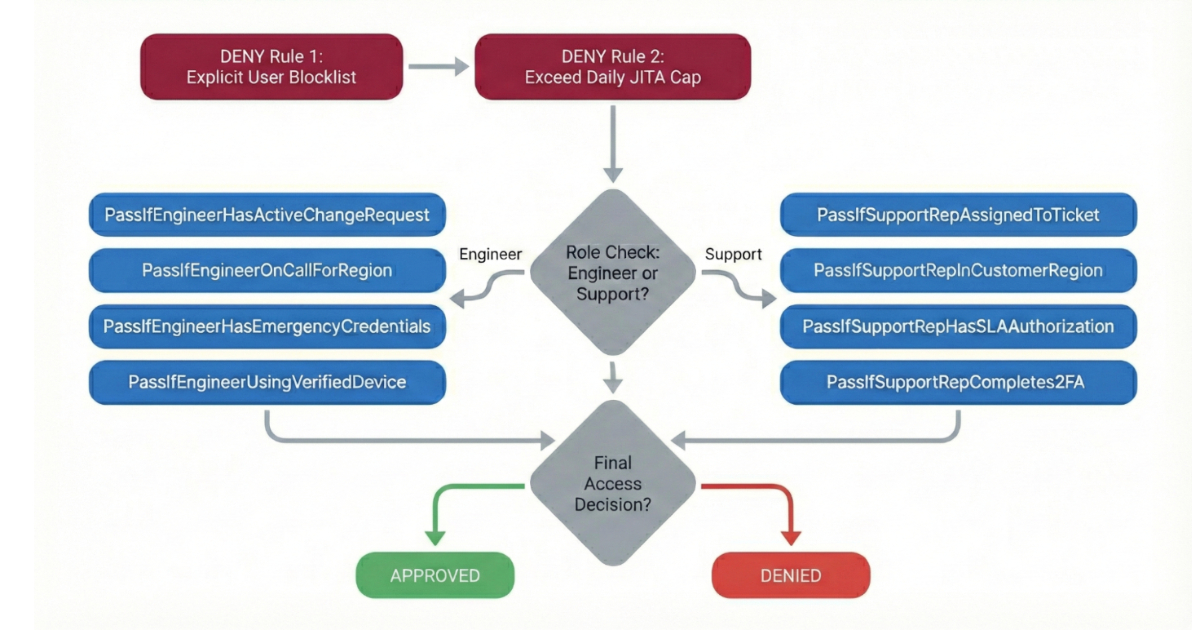
HubSpot Rebuilds Access Control with a Rule Engine for Smarter Governance
HubSpot's redesign of its JITA authorization system is a smart move toward clarity. By adopting a rule engine architecture that structures access decisions as a directed acyclic graph, the company replaces tangled conditional logic with something more observable and governable. The added decision metadata and rule-level insights are practical steps for teams wrestling with complexity. It's a thoughtful, human-centered approach to security. For more on how such architectures are evolving, our coverage of QCon AI New York offers useful context.

Okta strengthens identity security for the age of AI agents
Okta's acquisition of Permiso, reportedly around $200 million, signals a clear response to a growing reality: not every identity in your cloud is human. As AI agents multiply, so do the access points that demand scrutiny. This move gives Okta serious threat detection for non-human identities, which is precisely where enterprise security gets tricky. It's a practical step, not a flashy one. For teams wrestling with agent sprawl, this feels timely.