inference costs
Beyond Market Intelligence keeps inference costs in one place: 7 stories so far. The section currently leads with “Google Antigravity SDK Now Runs Agentic Workflows Locally for Greater Data Privacy”, “Explore adaptive model routing to make multi-agent AI more efficient”, and “Explore how Kimi K3 makes powerful AI more accessible and affordable.”. Google's Antigravity SDK now runs agentic workflows directly on local machines, giving developers meaningful control over data privacy and inference costs. Static model assignment is the default in multi-agent systems, but it is also the most expensive. Acme AI is the next-generation, AI-powered spreadsheet platform built to replace Excel and redefine how analysts, data scientists, and enterprise teams work… The list below is every inference costs story on Beyond Market Intelligence, newest first.

Google Antigravity SDK Now Runs Agentic Workflows Locally for Greater Data Privacy
Google's Antigravity SDK now runs agentic workflows directly on local machines, giving developers meaningful control over data privacy and inference costs. Balancing local execution with optional cloud models is a practical approach, not an all-or-nothing trade-off. For anyone feeling constrained by centralized AI dependencies, this opens a more flexible path forward. It reminds us how the right tools empower builders, much like Facebook's recent move to put algorithm control directly in users' hands. Privacy and power don't have to be opposites.

Explore adaptive model routing to make multi-agent AI more efficient
Static model assignment is the default in multi-agent systems, but it is also the most expensive. Assigning every task to a frontier model, regardless of complexity, inflates inference costs without improving output quality. Adaptive model routing changes that by matching each task to the right LLM at the moment it arrives. It is a smarter, more accessible approach to cost control. For teams already wrestling with distributed systems, this practical strategy is worth exploring.
Explore how Kimi K3 makes powerful AI more accessible and affordable.
A 2.8-trillion-parameter model that only activates a fraction of its weights per token sounds like a paradox, but that's exactly what makes Kimi K3 interesting. Moonshot AI built it with a Mixture-of-Experts architecture to keep inference costs down while pushing coding and agentic performance. It's a practical alternative to proprietary systems, especially when you weigh open weights against near-frontier capability. We think that trade-off is worth exploring.

Discover how Gemini 3.7 Flash empowers smarter coding and agentic workflows
Gemini 3.7 Flash arrives with coding and agentic workflows at the center, and a price cut that makes it hard to ignore. For the next few months, developers can run it at half the standard rate, a direct bet that Google's efficiency gains will translate into lower operating costs. We think that's the right wager, especially for teams running high-volume agents. The real test isn't the leaderboard; it's whether the model reduces retries and manual oversight in production.

OpenAI slashes GPT-5.6 Luna pricing 80% to compete on cost
The price of intelligence just dropped. OpenAI slashed GPT-5.6 Luna's combined token cost by 80%, bringing it to $1.40 per million tokens and planting it firmly in the low-cost tier alongside models from Google and Xiaomi. Terra's 20% cut to $14 matches Google's Gemini 3.1 Pro, while Sol gains a pricier Fast mode. This isn't just a discount; it's a strategic pivot. As model capability plateaus, the real battleground shifts to production economics, and OpenAI is betting on cost-per-intelligence to win enterprises.

Stop feeding your GPUs the same data twice
GPU memory is the most expensive resource in production AI, and it's running out fastest. Weka's NeuralMesh 6 takes a different path: instead of adding more GPUs, it caches 100% of a model's pre-calculated tokens on cheap flash storage. That cuts the costly recomputation behind long contexts and multi-turn chats. It's a practical fix for GPU scarcity, and one worth exploring, especially if you're chasing better utilization from the hardware you already have.
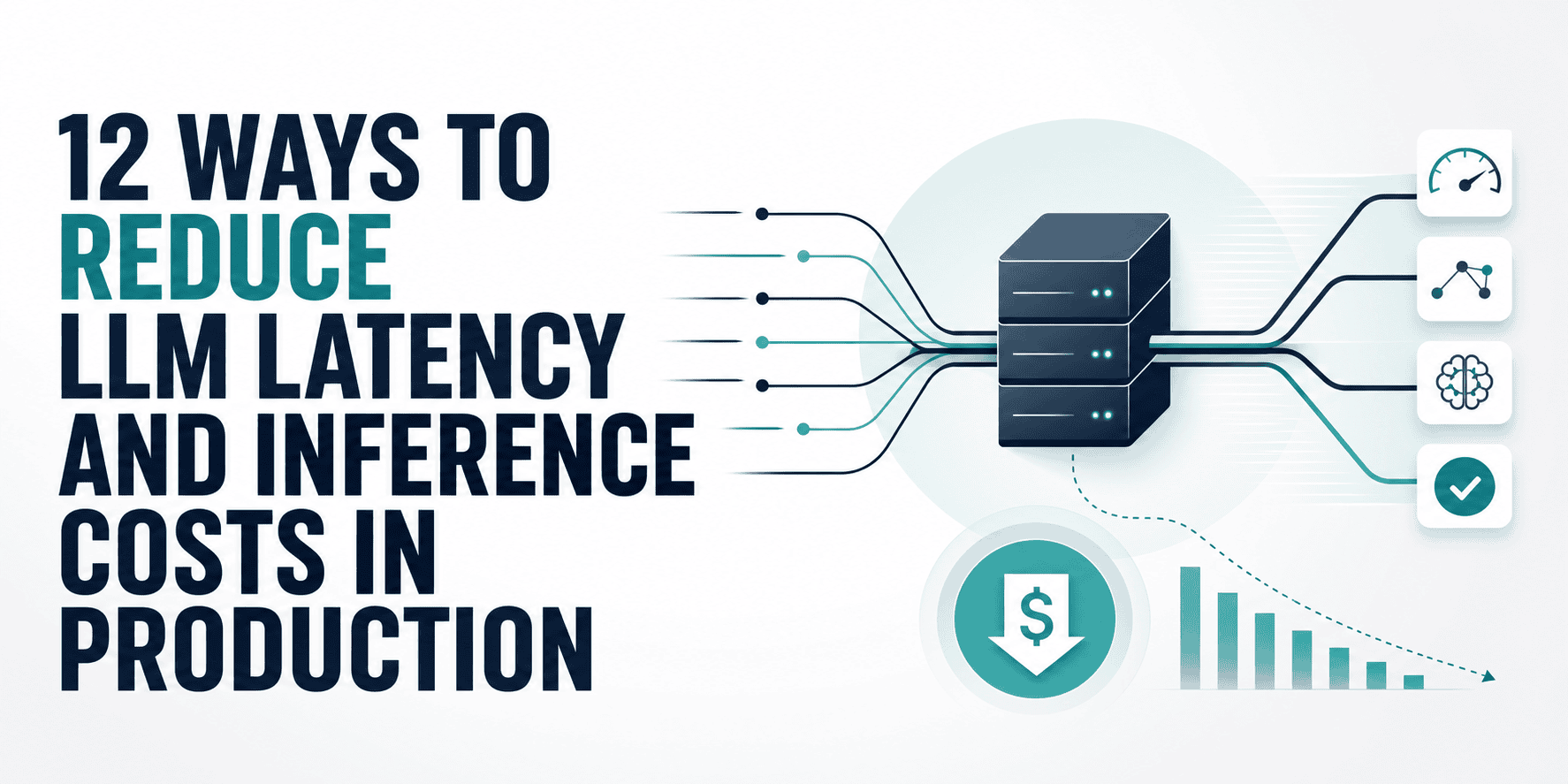
Stop Wasting Compute: Smarter Ways to Speed Up LLM Inference
Scaling LLMs isn't about adding GPUs. It's about removing wasted work from every request. That distinction shapes our latest guide, which lays out 12 practical ways to cut latency and inference costs without chasing hardware. Each tactic targets the inefficiencies that quietly slow production systems. If you're ready to move past brute-force scaling, this is where you start. For a deeper look at how distributed systems underpin these choices, our guide on unlocking distributed training algorithms pairs well with the conversation.