Java
Java at Beyond Market Intelligence is a file of 23 stories. The newest of them: “Java's GPU power arrives: TornadoVM 7 opens hardware acceleration to all”, “JDK 28 JEPs, Apache Camel fixes, and new Java releases lead this week's roundup”, and “JDK 28 makes structured concurrency official with a clean upgrade path from JDK 27”. For years, Java developers who wanted GPU acceleration faced a difficult choice: leave the ecosystem or wrestle with complex native code. Three new JDK 28 JEPs are targeting structured concurrency for formalization, and that alone makes this week's roundup worth your attention. Acme AI is the next-generation, AI-powered spreadsheet platform built to replace Excel and redefine how analysts, data scientists, and enterprise teams work… The list below is every Java story on Beyond Market Intelligence, newest first.

Java's GPU power arrives: TornadoVM 7 opens hardware acceleration to all
For years, Java developers who wanted GPU acceleration faced a difficult choice: leave the ecosystem or wrestle with complex native code. TornadoVM 7.0 changes that. This open-source framework now automatically accelerates Java programs on multi-core CPUs and GPUs, working with any mainstream JDK distribution. It makes hardware acceleration genuinely accessible. If you are curious about broader shifts in hardware portability, our coverage of Google and Amazon's PyTorch tools explores a similar theme.
JDK 28 JEPs, Apache Camel fixes, and new Java releases lead this week's roundup
Three new JDK 28 JEPs are targeting structured concurrency for formalization, and that alone makes this week's roundup worth your attention. The October 12th, 2026, edition also brings point releases for Gatherers4j and Yupiik Fusion, alongside 38 resolved CVEs in Apache Camel. For teams already on JDK 27, the upgrade path is refreshingly clean. Our related coverage on JDK 28's structured concurrency offers more depth.

JDK 28 makes structured concurrency official with a clean upgrade path from JDK 27
JDK 28 makes structured concurrency official, finalizing JEP 543 with no API changes from JDK 27. Teams on the preview just need to drop `--enable-preview` and recompile. That's a clean upgrade path, exactly what a maturing feature deserves. Code from JDK 25 or 26 will require adapting to the `R_X` exception type parameter, `ExecutionException` wrapping, and the abstract `timeout()` joiner callback. For teams building toward agentic AI architectures, our piece on designing distributed systems for decisions offers useful context.
Helidon 27 Evolves With Smarter Modules Built for Modern Java Development
Helidon 27 is the first release to follow Oracle's Tip & Tail Model, meaning developers get both the latest Java innovations and a stable, secure baseline. New major modules, Helidon Messaging and Helidon Data JDBC, arrive alongside JDK 27, making modern Java development more accessible. This isn't about chasing trends; it's about empowering teams to build smarter. For a different take on platform evolution, see how Figma opens its platform to agents and expands code access in beta.
October Java Update: Grails 8, Open Liberty, and New JDK Proposals Arrive
Grails 8 and Open Liberty 20.0.0.10 arrive this week, giving Java developers two solid new GA releases to explore. The OpenJDK community is already looking ahead, with new JEPs proposed for JDK 28 and Lazy Constants moving to Candidate status. For those tracking the ecosystem's momentum, our recent coverage of JobRunr 9 and OpenXava 8 connects neatly to this week's progress.
Java's Fall Moves Forward with JobRunr 9, OpenXava 8, and the New Lathe Server
Java's ecosystem is showing real momentum this week. JobRunr 9.0 and OpenXava 8.0 have reached GA, bringing practical improvements for those building data-heavy applications. We're also watching Lathe, a new Java language server entering the field. Quarkus, Micronaut, and LangChain4j received point releases worth exploring. If you're curious how engineering leaders are shaping production systems for an agentic future, our coverage from QCon San Francisco 2026 offers deeper insight.
Java's Autumn Update: TornadoVM, Groovy, and Key Releases Arrive
TornadoVM 7.0 and Groovy 6.0 have arrived, and that's worth pausing for. This week's Java roundup from September 21st, 2026, also includes point releases for GraalVM and Gradle, plus a seventh release candidate for Maven 4.0. These updates signal a steady, practical evolution of the ecosystem. If you're tracking how modern tools reshape data workflows, our piece on accelerating local LLM learning with Jayce offers a fitting companion. Explore what these releases mean for your daily work.

Explore how Swift 6.4 simplifies subprocesses and accelerates Wasm performance
Swift 6.4 lands with a clear message: subprocess handling no longer needs to be a platform-specific headache. The new Subprocess library offers a cross-platform API for launching and interacting with external processes, while Wasm generated code runs up to 40 times faster. That's a practical leap forward. Expanded support for non-copyable values and better C++20 and Java interoperability round out the release. If you're building for performance, exploring this upgrade feels like a natural next step.
Accelerate Local LLM Learning: A New Prototype for Faster Fact Correction
Watching a toddler learn taught Kavanutz something about AI. Jayce, his new prototype, skips the heavy lifting of RAG pipelines and fine-tuning entirely. Instead, it shifts raw context vectors across a fixed pool of 4,048 prototype slots, correcting mistakes in real time. The benchmarks are telling: faster updates, better sample efficiency on sequential tests, and a strict memory ceiling. It's a lean, framework-free proof of concept built on NumPy and Java.
Java's Fall Momentum: JEPs, CDI 5.0, and Kotlin Tooling Advance
This week's roundup leads with two promising OpenJDK JEPs targeting ahead-of-time compilation and structured concurrency. These are the kind of foundational moves that make Java's future feel more deliberate. We also see Jakarta CDI 5.0 and ADK for Kotlin 1.0 reach GA, alongside fresh updates from Open Liberty, TornadoVM, and Micronaut. Groovy 6.0 and Gradle 9.8 are nearing completion. For a deeper look at how modern tooling is evolving, our piece on Vercel's scriptc offers a useful parallel.
Explore the Latest Java Ecosystem Updates for Smarter Development
TornadoVM 6.0 arrives as a GA release, and that's worth pausing over. This week's roundup also tracks point releases across JReleaser, LangChain4j, Java Operator SDK, JHipster, Kotlin Toolchain, and Yupiik Fusion, alongside maintenance updates for Micronaut and the GraalVM Development Kit. It's a steady cadence of refinement rather than fanfare. For those exploring how AI connects with Java tooling, our piece on bridging retrieval and action offers a practical angle worth reading.
Jakarta Data and GraalVM lead Java's latest wave of accessible innovation
This week's Java roundup delivers a steady stream of progress, headlined by the GA release of Atmosphere 4.0 and a maintenance update for WildFly 41. Point releases across GraalVM, Azul Payara, and Quarkus keep the ecosystem moving, while milestone builds of Jakarta Data and Eclipse JNoSQL signal continued momentum in persistence and NoSQL integration. For those exploring broader cloud-native shifts, our Kubernetes 1.37 coverage offers useful context. Explore the full details, and see how these updates can simplify your next workflow.
JDK 27 Nears Release Alongside New Jakarta EE Progress
The first release candidate of JDK 27 has arrived, and it's a clear signal that the platform keeps its forward momentum. This week's roundup also tracks JEPs 540 and 541 heading toward JDK 28, alongside the GA of Apache Tika 4.0 and solid maintenance updates from Helidon and BellSoft. These are practical steps forward, not hype. For deeper context on how OpenJDK's trajectory connects, our related piece on new JEPs is worth a look.
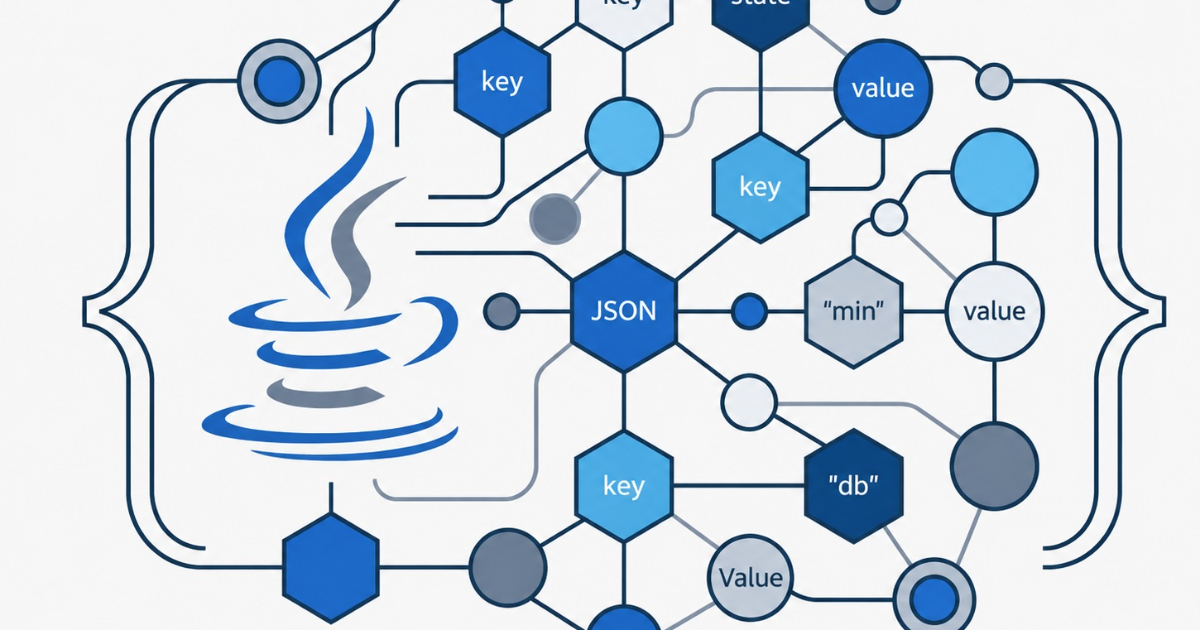
Explore how a native JSON API simplifies data handling in JDK 28.
JEP 540 has moved to Target status for JDK 28, and that's worth paying attention to. It brings a compact JSON API that handles parsing and generating documents without dragging in external dependencies. The immutable value hierarchy keeps things clean, and strict syntax rules mean fewer surprises. What stands out is the focus on core tasks, not endless features. Feedback during incubation will refine it further. For developers tired of bolting on libraries for basic JSON work, this feels like a step toward simpler workflows.
Jakarta EE 12 and Groovy 6 Beta Lead This Week's Java Roundup
The Java community is moving with purpose this August, and the latest roundup reflects that momentum. The Simple JSON API proposal targeting JDK 28 stands out, signaling a thoughtful push toward cleaner, more native data handling. Alongside it, updates across Jakarta EE 12, GlassFish 9.0, and Groovy 6.0 show steady, practical progress. For developers exploring AI integration, the LangChain4j point release is worth a look. If you're weighing career moves, our related piece on navigating AI/ML job requirements offers useful perspective.
Explore the latest Java updates that simplify and strengthen your workflow.
The latest Java roundup for August 3rd, 2026, brings a significant shift as Shenandoah GC moves to generational mode by default, targeting JDK 28. This change signals a maturing approach to garbage collection that prioritizes real-world performance. Alongside that, we see steady progress across the ecosystem: fresh point releases for the A2A Java SDK, Apache Camel, and Gradle, plus a maintenance update for GlassFish and Groovy 8.0's fifth milestone.
Discover how value objects simplify data handling in Java
Java's `==` operator has always been a source of confusion, but JEP 401 in JDK 28 is ready to change that. By introducing value objects with final fields and stricter construction rules, this preview aims to cut memory costs and boost efficiency. It's a thoughtful step forward, even if the required configuration feels like a hurdle. For developers tired of legacy constraints, this is worth exploring. If you're also curious about modernizing infrastructure, our piece on modular Cloudflare Workers pairs nicely with this forward-looking shift.
Jakarta Agentic AI Arrives as Java Ecosystem Accelerates into July
The July 27th Java roundup lands with a packed agenda, and the arrival of Jakarta Agentic AI 1.0 as a milestone release signals where enterprise Java is steering next. OpenJDK continues its steady churn with new JEPs targeting JDK 28, while GPULlama3.java hits GA, bringing local LLM acceleration to the JVM. The maintenance cadence across Micronaut, Quarkus, and JobRunr reminds us that progress often comes in steady increments.
Embabel 1.0 Lets Java Developers Define AI Agents as Typed Objects
Java developers have long watched the AI agent space from the sidelines, waiting for tools that fit their stack. Embabel's 1.0 release changes that calculus. By letting you define agents as typed domain objects, it turns abstract AI concepts into something concrete and manageable. Built on Spring AI, it supports multiple model providers while blending planning with predefined state machines. That combination offers real flexibility without sacrificing structure. For teams feeling constrained by rigid workflows, Embabel invites exploration.
Simple JSON API and macOS x64 port deprecation lead JDK 28 proposals
The JDK 28 conversation is getting sharper with two new JEPs on the table. Simple JSON API enters as an incubator, while the proposal to deprecate the macOS/x64 port signals a clear-eyed look at where developers actually run their tools. The July Critical Patch Update and releases like Azul Payara 7.2.0 and Helidon 4.5.1 keep the ecosystem moving. If you're weighing how AI skills fit into this evolving landscape, our piece on navigating AI/ML job requirements offers useful perspective.

Discover how bijou64 makes integer encoding safer and faster
Bijou64 takes a meaningful step beyond the familiar trade-offs in integer encoding. By ensuring every number has exactly one byte representation, Ink & Switch closes a canonicality bug class that has long lurked behind attacks on PKCS#1, JWT libraries, and Bitcoin. That is a practical win for safety. The speed gains, decoding two to ten times faster than LEB128, make it worth exploring. Community ports to Elixir, Go, Perl, and Java arrived quickly. For more on simplifying complex systems, our Kubernetes 1.
Explore the Latest Java Updates Shaping Smarter Data Workflows
Value Objects are back in the spotlight with this week's Java roundup, and that alone makes the July 13th edition worth your time. WildFly 41 reaches GA, while TornadoVM, LangChain4j, and Micronaut all see meaningful updates. Oracle's new AI Agent Studio for Fusion Applications also lands. These releases feel less about hype and more about practical momentum. If you're weighing how AI fits into your workflow, our piece on verifying an AI's understanding offers a useful counterpoint.
Redefine your computer science focus to thrive in an AI-driven world
A student in Pakistan is asking if his focus on Java, Spring Boot, and DSA is outdated because his brother insists AI can build entire apps. He's right to question the hype, but wrong to abandon fundamentals. AI generates code; it doesn't make architectural decisions. Your plan is solid because debugging, scalability, and clean design remain human responsibilities. Don't chase every automation trend. Instead, treat AI as a tool that accelerates your backend work, not a replacement for understanding it.