llama.cpp
5 stories filed under llama.cpp on Beyond Market Intelligence. The newest of them: “Unlock faster local LLM inference with DSpark speculative decoding”, “Meta brings agentic AI to local machines with open source Muse Glimmer”, and “Local AI agents arrive on devices as small as a Raspberry Pi”. Waiting for the local model to generate its next token can feel like watching paint dry. Meta is putting its weight behind open source again. Acme AI is the next-generation, AI-powered spreadsheet platform built to replace Excel and redefine how analysts, data scientists, and enterprise teams work… The list below is every llama.cpp story on Beyond Market Intelligence, newest first.
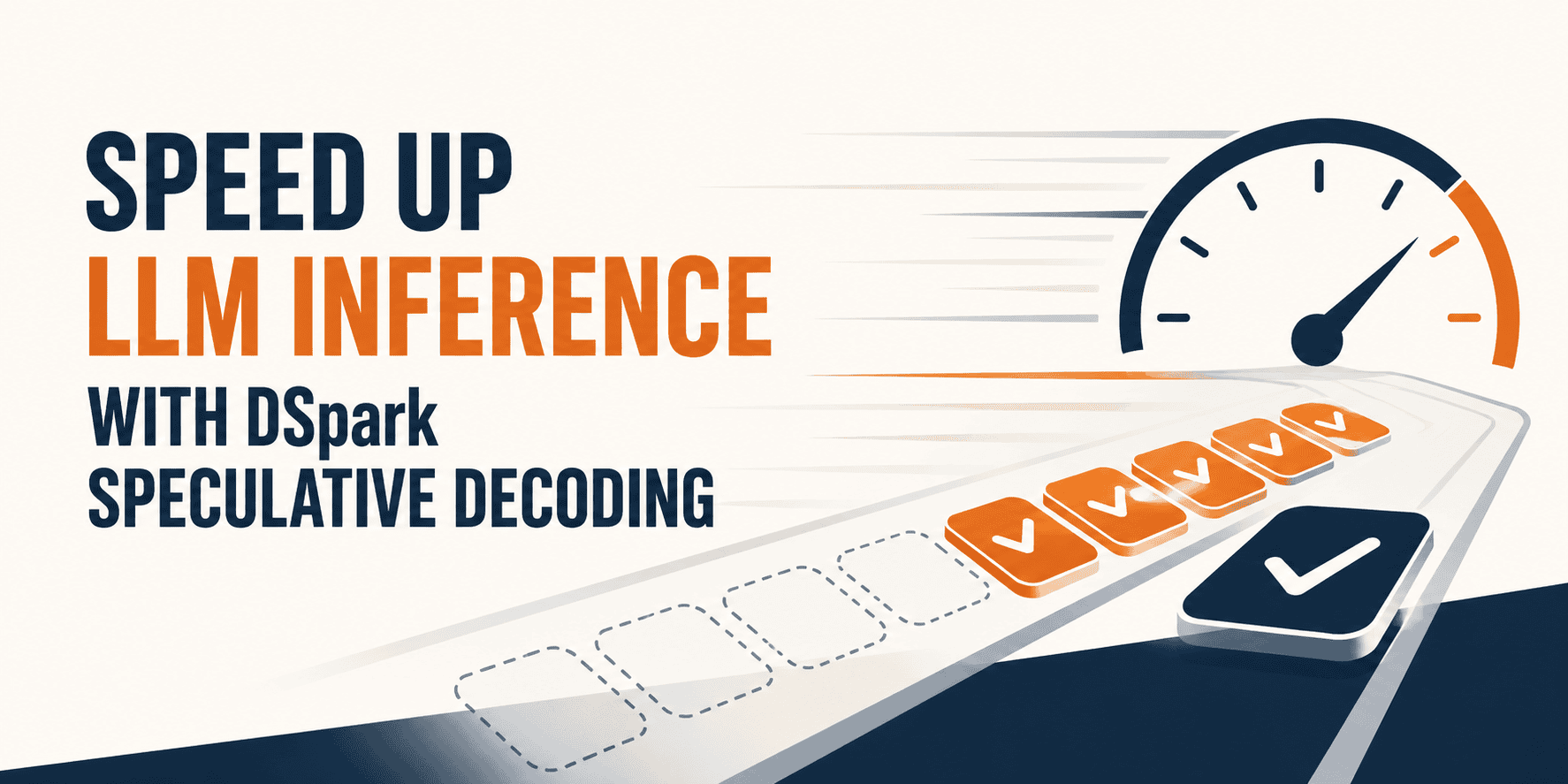
Unlock faster local LLM inference with DSpark speculative decoding
Waiting for the local model to generate its next token can feel like watching paint dry. DSpark speculative decoding changes that. By using a smaller draft model to propose candidates and the larger Qwen3-8B to verify them, it accelerates generation on the same GPU. We appreciate that this works directly with llama.cpp and CUDA, making it practical for your own hardware. It is a straightforward approach to reclaiming speed. For more on the broader concepts, our guide to distributed training is a helpful companion.

Meta brings agentic AI to local machines with open source Muse Glimmer
Meta is putting its weight behind open source again. Today marks the release of Muse Glimmer, a 30-billion-parameter model designed to run autonomous AI agents directly on high-end consumer hardware. It's a meaningful step toward moving agentic workloads off the cloud and onto local machines, but the license is the real headline. Glimmer arrives under Apache 2.0, a permissive standard with no usage restrictions. For developers, that means freedom to modify, deploy, and commercialize without legal friction. The weights are available now.

Local AI agents arrive on devices as small as a Raspberry Pi
Liquid AI's new LFM2.5-2.6B is built for a simple premise: capable AI shouldn't require a data center. By running entirely on local hardware, down to a Raspberry Pi, this open-weight model targets high-volume agentic tasks like tool calling and workflow automation without cloud dependency. It's a practical step for enterprises prioritizing privacy and latency. Explore how this small-footprint approach could fit your operations.
Discover how ARPL adapts llama.cpp to your device's true capabilities
Your phone already knows what chip it's running. Why shouldn't llama.cpp? ARPL tackles that gap head-on, reading the Snapdragon 8 Elite's actual ISA extensions and core layout at runtime, then tuning thread counts and context params to match. No per-device builds, no guesswork. Testing on a Samsung S25 Ultra shows real gains. It's a smart, practical step for ARM AI, even if the NPU partitioning is still pending.
Unlock faster local coding workflows with AI and speculative decoding
Local AI has a new ceiling. With Qwythos-9B-Claude-Mythos-5-1M running through llama.cpp, you can pair speculative decoding with the Pi coding agent to build fast, private workflows right on your own hardware. The OpenAI-compatible API keeps integration straightforward. This isn't about hype; it's about practical leverage. If you're still wrestling with cloud dependencies, this setup offers a refreshing alternative. And if you're questioning how much to trust these tools, our piece on talking to an AI clone is worth a read.