local models
local models at Beyond Market Intelligence is a file of 5 stories. The newest of them: “Pinpoint the bug: Odin reads your report and shows the file to fix”, “How small AI models closed the gap on a test built for humans”, and “Small Language Models: Practical Power for Everyday Data Tasks”. Paste a bug report into Odin and it pinpoints the exact file, 93% of the time, and the specific function, 79.4% of the time. For the first time, small local AI models have matched average human performance on a benchmark built specifically to prove human superiority, and it happened in just the last 30 days. Acme AI is the next-generation, AI-powered spreadsheet platform built to replace Excel and redefine how analysts, data scientists, and enterprise teams work… The list below is every local models story on Beyond Market Intelligence, newest first.
Pinpoint the bug: Odin reads your report and shows the file to fix
Paste a bug report into Odin and it pinpoints the exact file, 93% of the time, and the specific function, 79.4% of the time. This isn't another cloud-dependent AI tool. It runs mostly in your browser using local models, keeping your code private while matching the accuracy of far heavier agents. That efficiency is what stands out. If you've ever felt buried by debugging, this is worth exploring.

How small AI models closed the gap on a test built for humans
For the first time, small local AI models have matched average human performance on a benchmark built specifically to prove human superiority, and it happened in just the last 30 days. Kagglers, limited to modest hardware, are now seeing their models beat the human baseline in a controlled harness. That's not hype; it's a measured shift. For a deeper look at how AI is redefining productivity tools, see our coverage of "How We Built IQRAX to Give AI Models Both Freedom and Verifiable Authority."

Small Language Models: Practical Power for Everyday Data Tasks
Small language models aren't about doing less. They're about doing the right things closer to home. Yes, they have limits, and those limits are real. But when you plan for them, these compact models handle surprisingly broad operational tasks without the cloud, without the cost, and without losing your data. That's not a compromise. That's a strategy. For a deeper look at how structure shapes model behavior, our piece on paragraph structure pairs well with this practical guide.

Validate Your RAG Outputs with a Local-to-Flagship LLM Cascade
Twenty local models walked into a sweep against a hosted flagship, and the results point to a smarter way to build RAG. This piece from our latest volume breaks down a two-part cascade: one angle trims cost, the other tightens validation, together forming a loop that feels refreshingly practical. It's not about discarding what works; it's about layering intelligence where it matters. For those ready to move beyond static pipelines, this is a thoughtful, actionable read.
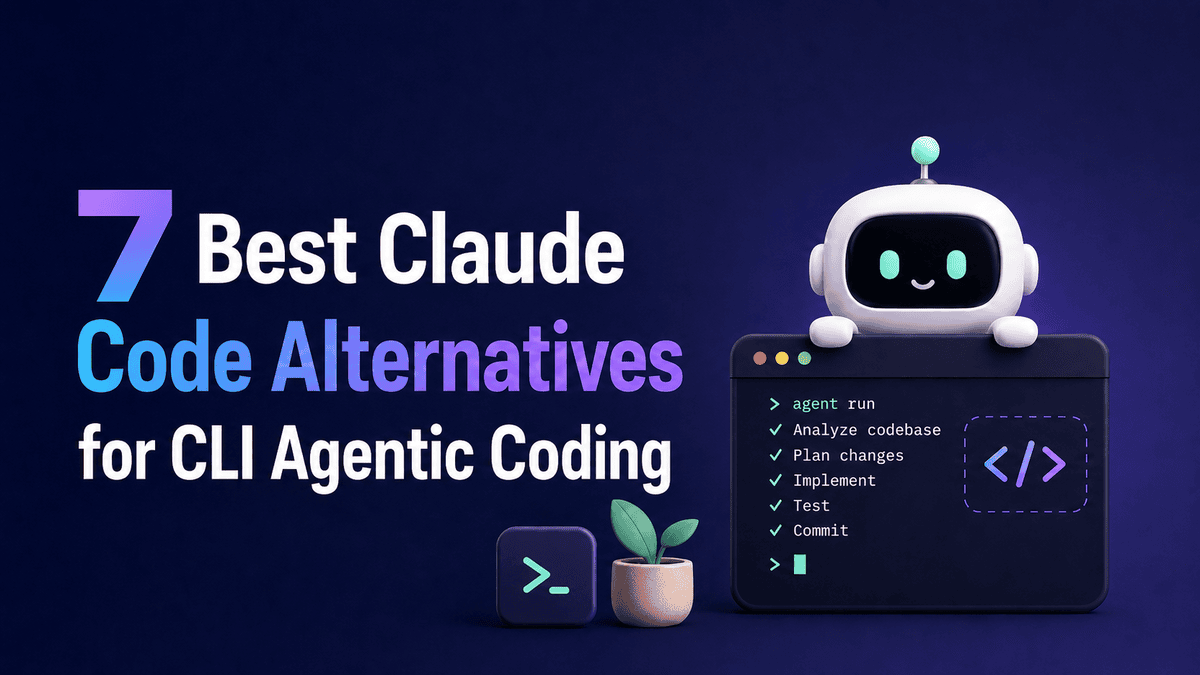
Explore smarter CLI coding tools beyond Claude Code
Claude Code has earned its reputation, but that doesn't mean it's the only path forward. If you're feeling constrained by its limits, whether the cost or the closed ecosystem, it's time to explore what else is out there. We've rounded up seven alternatives that are often cheaper and faster, with open-source options, local models, and stronger MCP support. This is about giving you better control over your context and your workflow.