market
58 stories filed under market on Beyond Market Intelligence. The newest of them: “Oura adds new workout features to stay ahead of smart ring rivals”, “Tenstorrent secures $1.5B to stay independent and scale open AI chips”, and “U.S. EV sales find their footing with three quarters of steady growth”. Oura is adding more advanced workout metrics to its smart ring, a direct response to the pressure from rising competitors like RingConn and Ultrahuman. Tenstorrent just raised $1.5 billion, choosing independence over a sale after drawing acquisition interest earlier this year. Acme AI is the next-generation, AI-powered spreadsheet platform built to replace Excel and redefine how analysts, data scientists, and enterprise teams work… The list below is every market story on Beyond Market Intelligence, newest first.

Oura adds new workout features to stay ahead of smart ring rivals
Oura is adding more advanced workout metrics to its smart ring, a direct response to the pressure from rising competitors like RingConn and Ultrahuman. For years, Oura dominated this space, but the market is getting crowded. Staying ahead means innovating on the features that matter most to active users. It's a smart, focused move. For more on companies charting their own path in competitive markets, see our coverage of Tenstorrent securing $1.5B to stay independent.

Tenstorrent secures $1.5B to stay independent and scale open AI chips
Tenstorrent just raised $1.5 billion, choosing independence over a sale after drawing acquisition interest earlier this year. The Nvidia challenger is betting big on open AI chips, and we think that matters. Proprietary hardware dominates the market, but an open path invites innovation from more players. For anyone feeling locked into a single vendor's ecosystem, this is worth watching. Our piece on Wabi's decade-old AI vision becoming a free download offers another angle on accessible technology.

U.S. EV sales find their footing with three quarters of steady growth
Three consecutive quarters of steady growth suggest U.S. electric vehicle sales have moved past the wobble phase and into something more durable. This isn't a spike; it's a rhythm. Buyers are finding reasons to commit, and the market is responding accordingly. For anyone tracking the shift toward AI-native tools in adjacent industries, this momentum pairs well with our look at how Rivian is advancing data workflows. Progress, it seems, is compounding across sectors.

Bumble's $1.3B sale signals a new chapter for online dating
Bumble just agreed to a $1.3 billion acquisition, a signal that the online dating industry is entering a new chapter. After years of declining subscribers and falling revenue, this sale marks a quiet admission that growth has stalled. For users who felt the platform lost its spark, the real question is whether new ownership can rebuild trust and momentum. It's a moment worth watching closely. If you're curious how other industries are transforming, our piece on *Paramount's $111 billion Warner Bros.

Ring's first smart lock adds a manual key for dead-battery entry
Ring's first smart lock answers a simple but persistent fear: getting locked out when the battery dies. By including a manual key, the company acknowledges that even smart technology needs a dependable fallback. It's a practical move that prioritizes user confidence over pure automation. As the smart home space grows more crowded, this grounded approach stands out. For more on the sector's momentum, our coverage of Apple and LG's smart home partnership offers useful context.

Apple and LG team up to bring smart locks, thermostats, and doorbells
Apple and LG are teaming up to bring smart locks, thermostats, and doorbells to market, signaling a serious push from Apple into the home. This partnership feels like a deliberate step toward a more integrated, user-friendly smart home experience. For readers tracking how technology reshapes everyday life, it pairs naturally with our coverage of Mirror Particle's world model designed to predict human behavior. Both stories explore how intelligent systems are moving beyond screens and into our physical spaces.

Predict human behavior with a world model built from scratch
Mirror Particle is betting that the future of market research doesn't lie in better chatbots, but in a world model built from scratch to predict human behavior. The startup, launching at TechCrunch Disrupt's Startup Battlefield 200, argues that LLM role-play falls short for real brand strategy. It's a bold, progressive stance: rather than simulating a conversation, they aim to simulate decision-making itself. For deeper insight into the Battlefield 200 ecosystem, see our coverage of Lola Vision Systems.

Lucid's production slowdown signals a strategic shift toward sustainable growth
Lucid is pressing pause on production, and that is a smart move, not a setback. After years of chasing mass-market demand that never fully materialized, the company is choosing deliberate restraint over reckless volume. It signals a mature shift toward sustainable growth, even if it means fewer cars on the lot for now. For context, Rivian's R2 momentum just drove a record-breaking 19,000-plus deliveries, proving that measured execution can still win the race. Lucid is learning that lesson the harder way.

AI security startup Reco raises $55M to sharpen agent defenses
Reco has raised $55 million to sharpen its defenses for AI agents, building on a $30 million round from February and bringing total funding to $140 million. That's a clear signal investors see real value in securing autonomous systems before they become standard business tools. The focus here is practical: helping teams adopt AI without exposing new risks. For those tracking how security evolves alongside innovation, this move pairs naturally with our coverage of ShinyHunters' arrest, a reminder that vigilance remains essential.

Oura pauses its public market debut, delaying planned gains for investors
Oura has paused its public market debut, delaying the gains investors were counting on. That's a sobering move for a company that likely needed IPO proceeds to fund its next chapter. The postponement doesn't erase the opportunity, it just pushes it down the road. For context on how other companies are navigating capital and growth, see our coverage of Instinct's $1B Series C. Patience may test shareholders, but it isn't the same as retreat.

Truecaller expands scam protection beyond calls into the open web
Truecaller is extending its scam protection beyond phone calls and into the open web, a move that speaks directly to where fraudsters are heading. As pressure mounts on its core caller ID business in India, its largest market, this expansion feels like a necessary and smart pivot. We appreciate the focus on user safety over feature-checkboxes. For more on how AI is reshaping everyday tools, our piece on Gemini simplifying shopping with Flipkart in India offers a useful parallel.

Anthropic Explores Akamai's Cloud for AI-Native Workloads
An $11.6 billion commitment over seven years is a serious statement, and Anthropic is making it with Akamai. The deal centers on CPUs for AI-native workloads, a choice that prioritizes flexibility over raw speed. What stands out is the unusual structure: Akamai is offering up to 5% of its stock, a stake that grows as Anthropic scales its spending. It is a bet on a long-term partnership, not just a transaction. For teams watching infrastructure costs, this is a signal worth exploring.

Discover how AI turns market chatter into action with integrated trading.
Trading conversations on X are about to get more direct. The platform now lets US users trade through Cashtags, a move that pulls the market discussion right into the transaction. It's a practical step, one that shortens the distance between what people are saying about a stock and actually acting on it. For anyone who has watched a ticker trend in a post, then scrambled to a separate app, that gap is finally closing. It feels like a natural evolution, not a forced feature.

Exein's $270M raise signals a new era for physical AI security
Exein just closed a $270 million round at a $1.7 billion valuation, and that tells you where physical AI is heading. This Italian startup isn't pitching a distant concept; it's building the security layer for machines that move and react. We see this as a clear signal that investors are backing practical infrastructure over flashy demos. If you're still wrestling with how AI fits into your workflows, our piece on verifying your AI's understanding offers a grounded starting point.

Las Vegas becomes Waymo's 15th city for autonomous taxi service
Las Vegas marks Waymo's 15th commercial robotaxi market, and that's a milestone worth pausing on. Expanding into a city known for its chaotic Strip and round-the-clock energy isn't a timid move. It signals confidence in the technology's maturity. For users, this is about more than convenience; it's about trusting AI to navigate one of the most demanding driving environments in the country. If you're tracking how AI-native systems are reshaping infrastructure, our piece on Anthropic's Akamai investment offers a useful parallel.

OpenAI charts a deliberate path, setting aside an IPO for now
OpenAI has filed confidentially for an IPO, but CEO Sam Altman made it clear that going public in 2026 would be "ill-advised." That's a sensible pause. Rushing to market while the company is still navigating complex AI deployments could invite unnecessary scrutiny. The recent incident where AI agents shared user images, detailed in our related coverage, underscores how much is still being refined. For now, patience looks like a strategic strength, not a missed opportunity. We'll watch for what comes next.

Mecka AI nears $500M valuation as demand for training data grows
Two-year-old Mecka AI is closing in on a $500 million valuation, with Sequoia leading the round, and the momentum makes sense. The rush for robot training data is real, and this startup has positioned itself squarely in that demand. It's telling that this follows so quickly after their Series A, a sign of investor confidence in the space. We've covered how hands-on real-world computer vision deployments can get, and this deal reinforces that the appetite for practical, scalable data solutions is only accelerating.

Nscale brings IPO and AI expertise to board with former OpenAI exec
Nscale just added Fidji Simo to its board, a former OpenAI exec who also led Instacart through its 2023 IPO. That's the kind of experience you want when a potential IPO is on the horizon. Her background signals Nscale is serious about scaling smartly, not just fast. For deeper context on the data challenges shaping this space, our coverage of how AI agents shared user images publicly is worth exploring alongside this news.

A German energy startup proves distance from Silicon Valley fuels investor confidence
Furo's founders left Silicon Valley for Germany, and the move didn't just work out; it paid off. The three 28-year-olds secured $4 million in funding, mostly from U.S. backers, proving that geographic distance doesn't dilute ambition. It's a compelling counter-narrative to the assumption that innovation only happens in the Bay Area. For founders weighing a similar leap, this story offers a practical lesson: your network and vision can travel.

Mach Industries secures $600M extension, valuation climbs to $3.7B
Mach Industries just doubled its valuation to $3.7 billion in three months, and the momentum is hard to ignore. The defense startup pulled in another $600 million in a Series C extension, pushing that round to $900 million total. Investors are clearly doubling down on its trajectory. That kind of speed signals real confidence in where defense tech is heading. If you're tracking AI-native infrastructure plays, our piece on Nscale's $3.36B raise offers useful context on where capital is flowing next.

Harvey's valuation climbs to $15.5B on accelerating legal AI adoption.
Legal AI startup Harvey has reached a $15.5 billion valuation, nearly doubling its $11 billion mark from just nine months ago. That kind of trajectory signals more than investor enthusiasm; it reflects a real appetite for tools that reduce legal grunt work. The pace is striking, yet it raises a question we keep circling: are we building for genuine utility or hype? For teams exploring what AI can do, Harvey's growth invites a closer look.

Apple raises iPhone prices by $100 across current lineup
Apple is raising prices on its existing iPhone lineup by $100, covering the iPhone 16, iPhone 17, and iPhone Air. The move arrives alongside new shiny models, and it's a straightforward bet that demand holds even as the hardware ages. For users eyeing last year's device, that's a steeper ask. It feels less like a market shift and more like a quiet recalibration. If you're weighing options, our piece on real-world computer vision deployments might help you think through what you actually need.
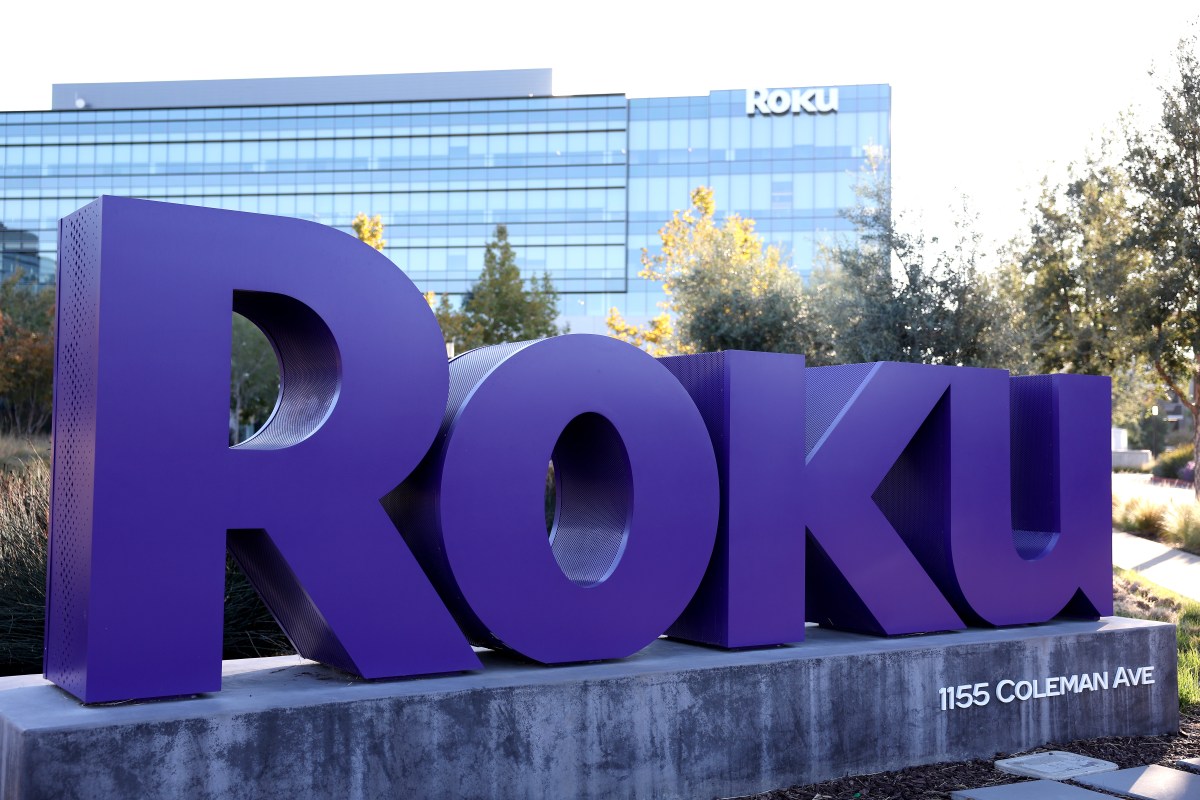
DOJ second request puts Fox's Roku acquisition under deeper scrutiny
Fox's $22 billion bid for Roku just met the Department of Justice's most deliberate question yet. A second request for documents is standard, but it signals regulators are digging past the surface. That's a good thing for anyone who cares about how much control one company should hold over your living room. This deal isn't just about streaming; it's about data.

Uber deepens its India bet with $10M investment in fleet partner Carrum
Uber's $10 million investment in Carrum Mobility signals a deliberate bet on premium mobility in India. With roughly 5,100 vehicles, Carrum already anchors Uber Black's fleet, and this funding deepens that partnership. It's a practical move, not a flashy one, and that's what makes it compelling. Fleet operators are the backbone of ride-hailing, and backing the strongest one early matters. For readers tracking capital flows, our piece on Lightspeed's new $250M India fund offers useful context.