model output
4 stories filed under model output on Beyond Market Intelligence. The newest of them: “Is Reinforcement Learning Really Needed for Jev's Spreadsheet AI?”, “Turn Idle CPU Power into Faster AI Token Generation”, and “Move Beyond Begging for Valid JSON with Constraint Decoding”. The question cuts to the heart of Jev's design. Speculative decoding is often framed as a GPU-only play, but DFlash proves otherwise. Acme AI is the next-generation, AI-powered spreadsheet platform built to replace Excel and redefine how analysts, data scientists, and enterprise teams work… The list below is every model output story on Beyond Market Intelligence, newest first.
Is Reinforcement Learning Really Needed for Jev's Spreadsheet AI?
The question cuts to the heart of Jev's design. If the model only predicts Choice, Score, or Noul, those outputs are already differentiable through cross-entropy or MSE. Adding reinforcement learning feels like extra machinery unless there's a hidden reward signal we're not seeing. The environment would need to be defined, and that's unclear. It's fair to ask if this is substance or just a buzzword. We're not dismissing the approach, but the burden of proof is on the implementation.

Turn Idle CPU Power into Faster AI Token Generation
Speculative decoding is often framed as a GPU-only play, but DFlash proves otherwise. In vLLM tests on Intel Xeon 6, it hit 3.92x the autoregressive throughput with Qwen3.5-9B at concurrency 1. That is not a marginal gain; it is a practical unlock for underused CPU compute. The post breaks down the acceptance metrics and shows exactly when speculation pays off. For a deeper look at keeping model inputs clean, check out our piece on catching AI slop before it skews your data.
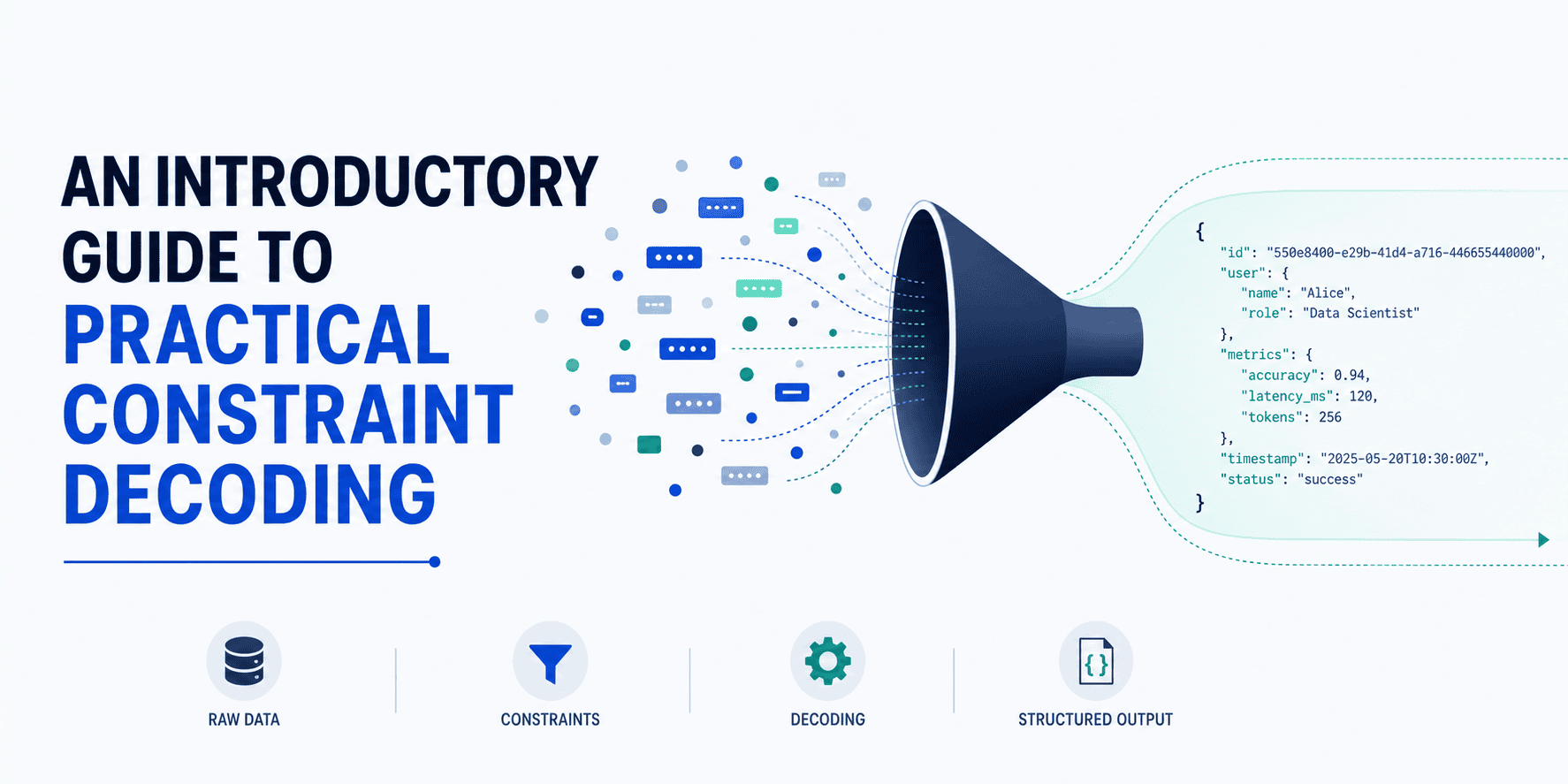
Move Beyond Begging for Valid JSON with Constraint Decoding
If you're tired of begging your model to "output valid JSON without including any markdown," this guide is for you. Practical constraint decoding takes the guesswork out of formatting, turning a frustrating negotiation into a reliable, repeatable process. It's a straightforward approach that puts control back in your hands. We think it's an essential read for anyone building on AI. For more ways to keep your work smooth, check out "Keep Your Data Science Notebooks Running: Six Essential Habits" to round out your workflow.

Stop parsing JSON manually and let AI handle structured data output
If you're tired of wrestling with JSON schemas and manual parsing, this guide is for you. It demonstrates a cleaner path: using Pydantic with OpenAI to get structured outputs directly from LLMs. The approach removes the fragile, time-consuming busywork, letting you trust the model's response instead of second-guessing every field. It's a practical shift toward more reliable data handling. For those ready to move beyond basic prompting, this is a solid next step.