navigation
navigation at Beyond Market Intelligence is a file of 10 stories. The newest of them: “Waymo's Texas Fleet Grows Significantly, Reflecting Rapid Expansion”, “Prepare Your iOS Apps for the iPhone Duo’s Flexible Displays”, and “When AI advice overlooks the human need for preparation”. Waymo's Texas fleet just grew by 49% in a single month, and that kind of momentum is hard to ignore. The iPhone Duo's flexible display demands more than a quick tweak; it asks developers to rethink navigation, toolbars, and even camera behavior across distinct physical states. Acme AI is the next-generation, AI-powered spreadsheet platform built to replace Excel and redefine how analysts, data scientists, and enterprise teams work… The list below is every navigation story on Beyond Market Intelligence, newest first.

Waymo's Texas Fleet Grows Significantly, Reflecting Rapid Expansion
Waymo's Texas fleet just grew by 49% in a single month, and that kind of momentum is hard to ignore. It signals a deliberate push into new terrain, not just a test run. We're watching a company move with intent, and the pace is worth your attention. Expansion at this scale raises practical questions about deployment and real-world performance, questions our earlier piece, "Exploring Real-World Computer Vision," tackles head-on.
Prepare Your iOS Apps for the iPhone Duo’s Flexible Displays
The iPhone Duo's flexible display demands more than a quick tweak; it asks developers to rethink navigation, toolbars, and even camera behavior across distinct physical states. That's a meaningful shift in how we approach iOS design, and it's smart to start planning now. The outer screen, inner canvas, and partial folds each introduce new reserved regions to respect. For a deeper look at how skill demands are changing alongside hardware, check out our piece on navigating AI/ML job requirements.

When AI advice overlooks the human need for preparation
A pair of hikers recently needed rescue after following Google Gemini's advice on trail provisions. The sheriff's office noted Gemini told them to bring far less food and water than their group required. It's a sharp reminder that AI can't fully grasp real-world variables. We're all for exploring new tools, but planning decisions should lean on human judgment. For more on AI's reach, check out our piece on Waymo's Texas Fleet Grows Significantly, Reflecting Rapid Expansion.

Enterprise buying patterns have shifted, leaving startup ARR vulnerable
Enterprise buying has always been chaotic, but new research suggests the AI era has made startup ARR genuinely fragile. The old playbook for closing deals no longer applies, and too many founders are still running it. We think that is the real story here. If you are navigating this shift, our related piece on AI/ML job requirements shows how expectations are bending in parallel ways. The pattern is clear: adapt your approach, or watch the pipeline stall.

Waymo makes its case for sensor diversity over pure AI autonomy
Waymo is making its case loudly: full autonomy can't be achieved with a single approach. By arguing that a mix of sensors is essential, Waymo directly challenges the idea that pure end-to-end AI systems are safe enough for public roads. It's a confident stance, especially with Tesla's Cybercab on the horizon. We see this as a necessary push for accountability in a moment when hype often outpaces proof.

Explore how recursive CTEs simplify graph traversal in SQL.
Most of us treat SQL as a tool for flat tables, but recursive CTEs unlock something far more interesting: the ability to traverse relationships directly in your database. This guide shows how to navigate hierarchies, detect cycles, and even calculate degrees of separation without leaving SQL. It's a practical, empowering look at a hidden capability. If you're ready to move beyond simple queries, this is your entry point.

Waymo expands Dallas robotaxi access, inviting more riders to explore autonomous travel
The waitlist is gone. Waymo has opened its robotaxi service to everyone in Dallas, a decisive move in its push to scale self-driving technology across the U.S., U.K., and Europe. This isn't just another city launch; it's a signal that the company believes its system is ready for broader, unscripted use. We're watching a deliberate expansion, not a test. For a deeper look at how this momentum fits into the wider investment surge, check out our piece on AI-native companies driving major capital interest.

Explore how AI is reshaping the path forward for autonomous mobility.
The robotaxi industry has reached a fork in the road, and TechCrunch Mobility is here to map both routes. This week, we're digging into how AI is reshaping transportation, from autonomous fleets to the tools we use to build them. It's a moment to explore what works, what doesn't, and what's next. If you're questioning how much trust to place in these systems, our piece on talking to an AI clone offers a grounded reality check.
Explore how Claude Design turns ideas into interactive prototypes with AI.
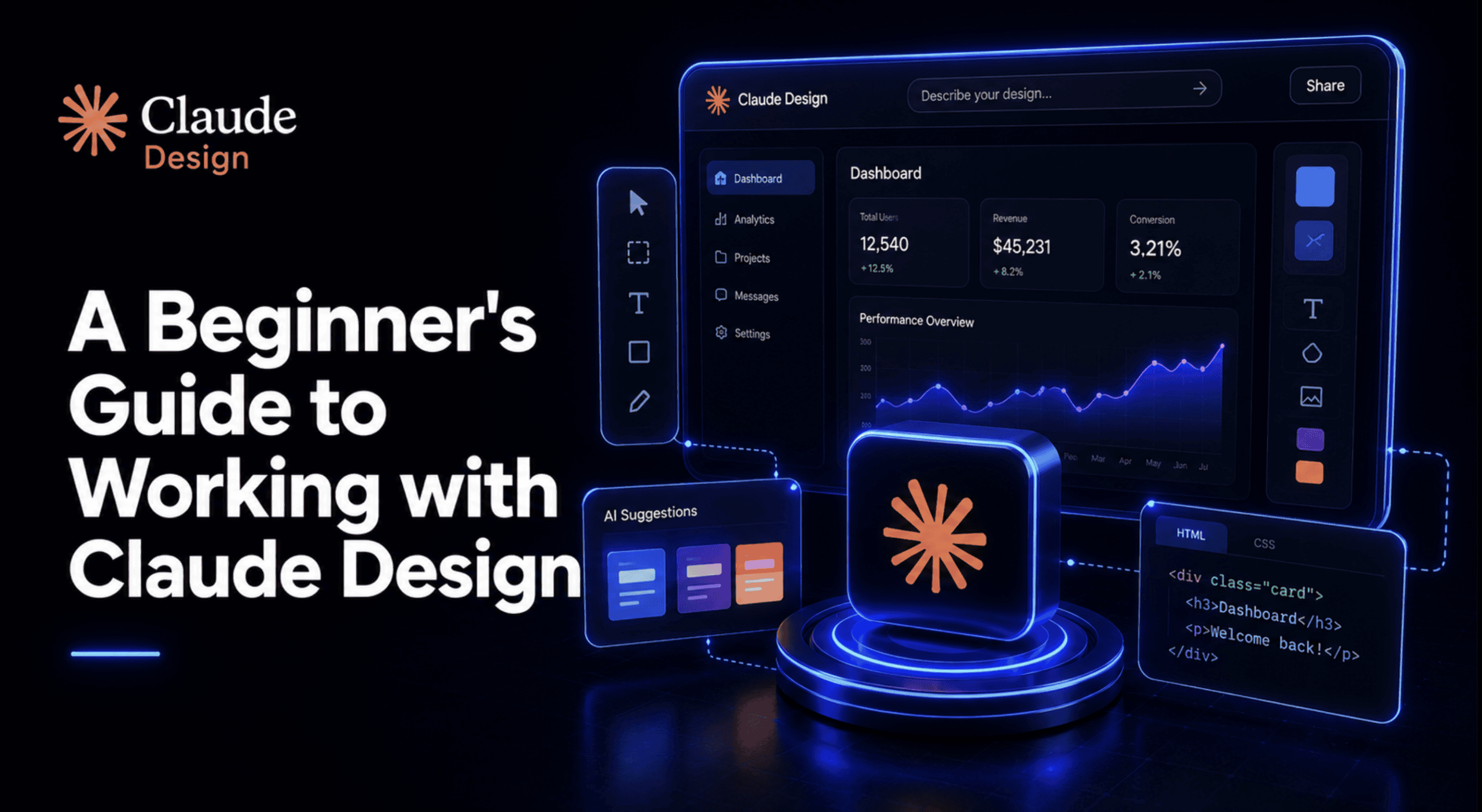
Claude Design isn't just another prototype tool. It's a research preview from Anthropic Labs that uses Claude Opus's vision capability to turn ideas into interactive prototypes with working navigation, embedded video, voice input, and even 3D elements. For beginners, the barrier to entry feels refreshingly low. You're not wrestling with code; you're exploring what's possible when AI handles the heavy lifting. If you're ready to move beyond static mockups, this guide walks you through the essentials.

Ford maps a smarter drive with Apple navigation built right in
Ford is putting Apple at the center of its next-generation EV cockpit, becoming the first automaker to embed Apple Maps directly into its infotainment system. That is a smart bet on familiarity over fragmented ecosystems. Drivers already trust Apple's navigation, so bringing it into the car feels less like a learning curve and more like a natural extension. It also signals that legacy automakers are serious about software partnerships, not just hardware specs.