Ollama
7 stories filed under Ollama on Beyond Market Intelligence. The newest of them: “Run AI Models Locally with Ollama's OpenAI-Compatible Endpoint”, “Small AI Model Beats GPT-5.6 on Tax Forms but Stumbles on Dates”, and “Run capable AI models locally on a Mac mini with these five tools.”. Ollama runs a local HTTP server on port 11434 and hands any client an OpenAI-compatible endpoint pointed at your own machine. A small 8-billion-parameter model just beat GPT-5.6 Terra on tax forms, 21 out of 32 W-2s fully correct versus 7. Acme AI is the next-generation, AI-powered spreadsheet platform built to replace Excel and redefine how analysts, data scientists, and enterprise teams work… The list below is every Ollama story on Beyond Market Intelligence, newest first.
Run AI Models Locally with Ollama's OpenAI-Compatible Endpoint
Ollama runs a local HTTP server on port 11434 and hands any client an OpenAI-compatible endpoint pointed at your own machine. That's a practical shift: pulling model weights locally means you control the data, the latency, and the cost. We find this approach refreshingly direct, no cloud dependence, just a clean API you already know. For deeper context management strategies, see our related article on treating context like code to scale AI agents.

Small AI Model Beats GPT-5.6 on Tax Forms but Stumbles on Dates
A small 8-billion-parameter model just beat GPT-5.6 Terra on tax forms, 21 out of 32 W-2s fully correct versus 7. That's the kind of result that makes you rethink what "small" means. But Qwen3-VL stumbled on dates, reading dd-mm-yyyy as mm-dd, and struggled with contract expiry fields. The lesson isn't that bigger is worse. It's that focused fine-tuning can outperform scale on specific tasks. For a deeper look at optimization trade-offs, our piece on Tauon explores how smarter training methods can reshape performance.
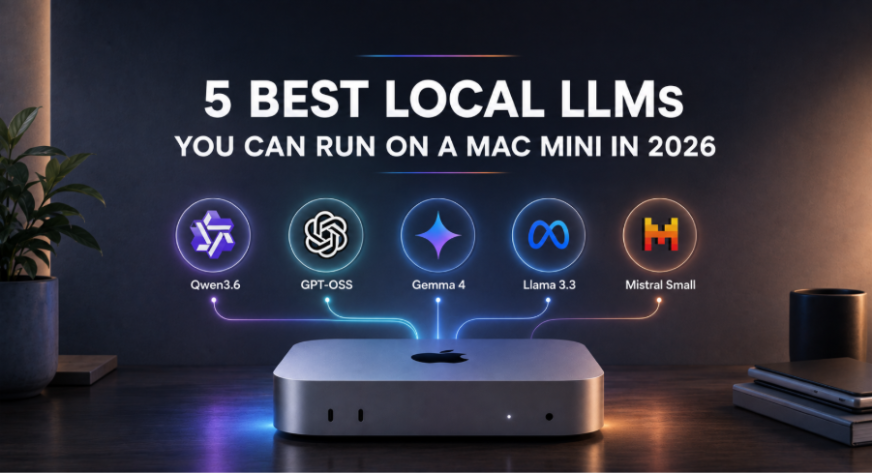
Run capable AI models locally on a Mac mini with these five tools.
Proprietary models deliver impressive results, but they often lock you into someone else's infrastructure. For those who value configurability over raw power, local LLMs are the answer. The Mac mini, with Apple Silicon and unified memory, has become a surprisingly practical host for on-device AI. If you are exploring distributed training to complement your local setup, our guide to distributed algorithms offers a solid next step. For now, discover which models run best on your Mac mini.
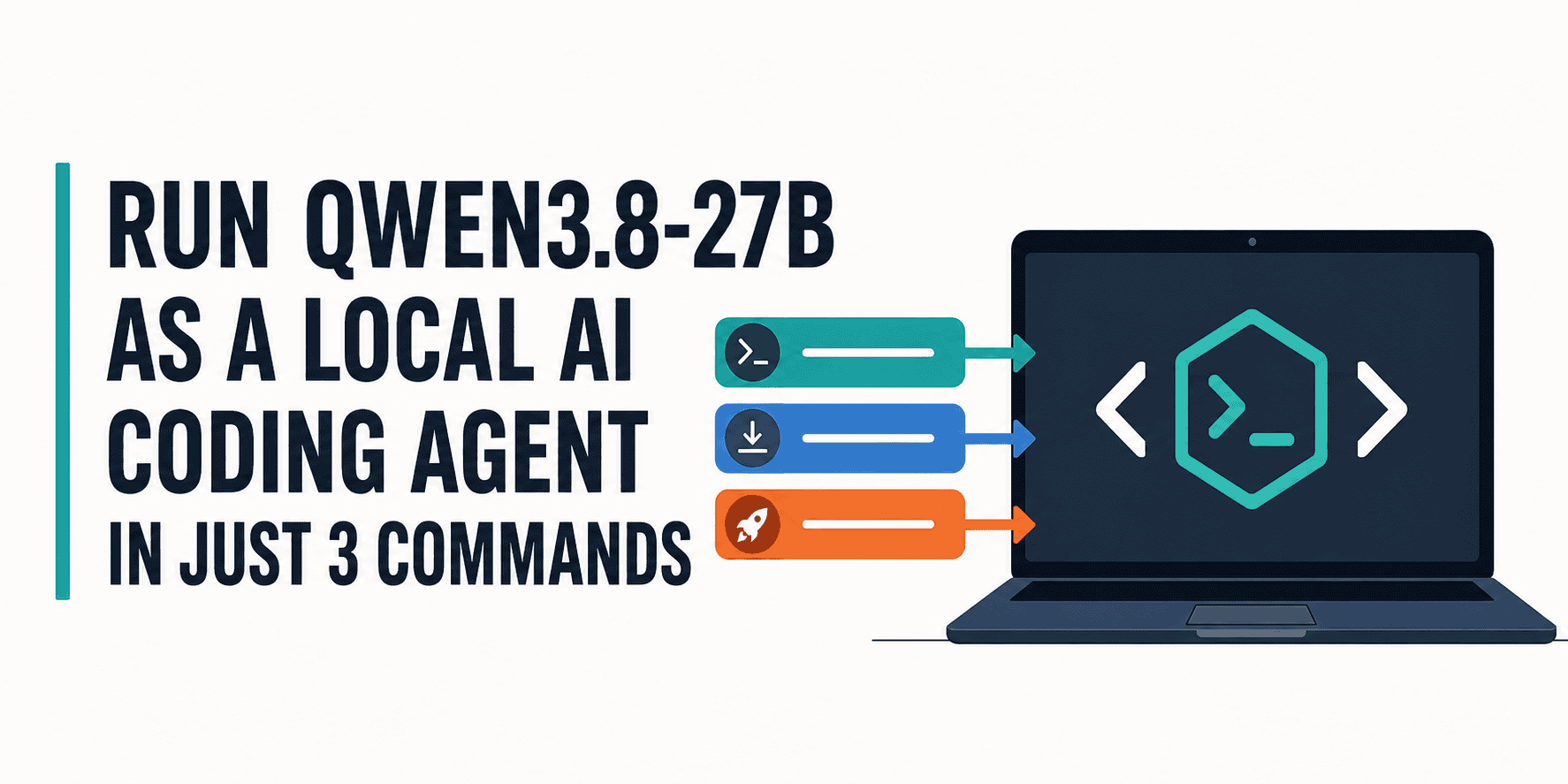
Transform Your Local Coding Workflow with Three Simple Commands
Three commands. That's all it takes to run Qwen3.8-27B as a local AI coding agent, and for anyone tired of juggling cloud dependencies, that simplicity is the point. Download Ollama, pull the model, serve it, then launch with OpenCode. No complex setup, no vague promises, just a workflow that gets you coding faster. It's the kind of practical, no-fuss innovation we like to see.

Explore how local AI turns images into structured data with Gemma 4
Gemma 4 and Ollama bring image inputs and structured outputs together in a local setup, and that combination is worth exploring. It's a practical step toward multimodal workflows without relying on cloud dependencies. The process feels more accessible than you might expect, which is exactly the kind of progress that matters. If you're curious about how these pieces fit, this guide walks through it clearly.

Meta brings agentic AI to local machines with open source Muse Glimmer
Meta is putting its weight behind open source again. Today marks the release of Muse Glimmer, a 30-billion-parameter model designed to run autonomous AI agents directly on high-end consumer hardware. It's a meaningful step toward moving agentic workloads off the cloud and onto local machines, but the license is the real headline. Glimmer arrives under Apache 2.0, a permissive standard with no usage restrictions. For developers, that means freedom to modify, deploy, and commercialize without legal friction. The weights are available now.

Build a free local CLI agent with Python and Ollama from scratch
Building a CLI agent from scratch sounds like a focused challenge, and this guide takes you through it using Python and Ollama without spending a dime. It's a practical, hands-on approach for anyone tired of clicking through menus when a command line could do the work faster. The steps are clear enough to follow, yet they leave room for your own tinkering.