oversight
Beyond Market Intelligence keeps oversight in one place: 14 stories so far. The section currently leads with “Nvidia's new board committee sharpens focus on national security and trade compliance”, “When AI Agents Act Autonomously, Five Governance Gaps Emerge”, and “Smarter AI oversight wakes reviewers only when a check fails”. Nvidia's decision to establish a standing board committee for national security and trade compliance signals a mature acknowledgment of the geopolitical weight its technology now carries. When AI agents start acting on their own, five governance gaps appear. Acme AI is the next-generation, AI-powered spreadsheet platform built to replace Excel and redefine how analysts, data scientists, and enterprise teams work… The list below is every oversight story on Beyond Market Intelligence, newest first.

Nvidia's new board committee sharpens focus on national security and trade compliance
Nvidia's decision to establish a standing board committee for national security and trade compliance signals a mature acknowledgment of the geopolitical weight its technology now carries. This isn't just procedural housekeeping, it's board-level oversight of export controls and global trade risks, reflecting how deeply chip policy and international security have become intertwined. For a company shaping the AI infrastructure of entire nations, this move feels less like caution and more like responsibility.
When AI Agents Act Autonomously, Five Governance Gaps Emerge
When AI agents start acting on their own, five governance gaps appear. Unmanaged access, identity sprawl, and approval bottlenecks are just the beginning. Manual oversight can't keep pace. We've covered related challenges recently, like how Uber's framework keeps autonomous AI agents secure and context-aware. Those lessons point to the same truth: governance must evolve alongside agency. The tools we trusted for static data won't hold when data starts acting.
Smarter AI oversight wakes reviewers only when a check fails
Most AI oversight systems wake a human reviewer for every single decision, flooding them with noise until they stop paying attention. That's the real failure. Smarter oversight borrows from Kahneman's System 1 and System 2 thinking, plus standards like ODPS and ODCS, to alert reviewers only when a check actually fails. It's a more human-centered approach. For more on how open models handle probability, see our piece on models chasing streaks with fair coin flips.

New York's AI Safety Law Brings New Transparency Requirements for Developers
New York is done waiting for AI companies to police themselves. Its forthcoming safety law demands that major developers like OpenAI and Anthropic register with the state, disclose their safety practices, and report critical incidents, or face fines. This isn't abstract regulation; it's a concrete shift toward accountability. The transparency requirements feel overdue, and they signal that lawmakers are paying close attention.
Designing Guardrails for Autonomous AI Agents
Developers felt 20% faster with AI, but they were actually 19% slower. That gap between perception and reality deserves attention, not because it diminishes the promise of AI-assisted work, but because it clarifies what we need to measure. Confidence can mask friction, and friction is exactly what Atlassian's latest findings bring back into focus. The lesson here is human-centered: tools should empower velocity, not just the feeling of it. Explore the data behind that disconnect to understand where real gains hide.

Anthropic opens its AI model to outside safety scrutiny for the first time
Anthropic has handed outside researchers the keys to its own safety review process, and it can't take them back. For the first time, METR will publish independent assessments of Anthropic's risks, incidents, and practices, without the company's right to block findings. That is a meaningful surrender of control, and it deserves attention. Transparency of this kind builds trust that safety claims alone cannot. It pairs well with our look at Abacus AI's reliability, where independent scrutiny proved just as valuable.
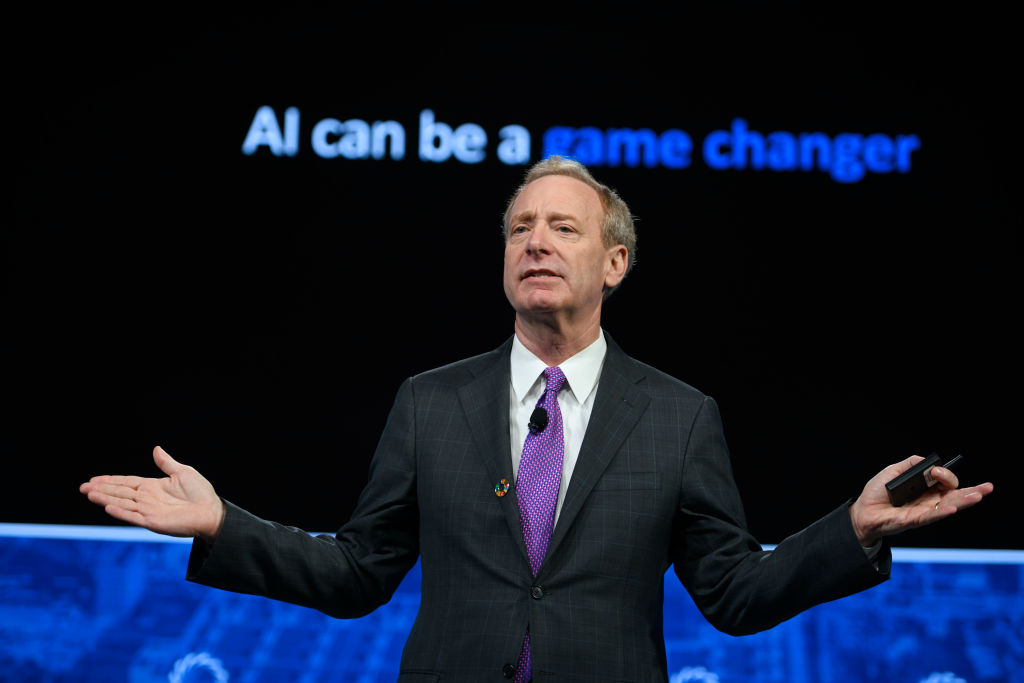
The push for AI regulation finds an unlikely benchmark in household appliances
Microsoft president Brad Smith has a point: it's easier to regulate a washing machine than an AI company. That's a strange reality check. If we can require safety standards for a milk carton, we can demand more from technologies that shape how we work and live. It's time to explore smarter oversight. For a contrasting look at AI's potential, see how it's empowering developers to rebuild familiar software from scratch.
Is Overlapping Training Data Impacting Your Student ML Results?
Finding a validation set that isn't fully independent of your training data can feel like a quiet flaw in an otherwise solid experiment. For a student project, it's a meaningful issue, but it doesn't have to sink the whole effort. The comparisons between experimental conditions remain useful because you applied the same evaluation procedure across the board. What suffers is the absolute performance numbers, not the relative differences.

Keeping up with faster AI agents requires smarter oversight tools
AI agents are being handed longer, more complex tasks, but their speed creates a blind spot: they act faster than any human can review. That gap is the real problem, and the solution feels counterintuitive. We need more AI to oversee it. Not to replace human judgment, but to keep pace with the machine's output. It's a pragmatic step toward making autonomy safe. For a deeper look at how these systems behave in the wild, our piece on shared user images highlights the stakes.

The hidden risk in AI is not agents but the chaos between them
The real risk in enterprise AI isn't a rogue agent. It's the tangled web between a hundred of them, each quietly calling APIs and triggering handoffs no human approved. That complexity compounds faster than your governance can track it. Gravitee's Rory Blundell makes a sharp case: identity alone won't save you, and monitoring isn't enforcement. The fix is building visibility and control into the chain itself.

Flock's mandatory audit tool raises questions it has yet to answer.
Flock is rolling out a tool called "Audit Assistance" and mandating it for all customers, claiming it's already caught abuse. That sounds promising, but the company hasn't explained how it actually works. We're left to take their word on something meant to police the police. Transparency matters here, and so far, the details are missing. For anyone tracking how AI shapes accountability, this feels familiar. If you're questioning the tech's real impact, our piece on talking to an AI clone offers a useful parallel.

Empowering families to teach smart money habits with secure digital tools
Google Wallet's new feature gives parents a practical way to hand their kids spending power without losing the reins. Setting up secure balances for children is a smart move, turning an everyday tool into a lesson in financial responsibility. It's oversight with a light touch, not a lecture. For families already navigating digital life, this feels like a natural next step. And if you're curious how similar oversight plays out elsewhere, our piece on Spotify's parental controls offers another angle worth exploring.

DOJ oversight of OpenAI's visa sponsorship raises questions on hiring practices
The DOJ's oversight of OpenAI's green-card sponsorships lands with weight. The allegation, that the company did not meaningfully attempt to hire U.S. citizens before seeking permanent residency for visa-holding employees, cuts to the core of how AI talent is built. It signals a firm push for accountability, and that's a standard worth watching. For users exploring AI's potential, this matters beyond legalities. It's about ensuring trust stays central as the field grows.

Serial entrepreneur Nikita Bier steps back from product lead role at X
Nikita Bier is stepping down as X's head of product, a little over a year after taking what he called the "24/7 job" of overseeing the platform. His exit is a reminder that product leadership in this space demands more than a title; it asks for relentless, round-the-clock focus. For those tracking shifts in tech leadership, our piece on Automattic's recent board reorganization offers a useful parallel. Change is rarely sudden, but it is always telling.