pandas
pandas at Beyond Market Intelligence is a file of 8 stories. The newest of them: “Build Interactive Dashboards Using Marimo's Reactive Notebooks”, “Explore a complete ML learning journey from NumPy to Transformers.”, and “Speed up pandas workflows with smarter, faster DataFrame processing.”. Spreadsheets weren't built for exploration, but Marimo's reactive notebooks are. Five months of daily commits is a serious signal. Acme AI is the next-generation, AI-powered spreadsheet platform built to replace Excel and redefine how analysts, data scientists, and enterprise teams work… The list below is every pandas story on Beyond Market Intelligence, newest first.
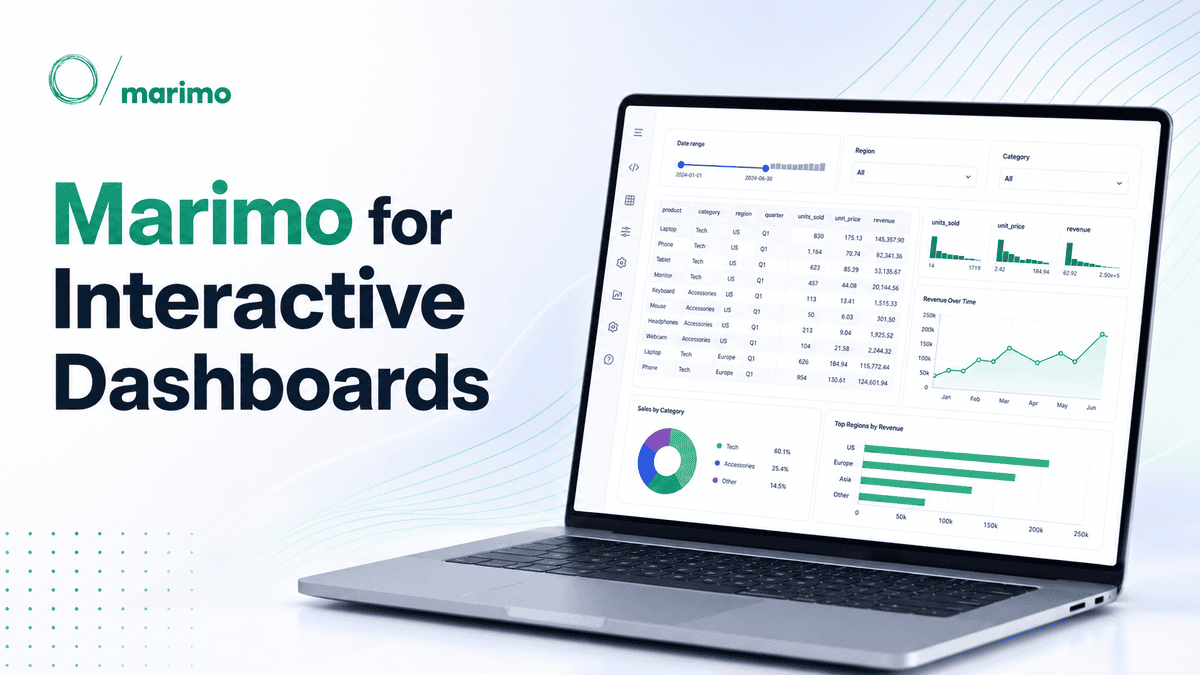
Build Interactive Dashboards Using Marimo's Reactive Notebooks
Spreadsheets weren't built for exploration, but Marimo's reactive notebooks are. This guide walks you through using Python, Pandas, and Altair to turn static analysis into an interactive dashboard you can actually share. We appreciate the focus on practicality, because data should respond to your questions, not the other way around. If you're curious how data representation shapes interpretation, our related piece, "How Many Stories Can Your Data Tell?" pairs well with this hands-on approach.
Explore a complete ML learning journey from NumPy to Transformers.
Five months of daily commits is a serious signal. This isn't a weekend project; it's a disciplined path from NumPy fundamentals all the way to Transformers. For anyone feeling overwhelmed by the machine learning landscape, this public repo offers a practical antidote. It covers the essential ground: classical models, deep learning, and the data handling in between. It's a resource built by someone who did the work, and it's open for you to explore.
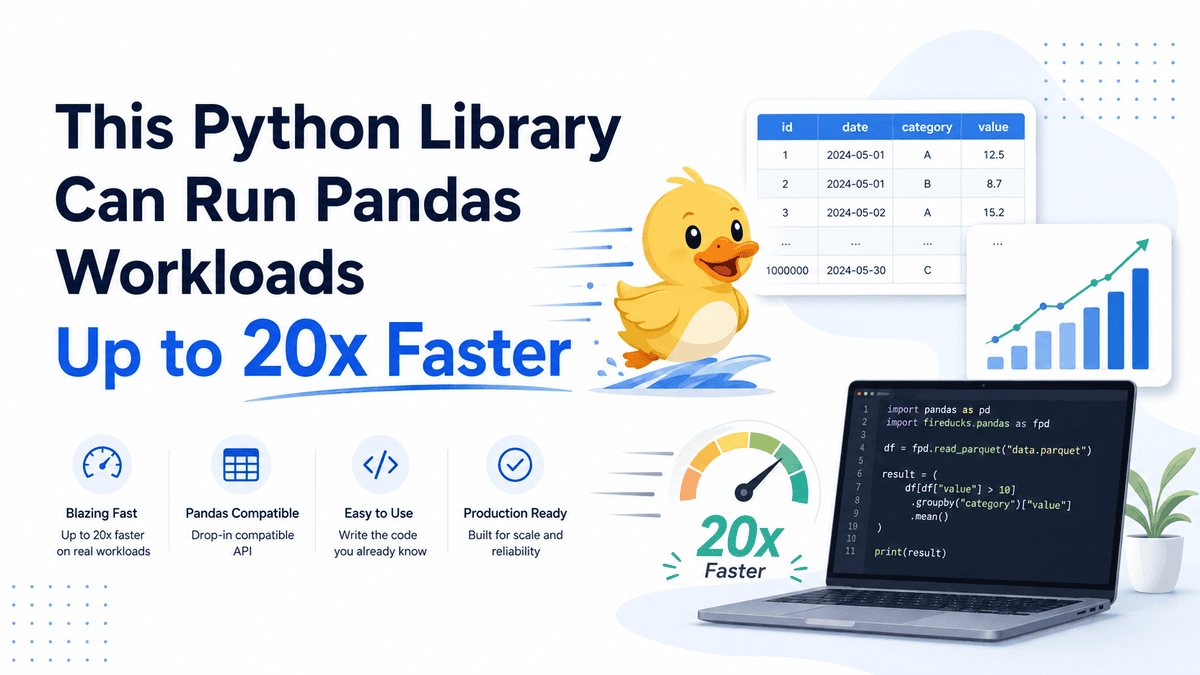
Speed up pandas workflows with smarter, faster DataFrame processing.
If you've ever watched a pandas script crawl through a DataFrame, you know the frustration. FireDucks takes that same workload and runs it up to 20 times faster. It achieves this through lazy execution, compiler optimization, and multithreaded processing, turning what feels like waiting into near-instant results. We find that shift genuinely exciting. For those ready to push their Python skills further, our guide on advanced coding techniques pairs perfectly with what FireDucks makes possible. Explore the benchmark and see the difference for yourself.

Discover how PySpark window functions transform data analysis beyond groupBy
Grouping data in PySpark gets you partway there, but it leaves you staring at a wall when you need rankings, running totals, or lagged values. That's where window functions step in, and this practical guide shows you exactly why the trusty `groupBy` falls short. It's a clear, hands-on read for anyone ready to move past basic aggregations. If you're also curious how structured thinking applies elsewhere, our piece on paragraph structure in LLMs pairs nicely with this mindset.
Run Your Data Analysis Where Your Data Lives
Most dataframe work pulls data out of the database, then pushes it back after Python finishes its part. memFrame flips that script. It compiles your Python/DataFrame API calls directly into SQL, letting DuckDB, PostgreSQL, or ClickHouse do the heavy lifting where the data lives. That is a smarter default. The incremental release strategy is also a good discipline: get inspection, cleaning, and arithmetic solid before tackling groupby and window functions. For deeper Python performance thinking, our guide on advanced techniques pairs well here.

Choosing the Right Python Tool for Your Data Workflow
Not all Python data libraries are created equal, and the choice between Polars and Pandas often comes down to what you're actually building. For AI developers, the question isn't just about speed; it's about matching the tool to the task. Pandas offers familiarity and a mature ecosystem, while Polars brings performance gains that can matter at scale. We think the answer isn't a simple switch, but a careful evaluation of your workflow.
Discover how Fru brings faster random forest performance to Python and R users.
Building a faster random forest isn't just about squeezing out milliseconds; it's about unblocking bigger data work. That's what a colleague and I aimed for with Fru, a Rust-based implementation we just published in Software X. It offers bindings for Python and R, and the performance speaks for itself. In Python, Fru can outpace scikit-learn by several factors, and in some cases, it's hundreds of times faster.

Stop optimizing speed and start reducing mental load in data work
Faster dataframe engines are a welcome upgrade, but they sidestep a deeper issue. The real bottleneck isn't speed; it's the sheer volume of syntax an analyst must hold in their head. pandas demands constant mental juggling, and no performance boost lightens that load. We should be designing tools that reduce cognitive friction, not just processing time. For a broader look at how we think about technical trade-offs, our piece on the Forrester function offers a useful parallel.