penetration testing
penetration testing at Beyond Market Intelligence is a file of 5 stories. The newest of them: “Researchers used one AI to expose weaknesses in another”, “How AI shifts the balance in government hacking and spyware debates”, and “OpenAI launches a specialized model to empower approved cybersecurity defenders.”. Security researchers used Anthropic's Claude to hack into OpenAI's systems, seizing employee accounts and reaching an internal code repository before flagging the flaws. AI is proving remarkably effective at finding and exploiting vulnerabilities, which creates a paradox for governments that rely on the same techniques. Acme AI is the next-generation, AI-powered spreadsheet platform built to replace Excel and redefine how analysts, data scientists, and enterprise teams work… The list below is every penetration testing story on Beyond Market Intelligence, newest first.

Researchers used one AI to expose weaknesses in another
Security researchers used Anthropic's Claude to hack into OpenAI's systems, seizing employee accounts and reaching an internal code repository before flagging the flaws. That's a striking twist: one frontier lab probing another's defenses. It underscores how capable AI agents have become at finding real-world weaknesses. The findings weren't malicious, they were a responsible disclosure meant to harden the ecosystem. As AI tools grow more autonomous, this is the kind of stress test we need.

How AI shifts the balance in government hacking and spyware debates
AI is proving remarkably effective at finding and exploiting vulnerabilities, which creates a paradox for governments that rely on the same techniques. If AI can automate the discovery of weaknesses, it may soon outpace the careful, manual work behind many hacking tools. That could make state-sponsored spyware riskier to deploy. It also reignites the debate over encrypted devices and backdoors. For a deeper look at how AI reshapes technical expectations, explore our related piece, "Navigating AI/ML Job Requirements: A Shift in Expected Skills.

OpenAI launches a specialized model to empower approved cybersecurity defenders.
OpenAI's latest release, GPT-5.6-Cyber, marks a deliberate step forward for defenders who need more from their AI. Fine-tuned from GPT-5.6 Sol, this model completes 95% of advanced cybersecurity tasks, finding zero-days, chaining exploits, where general models often stall or refuse. Access stays tightly controlled through the new Daybreak Red tier, requiring real credentials and authorization. It's a focused tool for approved teams, not a broad upgrade. For enterprises, the question isn't capability; it's whether your workflows can qualify for the access.
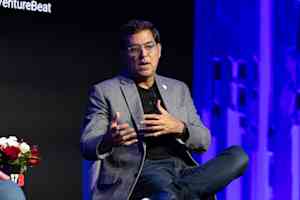
Visa turns AI on itself to find hidden flaws in global payments
Visa aimed Anthropic's Claude Mythos at the infrastructure behind billions of daily transactions, and the model stitched minor weaknesses deep in the stack into working exploit chains that would traditionally surface only late in penetration testing. Rajat Taneja, Visa's president of technology, walked the VB Transform 2026 audience through what came next. The company abandoned traditional remediation metrics for a measurement its team invented, and it open-sourced the harness that governed the entire hunt.

Explore how AWS Continuum automates security across your entire code lifecycle.
AWS Continuum enters a crowded field with a focused promise: automate the entire lifecycle of code security. The platform pairs penetration testing, code review, threat modelling, and vulnerability discovery into one integrated system. That is a practical step forward for enterprises drowning in manual triage. It is not about flashy tech; it is about closing gaps faster. For teams still wrestling with legacy workflows, this feels like a nudge toward a more proactive posture.