planning
Beyond Market Intelligence keeps planning in one place: 15 stories so far. The section currently leads with “Build Smarter MCP Servers by Keeping Orchestration in the Host”, “Plan smarter trips as Google Maps now builds real-time, multi-stop itineraries”, and “20 AI Experiments Reveal How Transformers Think and Edit”. Build smarter MCP servers by keeping orchestration in the host, not the tool. Google Maps now builds multi-stop itineraries in real time, turning trip planning into a conversation. Acme AI is the next-generation, AI-powered spreadsheet platform built to replace Excel and redefine how analysts, data scientists, and enterprise teams work… The list below is every planning story on Beyond Market Intelligence, newest first.
Build Smarter MCP Servers by Keeping Orchestration in the Host
Build smarter MCP servers by keeping orchestration in the host, not the tool. A Python SDK v2 catalogue server with two narrow tools, one resource, and one prompt shows how planning, workflow state, and authorisation belong on the host side. This is practical architecture that respects boundaries. For a broader take on agentic design, our 7-step roadmap explores tools, memory, and control loops.

Plan smarter trips as Google Maps now builds real-time, multi-stop itineraries
Google Maps now builds multi-stop itineraries in real time, turning trip planning into a conversation. Ask Maps for a holiday shopping run or a three-day coastal road trip with oceanfront dining, and it handles the routing. This is practical AI, it works alongside you, not for you. For a deeper look at where travel tech is headed, our piece on United Airlines drawing the line on AI agents booking flights offers a useful counterpoint.
20 AI Experiments Reveal How Transformers Think and Edit
Twenty experiments, one honest question: how do transformers actually think? A new open-source repo from Quantix-eng documents Next-Concept Modeling, mechanistic interpretability in GPT-2, and model controls without claiming breakthroughs. The work covers structured tasks like Sudoku alongside toy parallel models. Every outcome is categorized, including the negative results. That transparency matters. For deeper context on AI's practical limits, our earlier piece "From Code to Calendars: Putting GPT-6.1 Terra's Practical Skills to the Test" explores similar territory. This is rigorous, human-centered research worth exploring.

OpenTofu 1.13 Helps Module Authors Resolve More Values at Plan Time
OpenTofu 1.13 gives module authors a smarter way to handle unknown values at plan time. New `convert` and `assume` functions let you provide type and value hints directly to the planner, so more expressions resolve during `tofu plan` instead of failing later. If a guarantee is broken, OpenTofu catches it during apply. This is a practical step toward more reliable infrastructure. For teams building production systems, our piece on practical AI certifications this November offers complementary guidance.

Meta explores new stock class to fund its expansive AI investment
Meta is planning a new stock class to fund its ambitious AI investments. That's a pragmatic move for a company betting big on models and services that demand serious capital. Traditional spreadsheets won't help here, this is about strategic scale. If you're tracking how the biggest players are financing the AI buildout, our piece on why Blackstone isn't worried about the debt side offers a useful counterpoint. Explore the full picture on our site.

Keep your private chats secure when sharing your device with others
Private chats shouldn't become public the moment you hand your phone to a friend. That's the simple problem this new feature solves. It lets you keep sensitive conversations, a surprise party plan or a personal discussion, secure while sharing your device. It's a practical, human-centered solution. For more on keeping data local, our piece on five self-hosted Docker tools for developers offers a deeper look at controlling your own privacy.
Your AI Agent Is Ready Now Build the Scaffolding Around It
Agents got good. Now the hard part is building the scaffolding around them. Gubi reissued the Lotus lamp. That's the message from a new piece that argues your agent doesn't need more freedom, it needs structure. The most capable AI is pointless without the right architecture to support it. For a deeper look at that architecture, explore "From Cognitive Loops to Multi-Agent Swarms: Your 2026 AI Roadmap" on our site.

Google gives Gemini a workplace identity to plan and execute tasks
Google is giving Gemini its own email address. That's the headline, but the real story is about agency. By turning Gemini into an AI agent that can plan, execute tasks, and delegate work to subagents across business systems, Google is rethinking what a workplace identity means. This isn't just another assistant, it's a colleague that operates autonomously. For a deeper look at how Google is reimagining data ownership, see our piece on "Why Google's $10 Million Bid for Old Emails Signals a Smarter Data Future."
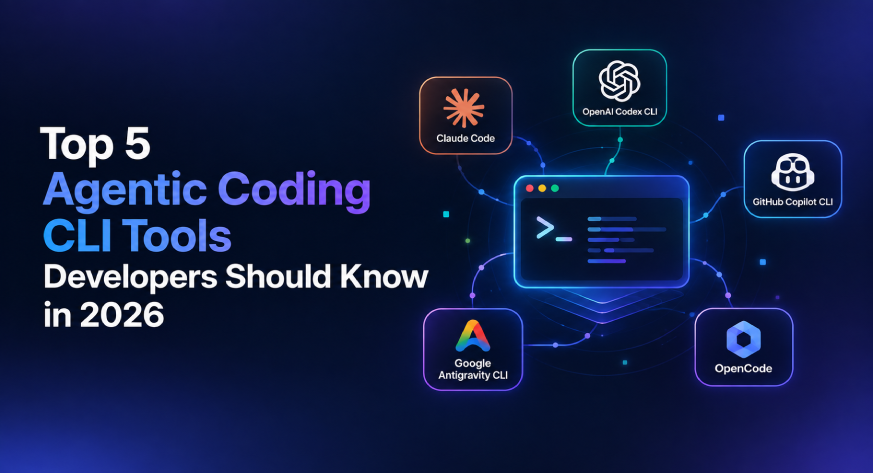
From Terminal Helper to Autonomous Developer: The CLI Evolves
A year ago, terminal AI meant asking a model to explain an error or tweak a function. In 2026, leading coding CLIs operate as full agent runtimes, inspecting repos, planning work, and verifying results. We compare five standouts, including Claude Code and Codex CLI, to show how this shift transforms daily workflows. If you are tracking how AI skills are evolving, our related piece, "Navigating AI/ML Job Requirements," offers useful context on what developers now need. Explore the tools that make complex tasks simpler.
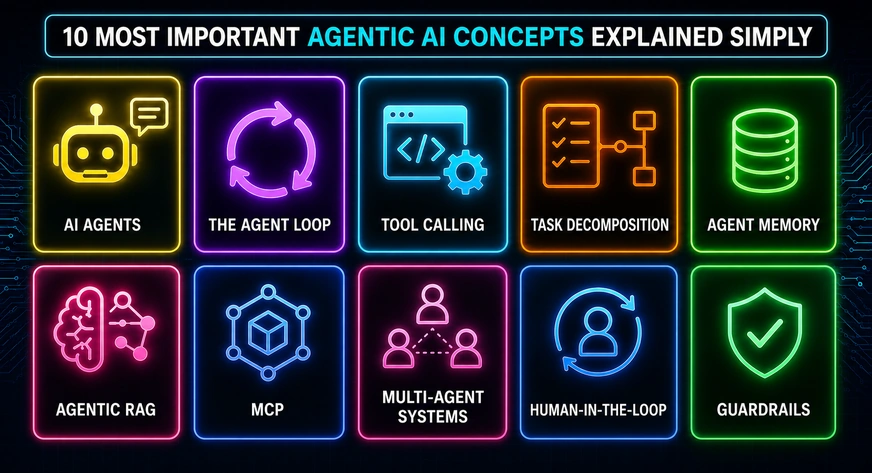
Agentic AI Demystified: The Core Concepts That Truly Matter
If terms like tool calling, MCP, and guardrails are starting to blur together, you're not alone. Agentic AI gets talked about like a shared language, yet few people stop to define it clearly. This guide cuts through that noise. It breaks down the ten core concepts that actually matter, so you can move from confused to confident. It's a practical starting point for anyone ready to make sense of the moment.

Linkdaze's free AI meal planner makes household calendars truly smart.
Linkdaze's smart calendar is built to run a household, not just track a schedule, and that mission rings true when you see its AI meal planner included without a paywall. Most tools dangle useful features behind a subscription, so this feels like a genuine shift toward accessibility. It's a smart move for families wanting practical help without the nickel-and-diming. If you're curious about how AI shapes daily tools, our piece "Talking to My AI Clone Taught Me to Question the Tech" offers a fitting counterpoint.

Small Language Models: Practical Power for Everyday Data Tasks
Small language models aren't about doing less. They're about doing the right things closer to home. Yes, they have limits, and those limits are real. But when you plan for them, these compact models handle surprisingly broad operational tasks without the cloud, without the cost, and without losing your data. That's not a compromise. That's a strategy. For a deeper look at how structure shapes model behavior, our piece on paragraph structure pairs well with this practical guide.
Building smarter AI for puzzle games with previewed chance and stack constraints
Planning an AI around previewed chance events and long-horizon throughput is a sharp problem, and the trade-offs are framed clearly. Separating deterministic afterstates from explicit chance nodes, paired with a policy/value network and PUCT, feels like the right structural instinct, especially given the preview-conditioned fourth action. Their honest reporting on what failed, like Q-head calibration and exhaustive leaf maximization, is more useful than most success stories.
Choose your NeurIPS destination: Sydney or Atlanta this December
NeurIPS 2026 is pulling the community in two directions, and the choice between Sydney and Atlanta is more than a flight decision. It reflects a broader tension in how we approach research, travel, and opportunity. For US-based attendees, the question is practical, but it also touches on accessibility and the evolving geography of AI. We encourage you to weigh your options carefully. And if you are feeling the pressure of shifting expectations in this field, our piece on "Navigating AI/ML Job Requirements" offers useful context.

Embabel 1.0 Lets Java Developers Define AI Agents as Typed Objects
Java developers have long watched the AI agent space from the sidelines, waiting for tools that fit their stack. Embabel's 1.0 release changes that calculus. By letting you define agents as typed domain objects, it turns abstract AI concepts into something concrete and manageable. Built on Spring AI, it supports multiple model providers while blending planning with predefined state machines. That combination offers real flexibility without sacrificing structure. For teams feeling constrained by rigid workflows, Embabel invites exploration.