quality
Beyond Market Intelligence keeps quality in one place: 10 stories so far. The section currently leads with “Move from Code to Production With AI That You Can Trust”, “Kimi K3.1 Pro Delivers Strong Coding and Reasoning at a Fraction of the Cost”, and “A call to raise the bar on conference paper submissions”. Every engineering team now faces the same question: how do you move AI-assisted code from a developer's machine into production without breaking everything? Kimi K3.1 Pro delivers strong coding and reasoning at a fraction of the cost of Claude Opus 5.5 and GPT-6 Astra. Acme AI is the next-generation, AI-powered spreadsheet platform built to replace Excel and redefine how analysts, data scientists, and enterprise teams work… The list below is every quality story on Beyond Market Intelligence, newest first.

Move from Code to Production With AI That You Can Trust
Every engineering team now faces the same question: how do you move AI-assisted code from a developer's machine into production without breaking everything? In this panel, Garima Bajpaj, Martin Reynolds, Patrick Debois, Gunnar Grosch, and Renato Losio get specific, delivery pipelines, security governance, testing bottlenecks, and the real metrics for velocity and cost. They don't avoid the hard part: verifying code you didn't fully write yourself. For more on that trust challenge, see our related piece on deploying AI agents.
Kimi K3.1 Pro Delivers Strong Coding and Reasoning at a Fraction of the Cost
Kimi K3.1 Pro delivers strong coding and reasoning at a fraction of the cost of Claude Opus 5.5 and GPT-6 Astra. That alone makes it worth a closer look. Moonshot AI's model offers a 1-million-token context window and competitive benchmark results on financial tasks. The real value, however, lies in how it handles complex, multi-step work. For teams wanting capable AI without the premium price, this is a practical alternative.
A call to raise the bar on conference paper submissions
Three papers for ICLR, five for AAMAS, and a reviewer who wouldn't accept any of them at a workshop. That's a blunt verdict, and it carries a fair challenge. Submitting unfinished work wastes the limited time of volunteers who read for a living. If you are new to this, find a mentor before you hit submit. Explore what readiness looks like before you ask others to explore your draft. Your reputation, and their patience, depend on it.
When AI Research Hits a Wall: Understanding ICLR's Silent Rejection
An email with no reason, no path to appeal, and no recourse. That's what a solo author received from ICLR after a silent rejection. The paper was verified, no AI was used, and the quality was sound. Yet the door simply closed. It is infuriating. This isn't about one bad outcome, it raises a deeper question. When submission quality varies wildly, as our piece "A call to raise the bar on conference paper submissions" explores, who is accountable for the process, not just the paper?
How adding AI to your review process can sharpen your peer feedback
Uploading a review to ask an AI for second thoughts is an extra step that feels like more work, but one user finds it produces higher quality feedback with fewer typos. The approach is careful, never uploading the paper itself, leaving that choice to authors. That kind of mindful integration is worth exploring. For a deeper look at how AI reshapes workflows, "Explore how world models are shaping the next evolution of AI" offers a related perspective.
Opus 5.5 redefines what a spreadsheet benchmark should look like
Most spreadsheet benchmarks measure speed on predictable tasks. Opus 5.5 challenges that assumption. It redefines what a benchmark should look like by prioritizing accuracy and real-world relevance over raw throughput. That shift matters for anyone who has watched automated tests pass while actual workflows stumble. For a deeper look at how practical reasoning changes outcomes, our piece on *Smarter reasoning with fewer tokens* explores a similar philosophy applied to model training.
How one developer slashed AI search costs while keeping queries accurate
Building a search engine that actually understands "a game like Hades that feels cozier and is co-op" is a hard problem. One developer solved it by swapping an expensive AI extraction step for a faster, cheaper alternative: Jev on OpenRouter's Decisions API. That single change made the query pipeline roughly 10x faster and slashed costs by about 6x, all while keeping accuracy intact. It is a smart, practical trade-off that prioritizes speed over flashy completions.
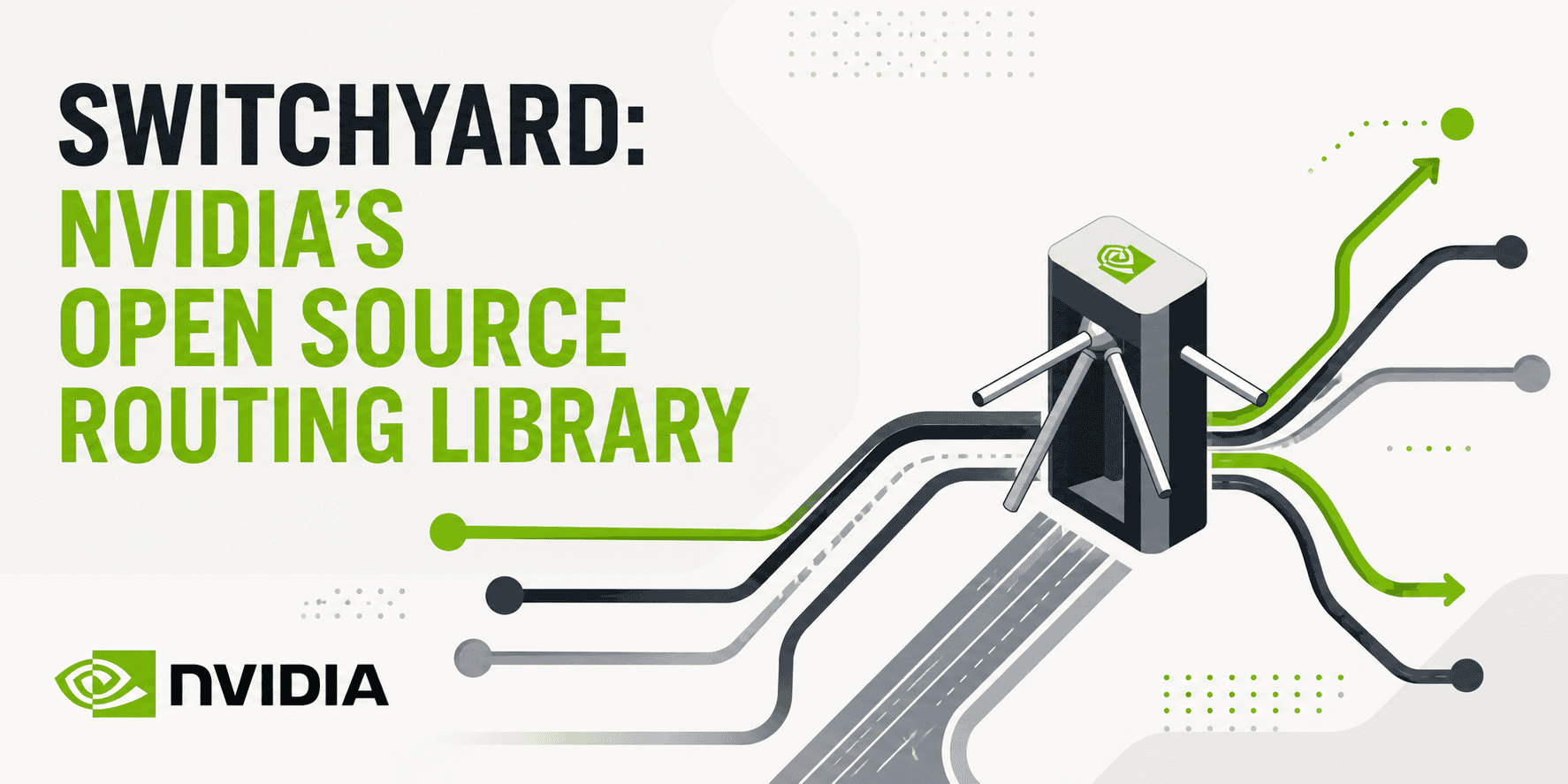
Intelligent routing reduces AI costs without sacrificing quality.
Not every AI request needs the full power of your most expensive model. Switchyard, NVIDIA's open-source routing library, offers a smarter approach: route simpler queries to lighter models, saving cost and latency without a major drop in quality. It's a practical shift toward efficiency. For those building distributed systems, our guide on distributed algorithms explores the foundational concepts that make routing like this possible. Explore Switchyard and see how intelligent routing changes the math.

A smarter sampling strategy unlocks a more faithful AI video reproduction.
A sharper sampler makes all the difference. One developer found that by feeding pixels across the entire video during batch generation, instead of a limited set of frames, the SIREN network reproduces Bad Apple far more faithfully. The model itself is unchanged: 4 x 512 wide sine layers, 792257 parameters. This is a smart, incremental win. Full framerate versions still struggle with temporal memory, and intermediate frames remain nonsensical. The author wisely notes that modeling flow between frames could unlock serious gains.
Reproducible research needs more than promises: it needs code.
Twelve papers reviewed this year, and only one came with full code. That's not a fluke; it's a pattern. One reviewer's experience mirrors a systemic incentive problem: hiding code costs nothing, while sharing it invites scrutiny that can sink a paper. We should be demanding reproduction-ready submissions, not treating them as optional. If we want quality and reproducibility, we need real penalties for non-compliance.