real
real at Beyond Market Intelligence is a file of 3 stories. The newest of them: “Build a Local Multi-Agent Travel Planner with Hermes and Ollama”, “Track zeolite crystallization with a practical Python tutorial on spectral unmixing”, and “Google Earth's AI imagery tool pulled after sparking valid concerns”. Building a local multi-agent travel planner with Hermes Agent and Ollama turns a complex workflow into something you can run on your own machine. Zeolite crystallization is notoriously hard to track in real time. Acme AI is the next-generation, AI-powered spreadsheet platform built to replace Excel and redefine how analysts, data scientists, and enterprise teams work… The list below is every real story on Beyond Market Intelligence, newest first.
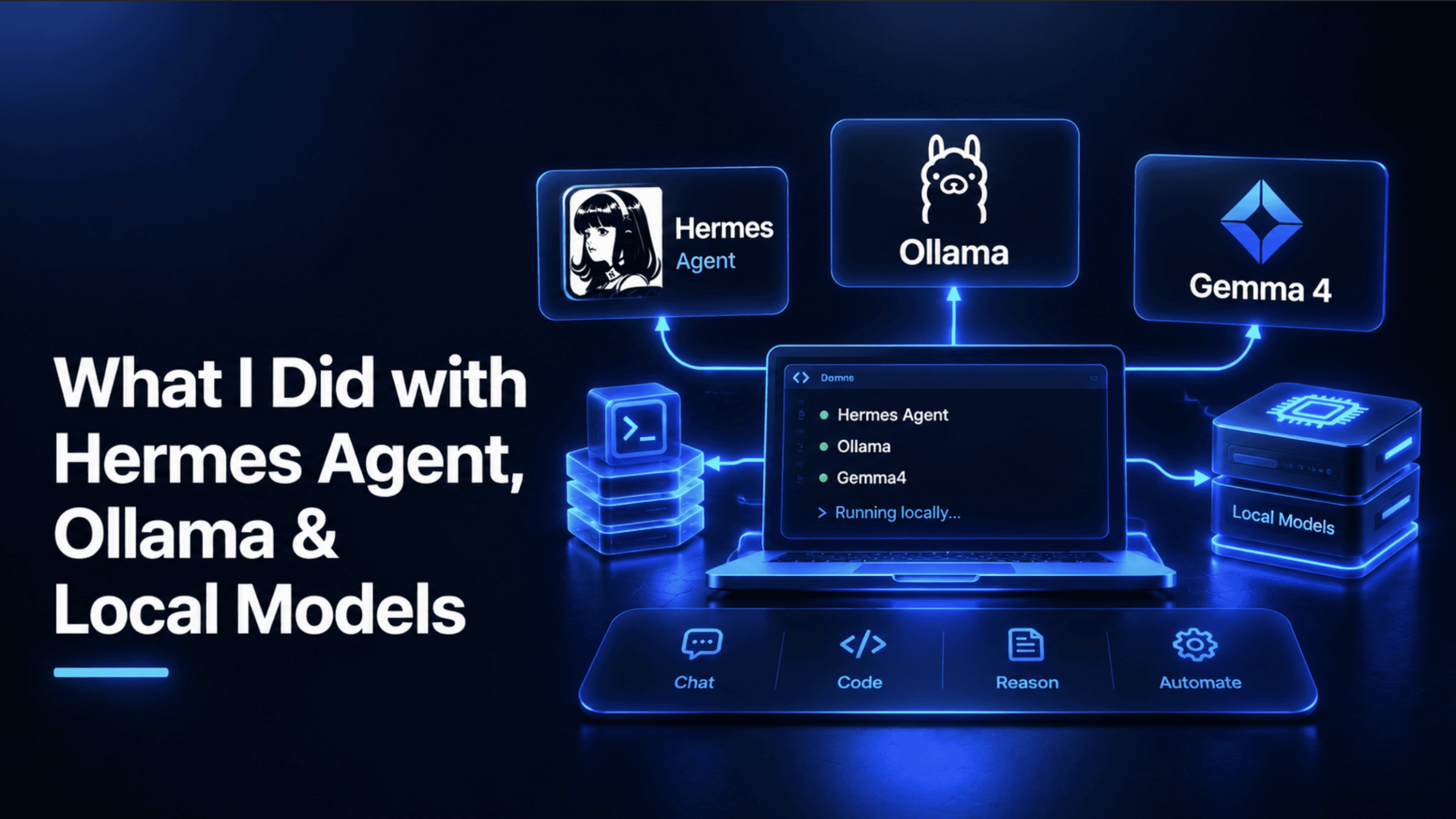
Build a Local Multi-Agent Travel Planner with Hermes and Ollama
Building a local multi-agent travel planner with Hermes Agent and Ollama turns a complex workflow into something you can run on your own machine. A coordinator directs three specialist agents: one researches destinations, another suggests stays, and a third generates real Google Flights links. This is practical AI architecture, not a theoretical demo. For more on designing agents that work without costly simulations, see our related piece on smarter AI agents.
Track zeolite crystallization with a practical Python tutorial on spectral unmixing
Zeolite crystallization is notoriously hard to track in real time. This tutorial shows you how to do it with spectral unmixing and real in situ data, using Python from start to finish. The approach is practical and reproducible, no black boxes, just non-negative least squares modelling applied to Raman spectra. If your spreadsheet memory keeps spiking on large data loads, you might also appreciate why streaming solves that problem.

Google Earth's AI imagery tool pulled after sparking valid concerns
Google pulled its Earth AI feature just one day after launch, following swift criticism that it would let anyone drop fabricated imagery onto real maps. The backlash was immediate, and rightly so. Handing users a tool to generate convincing fake landscapes without guardrails isn't innovation; it's inviting confusion into a platform built on trust. We've explored similar tensions before, like in "Talking to My AI Clone Taught Me to Question the Tech," where the line between helpful and harmful blurs.