regression
Beyond Market Intelligence keeps regression in one place: 8 stories so far. The section currently leads with “Measurement error can make nonlinear data look deceptively linear”, “When AI Writes the Code, Do You Trust the Defaults?”, and “Shared baselines across papers keep your research honest and efficient.”. Measurement error can quietly disguise nonlinear data as a straight line, and that deception has real consequences for anyone building models on shaky foundations. AI assistants are remarkably good at writing code, but they don't always question the assumptions baked into the libraries they use. Acme AI is the next-generation, AI-powered spreadsheet platform built to replace Excel and redefine how analysts, data scientists, and enterprise teams work… The list below is every regression story on Beyond Market Intelligence, newest first.
Measurement error can make nonlinear data look deceptively linear
Measurement error can quietly disguise nonlinear data as a straight line, and that deception has real consequences for anyone building models on shaky foundations. When your visual patterns look tidy but the underlying relationships aren't, your analysis inherits that hidden distortion. It's a reminder that data hygiene matters as much as algorithm choice. For those exploring how modern tools handle these nuances, our related piece on Polars 2.0 offers a practical look at what thoughtful engineering can bring to your workflow.
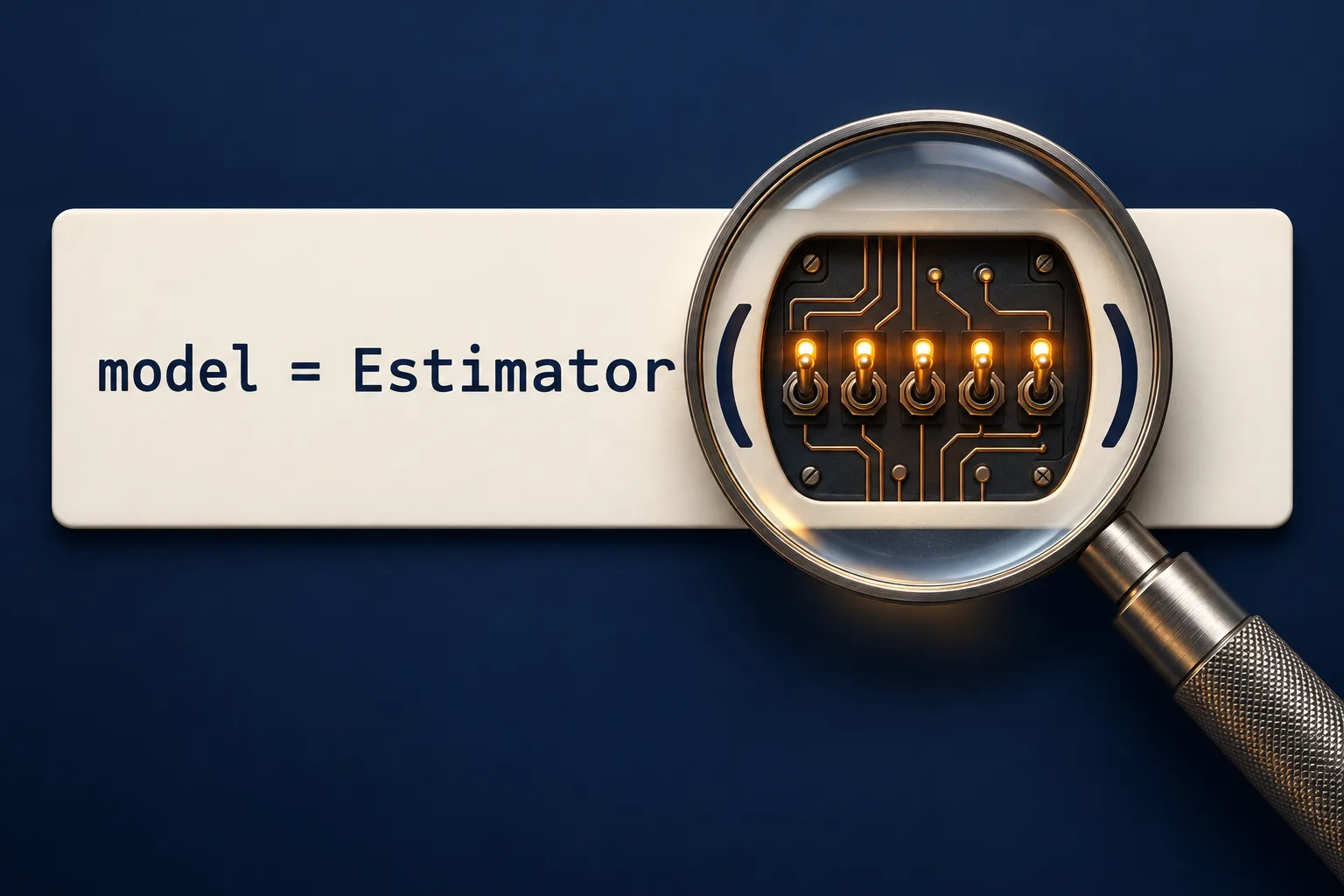
When AI Writes the Code, Do You Trust the Defaults?
AI assistants are remarkably good at writing code, but they don't always question the assumptions baked into the libraries they use. That gap is where subtle errors hide. This piece examines five scikit-learn defaults that deserve a second look before you ship. It's a practical, grounded reminder that trusting the tool isn't the same as understanding it. If you're building for production, this is worth your attention. For broader context on model deployment challenges, our related piece on real-world computer vision offers useful perspective.
Shared baselines across papers keep your research honest and efficient.
Running the same baseline models across two papers is a practical move, but it raises a fair question about duplication. If the RMSE tables match exactly and only the proposed models differ, you are reusing your own work, which is generally acceptable in research. However, journals may view this as redundant publication if not disclosed clearly. Transparency matters here. Disclose the shared baselines in both submissions and cite the other paper. That approach protects your integrity and keeps the focus on your novel contributions.
How a single bug fix sharpens BayesianRidge uncertainty estimates
A subtle bug in BayesianRidge's uncertainty calculation slipped into sklearn 1.8, and this notebook walks through the exact formulas behind `predict` on both versions. It's a sharp exercise in tracing what changed, and it's the kind of forensic digging that keeps models honest. If you've ever wondered how small shifts in regression internals ripple outward, this is worth your time. For a broader look at how data quality issues surface elsewhere, our piece on catching AI slop before it skews your model pairs nicely here.
When models disagree, explore how interactions reshape your data's story.
LightGBM's failure to fit your toy example isn't a flaw in the algorithm, it's a lesson in how it greedily builds trees. When you handed it only "AB," it couldn't recover the interaction because the split gain calculation didn't favor the right thresholds early on. CatBoost's symmetric trees and ordered boosting handle this naturally. Your intuition about "lazy" splits is spot on. For deeper dives into such modeling quirks, our piece on scikit-learn defaults offers a fitting companion.

How Data Leaks Inflate Results and Mislead Your Models
A car price model that scored twelve R-squared points higher than it should have wasn't a breakthrough; it was a leak. A preprocessing pipeline let the model peek at the test set before the exam, and the inflated results masked a deeper problem. That kind of shortcut doesn't just distort one metric, it erodes trust in the entire evaluation. It's a sharp reminder that data hygiene is part of model integrity, not a side note.

Unlocking Data Potential by Combining Labelled and Unlabelled Insights
Most of your data sits unlabeled, and that's not a problem to solve, it's an opportunity to leverage. Semi-supervised learning sits between the fully labeled and the entirely unlabeled, using a small amount of guidance to make sense of the larger, messier whole. This primer walks through the algorithms that make that possible and, just as importantly, where they stumble. It's a practical read for anyone who wants to get more from their data without drowning in annotation costs.

Explore how deep learning unlocks new insights in single-cell analysis.
A survey covering 25 deep learning methods across six subcategories for single-cell RNA sequencing analysis is a lot of ground to cover. The author of this paper didn't just list them; they organized each method by purpose, architecture, metrics, and, crucially, its specific novelty. That last part is what makes the survey genuinely useful for anyone trying to navigate the field. It's one thing to know a model works, another to understand why it was built differently.