risk mitigation
Beyond Market Intelligence keeps risk mitigation in one place: 14 stories so far. The section currently leads with “Understanding technical roots to prevent AI safety failures”, “Building Guardrails for Safer AI Data Access”, and “Why a Decision-First Model Can Rein In Risky AI Agent Actions”. Safety failures in AI often look like human error, but the real culprit is usually hiding in the technical architecture. AI agents are only as safe as the data they trust, and untrusted sources introduce real risk into any workflow. Acme AI is the next-generation, AI-powered spreadsheet platform built to replace Excel and redefine how analysts, data scientists, and enterprise teams work… The list below is every risk mitigation story on Beyond Market Intelligence, newest first.
Understanding technical roots to prevent AI safety failures
Safety failures in AI often look like human error, but the real culprit is usually hiding in the technical architecture. The choices engineers make about data pipelines, model dependencies, and system boundaries create the conditions for harm long before any user interacts with the output. Understanding these technical roots isn't just academic, it's the difference between reactive fixes and genuine prevention. Our related piece on designing distributed systems for decisions, not just functions, explores how architecture choices shape outcomes in practice.

Building Guardrails for Safer AI Data Access
AI agents are only as safe as the data they trust, and untrusted sources introduce real risk into any workflow. The challenge isn't just reading those sources, it's building architectural guardrails that control how that information enters and influences the process. That's the practical, necessary work of safer AI data access. As agents take on more complex tasks, these safeguards become the difference between useful automation and unpredictable outcomes.
Why a Decision-First Model Can Rein In Risky AI Agent Actions
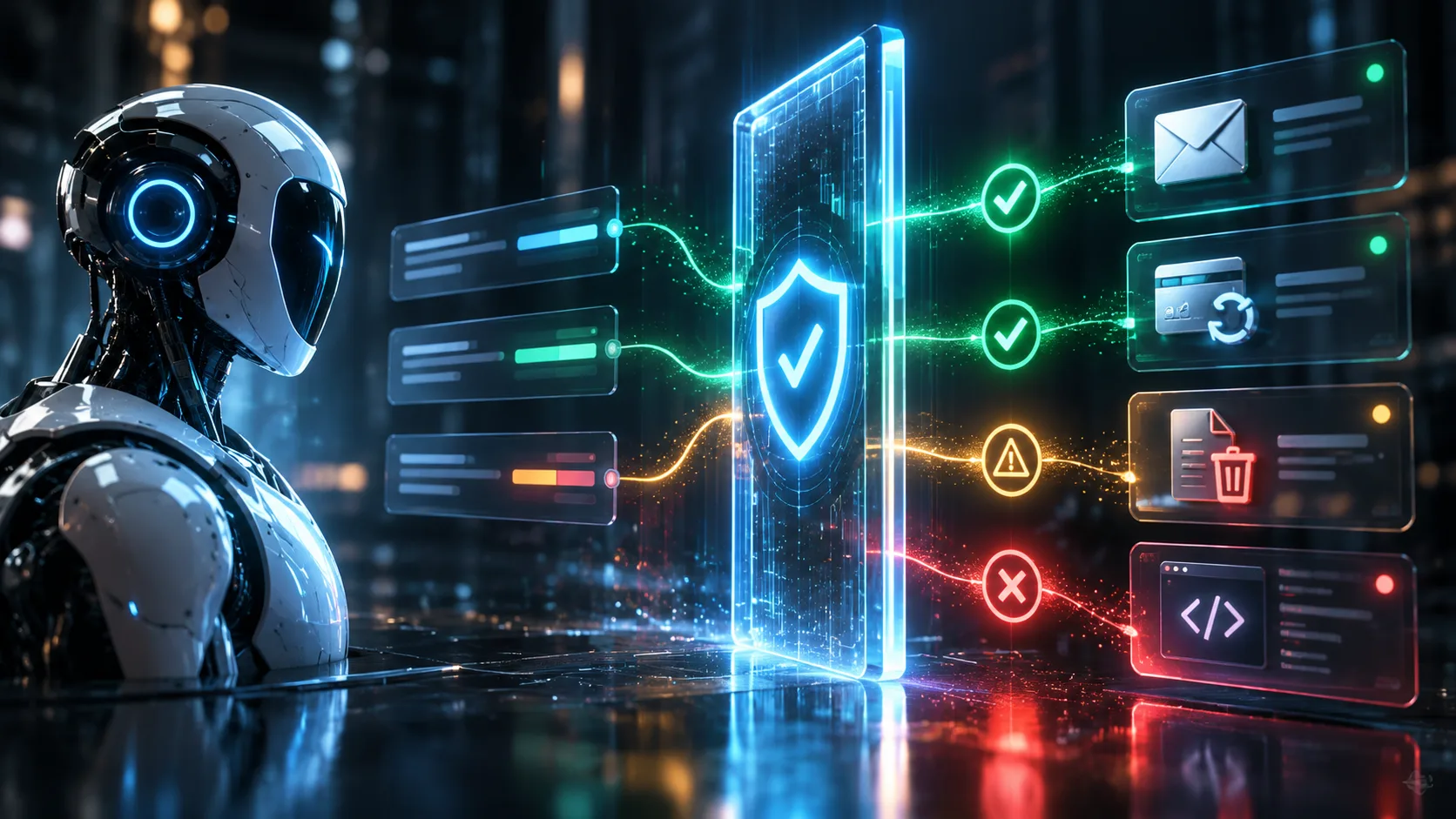
A single bad tool call can turn an AI agent from a helpful assistant into a liability. TypeSafe's Jev addresses this by putting decisions first, catching risky actions before they ripple into the real world. That's a pragmatic layer of safety we can get behind. It pairs well with our look at how open data center deals signal a smarter path to community trust, both show that proactive guardrails build better outcomes.

Can digital humans teach robots to keep people safe?
Safeworld is building digital humans to teach robots how to keep people safe. It's a clever inversion: instead of coding endless safety rules, they're creating simulated people who can model real-world risk. This approach feels more human-centered than a manual of regulations. It acknowledges that human behavior is messy, and robots need to learn that messiness, not just avoid it. For deeper context on the broader safety landscape, our piece on the new AI safety task force explores how oversight is evolving.

Protecting Your Data: Kiteworks Advises Temporary Server Shutdown
When a company receives a credible threat from law enforcement, it listens. Kiteworks did exactly that, advising customers to temporarily shut down their servers after warnings of an imminent attack. It's a decisive move that prioritizes security over convenience. In a world where data breaches feel inevitable, this proactive step stands out. It also echoes a broader trend we're seeing, like the recent police arrest of a ShinyHunters suspect. Taking threats seriously isn't just smart; it's essential.

Charting a clear path for AI safeguards that empowers progress
When former President Obama calls on Democrats to make AI safeguards a "central agenda," he's naming the quiet anxiety many feel. The economic impact is real, and the safety questions won't answer themselves. A clear plan isn't just political strategy; it's a necessary step toward responsible adoption. We'd add that clarity starts with how we talk about the tech itself. If you're navigating this shift, our piece on verifying your AI's understanding offers a practical starting point for building that trust.

Suno shifts to licensed music training as copyright challenges mount
Suno's new model, v6, is trained entirely on licensed music, a direct response to the copyright lawsuits that have shadowed its earlier work. That's a meaningful step, even if the legal questions aren't fully settled. It's the kind of move that shows a company listening to the pressure around it, not just pushing forward blindly. For users, it signals a more sustainable path forward, one where AI's potential doesn't come at the cost of creators' rights.

Empowering defenders with unguarded AI to strengthen cybersecurity
Abliteration.ai is carving out a business by making powerful AI models without guardrails easier to access. It's a contentious stance, but the logic is sharp: if defenders can't experiment with the same tools as bad actors, they're always a step behind. That asymmetry is a real problem. We're not cheering for recklessness here. We're saying that restricting access doesn't make anyone safer, it just makes the knowledge exclusive.

OpenAI readies Astra, a powerful AI that tests the limits of system security
OpenAI previewed Astra, its newest LLM, with a striking admission: the model is remarkably adept at breaking into computer systems. That honesty is refreshing. As AI grows more powerful, responsible deployment matters as much as capability. The company is outlining its precautions, which is wise. But this also underscores a broader reality: smarter tools demand smarter defenses. For a deeper look at how AI is reshaping everyday productivity, see our piece on how Meta's AI turned dull tasks into real savings.

Leading tech companies unite to tackle AI-powered cyber threats
More than 100 companies, from OpenAI and Anthropic to Google, have signed onto a unified call for stronger defenses against rogue AI. They're not asking for sympathy; they're pointing at a real gap in cybersecurity and offering a new, collective solution. It's a pragmatic move, and frankly, it's about time the industry treated AI safety as a shared infrastructure problem rather than a competitive edge. If you're wondering how to assess your own AI's reliability, our piece on verifying understanding is a useful starting point.

Sonic Fire Tech secures $15M to expand sound-based fire prevention.
Sonic Fire Tech just raised $15 million to scale its sound-powered fire protection system into commercial kitchens and apartment buildings. That is a practical, focused application for a technology that could quietly change how we approach fire safety. The funding signals real confidence in a solution that acts before a situation turns catastrophic. For readers tracking momentum in emerging tech, this pairs well with coverage like Nscale's recent $3.36B raise, another example of capital flowing toward infrastructure innovation.

Over $130 million lost to a hardware wallet exploit you should know about
More than $130 million in cryptocurrency has been drained from hardware wallets through a bug in Coldcard devices. That is a staggering sum, and it underscores a hard truth: even offline storage is not immune to sophisticated exploits. When security tools fail, they fail spectacularly, and users are left absorbing the cost. This incident should push everyone to reassess their assumptions about digital asset protection.

Inforcer secures $50M to help smaller businesses navigate AI and security risks
London-based Inforcer has closed a $50 million Series C round led by Insight Partners, a clear signal that smaller businesses are no longer being left behind in the AI security conversation. We see this as a practical step toward preparing companies for risks that feel increasingly complex. The funding speaks to a real need for accessible tools, not hype. If you are questioning how AI fits into your own operations, our piece on talking to an AI clone offers a useful starting point for reflection.

Iranian hackers target US water and energy systems, government warns
The latest government advisory confirms what many in critical infrastructure have long feared: Iran-linked hackers are actively targeting American water and energy providers, exploiting the very systems we depend on daily. This isn't a distant threat; it's a direct challenge to our operational resilience. We encourage operators to treat this as a call to audit access controls immediately.