rival
rival at Beyond Market Intelligence is a file of 6 stories. The newest of them: “Small specialist models prove bigger isn't always better for targeted tasks”, “inDrive plans 2027 robotaxi tests in Kazakhstan with Pony.ai and Nvidia”, and “A patent dispute challenges Ultrahuman's smart ring return to the US market”. Bigger isn't always better. Astana will see robotaxis on its streets by the first half of 2027. Acme AI is the next-generation, AI-powered spreadsheet platform built to replace Excel and redefine how analysts, data scientists, and enterprise teams work… The list below is every rival story on Beyond Market Intelligence, newest first.
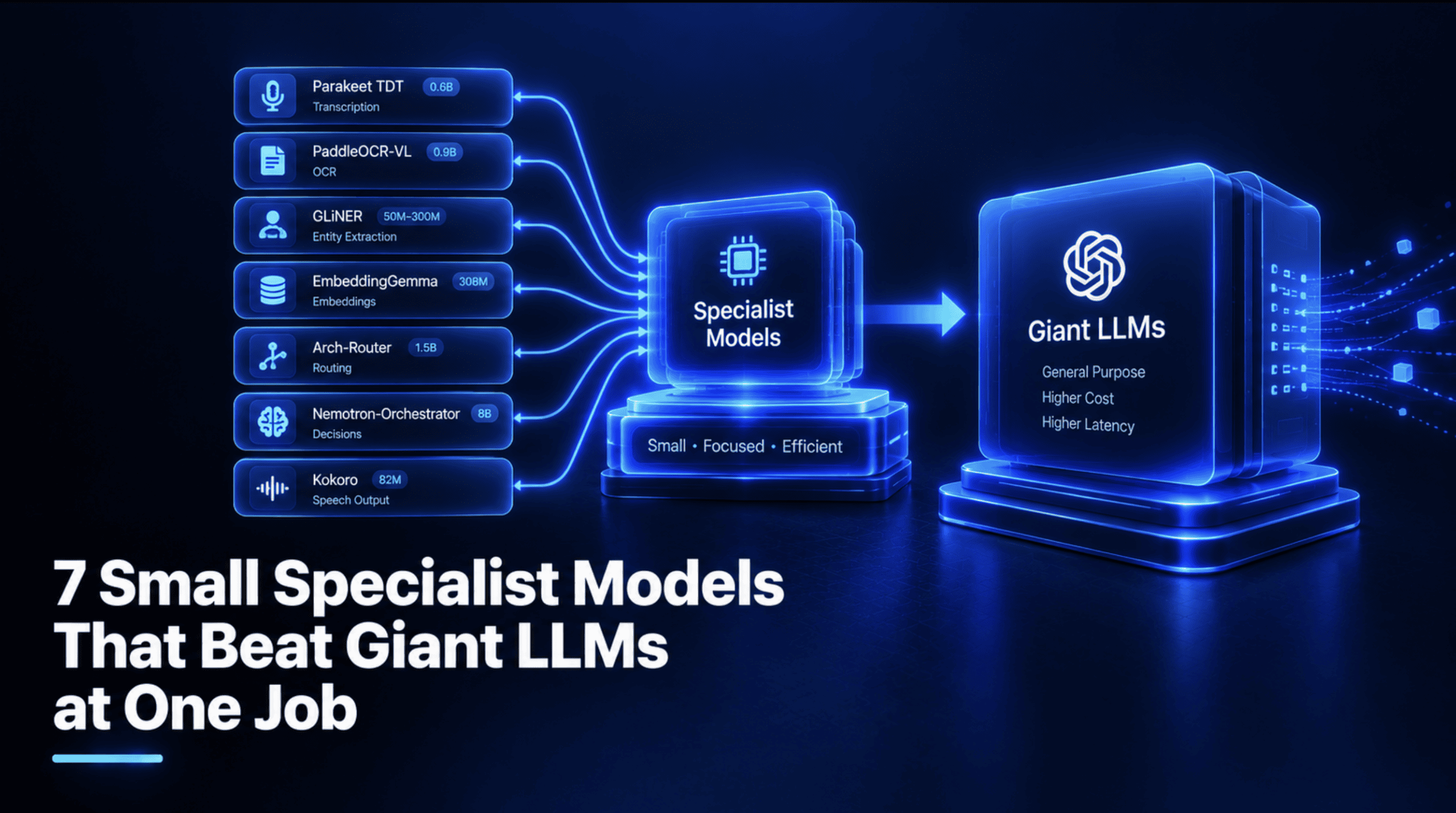
Small specialist models prove bigger isn't always better for targeted tasks
Bigger isn't always better. Seven open specialist models under 10 billion parameters prove that focused design can outperform much larger systems at single tasks like transcription, OCR, and routing. This is a practical shift toward efficiency. Our coverage of LightMIS shows how targeted models deliver expert-level image segmentation with dramatically fewer parameters, a similar philosophy applied to medical imaging. These small models empower users to tackle specific jobs without unnecessary complexity.

inDrive plans 2027 robotaxi tests in Kazakhstan with Pony.ai and Nvidia
Astana will see robotaxis on its streets by the first half of 2027. inDrive is partnering with Pony.ai and Nvidia to test autonomous rides in Kazakhstan's capital, a move that signals real progress in bringing AI-native transportation to new markets. This isn't speculative futurism, it's a concrete plan. For context on how AI is reshaping real-world decision-making, see our coverage of OpenAI's latest model launch.

A patent dispute challenges Ultrahuman's smart ring return to the US market
A new patent lawsuit from Oura is blocking Ultrahuman's Ring Pro from re-entering the US market, alleging infringement on two of its patents. This legal challenge arrives just as the smart ring sector heats up. For more on how Oura is fighting to maintain its edge, read our related coverage on how the company is adding new workout features to stay ahead of emerging rivals.

OpenAI opens its decision model to all, challenging Jev's lead
OpenAI is opening its decision model to everyone, directly challenging Jev's early lead in this space. It's a bold move that signals confidence, and it raises a fair question: can OpenAI's offering truly compete? The answer matters for anyone building workflows around AI-driven choices. If you're following how agents are reshaping productivity, don't miss our piece on how AI agents can now log in for you without ever seeing your password.

Why Insight Partners stays diversified while rivals chase AI giants
Insight Partners' Deven Parekh isn't chasing the herd. While rivals pour everything into OpenAI and Anthropic, his $90 billion firm is deliberately spreading its bets. Losing Legora to General Catalyst didn't rattle him; he's comfortable holding stakes in competing AI labs because he knows concentration isn't strategy. That's a refreshing counterweight to the industry's single-minded bet. Diversification here isn't caution, it's clarity. For a deeper look at how AI's practical limits shape decisions, our piece on verifying AI understanding offers a useful lens.

From courtroom rivals to collaborators, Archer brings Wisk into the fold.
Archer's acquisition of Wisk Aero closes a contentious chapter, transforming a former legal rival into part of its own trajectory. The two companies once faced off over trade secret allegations, so this move signals a pragmatic pivot toward consolidation in a competitive field. It's a bold step, and one that suggests Archer sees more value in collaboration than conflict. For readers tracking how AI-native tools are reshaping infrastructure, our piece on Anthropic's cloud commitment offers a useful parallel worth exploring.