servers
servers at Beyond Market Intelligence is a file of 5 stories. The newest of them: “Protecting Your Data: Kiteworks Advises Temporary Server Shutdown”, “Build a Decentralized Web: Exploring Spritely’s Innovative Architecture”, and “Empower AI agents with precise controls for safer data actions.”. When a company receives a credible threat from law enforcement, it listens. Spritely's architecture takes on decentralization's hardest problems with a clear-eyed focus on user agency. Acme AI is the next-generation, AI-powered spreadsheet platform built to replace Excel and redefine how analysts, data scientists, and enterprise teams work… The list below is every servers story on Beyond Market Intelligence, newest first.

Protecting Your Data: Kiteworks Advises Temporary Server Shutdown
When a company receives a credible threat from law enforcement, it listens. Kiteworks did exactly that, advising customers to temporarily shut down their servers after warnings of an imminent attack. It's a decisive move that prioritizes security over convenience. In a world where data breaches feel inevitable, this proactive step stands out. It also echoes a broader trend we're seeing, like the recent police arrest of a ShinyHunters suspect. Taking threats seriously isn't just smart; it's essential.
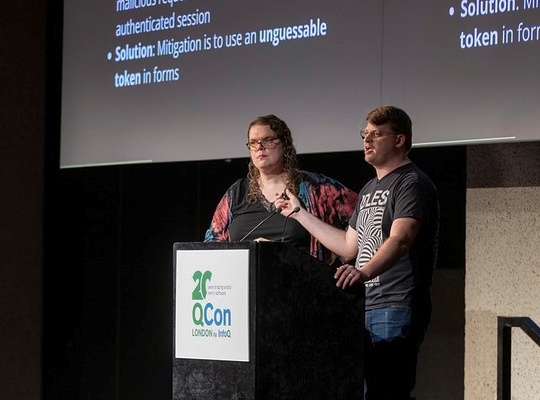
Build a Decentralized Web: Exploring Spritely’s Innovative Architecture
Spritely's architecture takes on decentralization's hardest problems with a clear-eyed focus on user agency. Christine Lemmer-Webber and David Thompson walk through capability-based access control via Goblins, actor-model communication through OCapN, and the trust-building role of petname systems. What stands out is how naturally Scheme, WebAssembly's Hoot, and local-first CRDTs fit together to support peer-to-peer apps without central servers. It's a thoughtful, practical design worth exploring. For broader context on decentralized tooling, our coverage of the Forrester function offers a useful parallel.

Empower AI agents with precise controls for safer data actions.
Cloudflare's WriteGuard, now in private beta, takes a meaningful step toward safer AI agents by giving MCP servers fine-grained control over which tools can modify data or trigger actions. That shift from broad access to precise permissions feels like the right kind of guardrail for a rapidly evolving space. It's a practical move, not a flashy one, and that's what makes it worth your attention. For a broader look at how MCP is shaping workflows, our visual guide offers a solid starting point.

Explore remote SQL execution with three concurrent DuckDB servers.
DuckDB is known for being fast, but what happens when you push it beyond a single machine? In this experiment, the team behind Quack ran SQL concurrently across three remote servers to see if the database could handle the pressure. The result is a practical look at distributed execution that feels both ambitious and grounded. It is not about hype; it is about what actually works. If you are exploring how AI-native tools handle real-world data challenges, this is a worthwhile stop.

Nscale acquires Anyscale to expand its AI compute capabilities
Nscale's move to acquire Anyscale signals a clear intent to own more of the AI compute stack. This isn't just another acquisition; it's a deliberate step toward simplifying how companies scale their AI workloads across data centers and servers. We see a British neocloud making a confident play for deeper infrastructure control. For teams wrestling with complexity, this could mean more accessible paths forward. If you're questioning how AI reshapes your own workflows, our piece on talking to an AI clone offers a useful counterpoint.