software
Beyond Market Intelligence keeps software in one place: 96 stories so far. The section currently leads with “Mature platform engineering unlocks sustainable AI value for enterprises.”, “Palantir's billion-dollar quarter challenges AI's trust deficit”, and “Siri catches up, but the AI assistant race has already moved on”. Perforce's 2026 Platform Engineering Report makes one thing clear: maturity in this space now separates AI experiments from operational wins. Palantir just posted $1 billion in profit, and Alex Karp responded by calling the AI industry "Marxist." That's a bold word from a CEO whose own success depends on the same frontier labs he's warning enterprises about. Acme AI is the next-generation, AI-powered spreadsheet platform built to replace Excel and redefine how analysts, data scientists, and enterprise teams work… The list below is every software story on Beyond Market Intelligence, newest first.

Mature platform engineering unlocks sustainable AI value for enterprises.
Perforce's 2026 Platform Engineering Report makes one thing clear: maturity in this space now separates AI experiments from operational wins. The report's findings suggest organizations that treat platform engineering as a strategic discipline are better positioned to turn AI adoption into lasting value. That's a practical, grounded perspective we can get behind. For a related look at how AI behaves in practice, our piece "Talking to My AI Clone Taught Me to Question the Tech" offers a useful counterpoint worth exploring.

Palantir's billion-dollar quarter challenges AI's trust deficit
Palantir just posted $1 billion in profit, and Alex Karp responded by calling the AI industry "Marxist." That's a bold word from a CEO whose own success depends on the same frontier labs he's warning enterprises about. His point deserves attention: if these tools can't be trusted, why rush them into critical workflows? We're not here to defend big tech's habits, but we'd rather see scrutiny than blind adoption.

Siri catches up, but the AI assistant race has already moved on
Siri finally gets the AI overhaul Apple promised, and it lands with a quiet thud. That's not because the upgrade lacks substance; it's because the bar has moved. A capable assistant now feels like table stakes, not a breakthrough. We've seen this pattern before, where the novelty of talking to an AI fades once you realize what it's really doing. For a deeper look at that unease, our piece on building an AI clone touches on the same tension.

June raises $20 million to make AI deployment simpler and more accessible
June emerged from stealth today with a $20 million pre-seed round, a clear signal that Marc Benioff-backed investors see real potential in simplifying AI adoption. The startup's premise is refreshingly direct: the hardest part of AI isn't building it, it's deploying it without drowning in complexity. That resonates. We've explored the human side of these tools before, like in our piece on questioning AI clones, and this feels like a natural next step.

Explore how AI is reshaping the path forward for autonomous mobility.
The robotaxi industry has reached a fork in the road, and TechCrunch Mobility is here to map both routes. This week, we're digging into how AI is reshaping transportation, from autonomous fleets to the tools we use to build them. It's a moment to explore what works, what doesn't, and what's next. If you're questioning how much trust to place in these systems, our piece on talking to an AI clone offers a grounded reality check.

Discover the new apps proving software innovation is thriving in the AI era
The latest App Store lineup quietly flips the script on the notion that AI agents will sweep away standalone software. Developers are shipping with fresh momentum, offering everything from smarter bookmarking tools to digital pen pals and nature journals. It's a reminder that practical, human-centered design still earns its place on your Home Screen. For those of us still weighing what AI truly changes, our piece on talking to an AI clone offers a thoughtful counterpoint worth exploring.

Discover how strategic teams amplify AI for measurable software success
DORA's 2025 research makes one thing clear: AI amplifies whatever system it touches, so the real work is shaping the organization around it. Ben Linders breaks down team profiles and success capabilities that turn this insight into action. It's a practical read for anyone tired of chasing tools instead of outcomes. If you're still weighing the human side of AI, "Talking to My AI Clone Taught Me to Question the Tech" pairs well with this analysis.

Meta expands enterprise AI beyond agents into APIs and internal tools
Mark Zuckerberg sees Meta's enterprise opportunity as far bigger than selling AI agents. On the company's second-quarter earnings call, he pointed to a broad field spanning APIs, compute, and internal software. That is a smart read of the market. Businesses do not need one flashy tool; they need practical infrastructure that fits how they already work. If you want to question how far this technology should go, our piece "Talking to My AI Clone Taught Me to Question the Tech" offers a useful counterpoint.

Pangram secures $9M to help you identify AI-generated content
Pangram's $9 million raise lands at a moment when AI-generated text is blurring the line between useful and noisy. The startup's new Pangram 4 model targets that problem directly, with an image detection tool also in research preview. That matters because the real cost of AI slop isn't just clutter; it's the silent skewing of models trained on it. We've seen how easily false positives muddy the data, as our own piece on catching AI slop showed.
Discover the new apps proving great software thrives alongside AI
The App Store is busier than ever, even as AI agents promise to make traditional software obsolete. Developers are shipping tools that feel refreshingly human, from smarter bookmarking apps to digital pen pals and neighborhood marketplaces. It's proof that great software isn't about competing with AI, but complementing it. If you're curious how these tools hold up against the AI wave, our piece on talking to an AI clone offers a thoughtful counterpoint worth exploring.

Granola brings AI-powered note taking directly to your wrist
Granola is putting AI to work where notes actually happen: in person. The company just launched an Apple Watch app for capturing conversations on the go, a practical step toward making note-taking feel less like a chore and more like a reflex. It's a smart move for anyone tired of typing during meetings. For a deeper look at how flexible devices are reshaping app design, check out our piece on preparing iOS apps for the iPhone Duo's displays.

Build your own AI layer or risk losing control of your data future.
Satya Nadella's warning cuts to the heart of the AI rush: lean on a single model for everything, and you might not survive the decade. He's right to push for ownership, whether that means building your own models or layering in AI gateways to keep your prompts separate from the model itself. It's not about tech for tech's sake; it's about control and adaptability. If you're questioning how deep this dependency runs, our piece on talking to an AI clone offers a timely reality check.

Enigma's $71M seed round aims to make robot control as intuitive as volume
Enigma's $71M raise signals something practical: making robot control feel as intuitive as turning a dial. Led by Index Ventures and Ribbit Capital, with Sarah Guo's Conviction Partners joining, this seed round backs a simpler interaction model. We're encouraged by the focus on accessibility over flashy claims. It aligns with our own explorations, like the piece on questioning AI clones, where ease of use meets ethical nuance. For those tracking how humans interface with intelligent systems, this is a step worth watching closely.
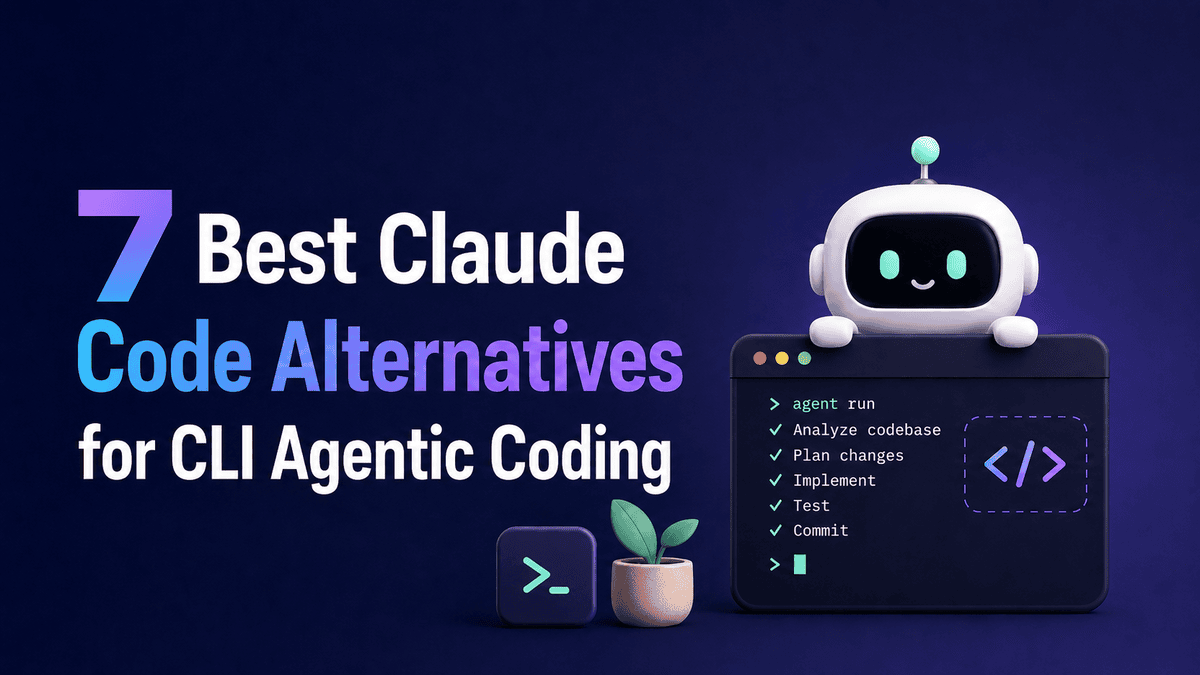
Explore smarter CLI coding tools beyond Claude Code
Claude Code has earned its reputation, but that doesn't mean it's the only path forward. If you're feeling constrained by its limits, whether the cost or the closed ecosystem, it's time to explore what else is out there. We've rounded up seven alternatives that are often cheaper and faster, with open-source options, local models, and stronger MCP support. This is about giving you better control over your context and your workflow.

ServiceNow invests $40 million to bring AI-native banking software worldwide
ServiceNow's $40 million investment in Indian banking software specialist BusinessNext signals a deliberate move to deepen its financial services expertise. The partnership positions BusinessNext to scale its AI-powered banking tools globally, with ServiceNow providing the strategic weight to make that expansion credible. It's a smart bet: banking runs on legacy systems, and AI-native tools are the clearest path forward. For readers tracking how AI reshapes established industries, this mirrors themes from our piece on Cloudflare's EmDash migration, where purpose-built technology quietly displaces older infrastructure.

Monday.com sharpens its focus on AI with a leaner workforce
Monday.com is cutting 20% of its workforce, roughly 630 people, to double down on its AI Work Platform. That is a significant move, and it signals a clear priority: leaner operations in service of a more focused product vision. It is a bold bet on where the market is heading, and it reflects a willingness to make hard choices now rather than play catch-up later. For anyone tracking how AI is reshaping work, this is a story worth watching closely.

Explore X's rebuilt Android app, designed for a smoother experience
After a year of rebuilding, X has rolled out its new Android app worldwide. That kind of patience matters when you are untangling years of technical debt, and the result feels like a genuine reset for users who have been waiting for the platform to catch up to its own ambitions. This is a move toward a more stable, thoughtful mobile experience. For more on how modern infrastructure choices are reshaping digital tools, our piece on Cloudflare's EmDash migration offers a useful parallel.

Cybersecurity breach exposes patient billing data at thousands of U.S. hospitals
Craneware, the Edinburgh-based tech firm trusted by thousands of U.S. hospitals and pharmacies for patient billing, has confirmed that hackers stole a "significant" amount of customer data during a cyberattack. That's a serious breach, especially when the exposed information could touch sensitive health records. It's a stark reminder that the tools we rely on for critical operations are prime targets.

Navigating the future of robotaxi rules with clarity and purpose
Robotaxi rules are turning into a battlefield, and that's exactly where things get interesting. The fight over who gets to deploy self-driving vehicles isn't just about technology; it's about trust, safety, and who decides what's acceptable on public roads. We're watching regulators and innovators circle each other, and the outcome will shape how we move for decades. If you're questioning how AI fits into this mess, you're not alone. It's a messy, necessary conversation, and we're here to break it down.

Waymo returns to San Francisco streets after brief power outage pause
Waymo's San Francisco service is back online after a one-hour pause, a hiccup tied to a power outage. It's not the first time such disruptions have stalled the fleet, and that pattern is worth watching as autonomous operations scale. Reliability in the field matters more than the tech's promise. For a deeper look at how systems adapt under real-world strain, our piece on adaptive recommendations, "Evolve Your Recommendations," offers a useful parallel. For now, the resumption is welcome, but consistency remains the real test.

Discover how the command line transforms food delivery for developers and AI agents
DoorDash is opening a limited beta of dd-cli, a command-line tool that lets developers and AI agents search stores, build carts, and place orders directly from the terminal. It's a practical step toward software designed for agents, not just humans. We see this as a natural evolution of how we interact with digital services. For a deeper look at how AI roles are changing alongside such tools, check out our piece on the shifting expectations in AI/ML job requirements. Explore the possibilities here.

A new keyboard from OpenAI invites a seamless coding workflow.
OpenAI's new $230 keyboard for Codex lands with a familiar tension: a bold tool for developers arriving amid a legal fight with Apple over hardware trade allegations. The light-up design feels intentional, built to pair with its agentic coding app, yet the timing complicates the story. We're not here to litigate the case, but it's worth asking what this signals about focus.

Indian AI coding startup hits unicorn status with 200,000 paying users
Emergent just crossed into unicorn territory, and the timing feels right. The Indian AI coding startup closed a $130M Series C, hitting a $120 million annualized revenue run rate with over 200,000 paying customers. That is real traction, not hype. It signals a growing comfort with AI-native development tools, especially as teams look to simplify complex workflows.

Siri's AI upgrade arrives in the iOS 27 public beta for everyone to explore
The iOS 27 public beta is out, and that means anyone can finally try the revamped Siri without a developer account. Apple is opening the door for everyday iPhone owners to test this AI-powered assistant ahead of its fall launch. It is a smart move, letting users explore these tools early and see what actually works for them. For a deeper look at how these interactions can challenge your perspective, check out "Talking to My AI Clone Taught Me to Question the Tech."