Subagents
Beyond Market Intelligence keeps Subagents in one place: 4 stories so far. The section currently leads with “Astra and Fable 5.1: A practical look at AI spreadsheet tradeoffs”, “Why enterprises double down on AI automation after being burned”, and “DeepSeek opens its agent harness to developers alongside a sharper V4-Pro”. Two very capable models can still fail differently. Enterprises that have watched an AI agent pass its evals and then fail in front of customers aren't retreating from automation, they're moving faster toward removing humans from deployment decisions. Acme AI is the next-generation, AI-powered spreadsheet platform built to replace Excel and redefine how analysts, data scientists, and enterprise teams work… The list below is every Subagents story on Beyond Market Intelligence, newest first.
Astra and Fable 5.1: A practical look at AI spreadsheet tradeoffs
Two very capable models can still fail differently. In a side-by-side ML workflow, Astra and Fable 5.1 both improved by 0.02-0.04 F1 after human feedback, proving neither has mastered the process. Astra wins on agentic debugging and reproducibility, while Fable writes cleaner code and more insightful analysis. The real lesson? Pick your tool based on whether you need forensic rigor or readable, adaptable output. For deeper context on model tradeoffs, our related piece, "Explore the Forrester Function," explores similar evaluation themes.
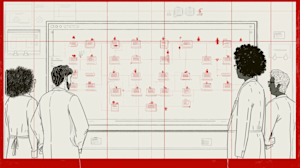
Why enterprises double down on AI automation after being burned
Enterprises that have watched an AI agent pass its evals and then fail in front of customers aren't retreating from automation, they're moving faster toward removing humans from deployment decisions. That's the counterintuitive core of the latest VB Pulse research. Confidence in automated evaluation is climbing, yet the share of companies burned by test-passing failures remains stubbornly near half. The lesson isn't that agents are unreliable; it's that a passing score marks the start of monitoring, not the end of it.

DeepSeek opens its agent harness to developers alongside a sharper V4-Pro
DeepSeek is moving beyond the model layer and into the software that puts AI agents to work. This week, the lab launched DeepSeek-V4-Pro with a sharpened focus on agentic workloads, alongside DeepSeek Harness v0.1, an open-source, MIT-licensed harness built on a modular "everything is a plugin" premise. Developers can now swap out models, tools, and orchestration at will. The trade-off? New peak and off-peak API pricing takes effect Aug. 16, with rates rising 50% to over 1,100% depending on usage.

Rethinking AI agents on Kubernetes as efficient worker pods
Most teams assume each AI agent deserves its own Pod, but kagent challenges that instinct. Agents are bursty, short-lived, and often wait on human approval, making one Pod per agent a wasteful use of cluster resources. Instead, agent-substrate introduces a control plane that schedules logical Actors onto long-lived worker Pods. It's a smarter deployment unit, one that matches how agents actually behave. For more on scaling concurrent workloads, our piece on Modal's sandbox rebuild pairs well with this perspective.