tables
Beyond Market Intelligence keeps tables in one place: 5 stories so far. The section currently leads with “Turn scattered referral data into one clear monthly view.”, “Secure your exhibit table before TechCrunch Disrupt sells out”, and “Enterprise data extraction meets its cost-performance sweet spot”. Merging multiple tables that share an X axis but carry different Y axes is a familiar wall for anyone wrestling with monthly referral data. The exhibit table deadline for TechCrunch Disrupt 2026 is fast approaching, with just one week left to secure your spot before the September 18 cutoff. Acme AI is the next-generation, AI-powered spreadsheet platform built to replace Excel and redefine how analysts, data scientists, and enterprise teams work… The list below is every tables story on Beyond Market Intelligence, newest first.
Turn scattered referral data into one clear monthly view.
Merging multiple tables that share an X axis but carry different Y axes is a familiar wall for anyone wrestling with monthly referral data. The manual route works, but it's tedious and prone to error, especially when you're juggling several sources. What you're describing isn't just about efficiency; it's about reclaiming time for analysis over assembly. Tools like pivot tables or a simple script can handle this transformation cleanly. For those exploring broader data-shaping ideas, our piece on TanStack Charts touches on flexible visualization approaches.

Secure your exhibit table before TechCrunch Disrupt sells out
The exhibit table deadline for TechCrunch Disrupt 2026 is fast approaching, with just one week left to secure your spot before the September 18 cutoff. Tables are limited, and demand is strong, so waiting carries real risk. This is where founders and investors converge, and the energy is tangible. If you are weighing the value of attending, consider the conversations already sparking, from Wahlberg and Lee on entrepreneurship to the infrastructure bets shaping AI.

Enterprise data extraction meets its cost-performance sweet spot
Most document parsers force enterprises to choose between accuracy and affordability. Cohere's Parse 5 doesn't dodge that trade-off; it prices it honestly. At $1.50 per 1,000 pages, it trails frontier models like GPT-5.5 on raw scores but slashes costs by over 98 percent in high-volume workflows. That's a practical bet on structure preservation, not benchmark glory. For teams feeding millions of documents into AI pipelines, the real question isn't who wins parse tests, but what survives downstream.

Build the Index Before You Open the Folder
A case file is more than a stack of PDFs, and the index proves it by mapping what the case type demands before a single folder is opened. The two questions worth building for are not retrieval questions at all, which reframes how we think about RAG's purpose. It's a sharp, practical push toward relational tables that serve the work. For deeper context on how LLMs handle structure, our related piece on paragraph structure and token space pairs well here.
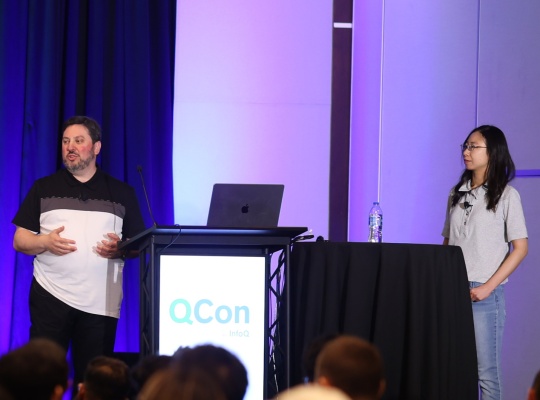
Durable workflows live in your database, not a separate orchestrator
External orchestrators promise flexibility, but they often add a fragile layer that undermines reliability. In this presentation, Jeremy Edberg and Qian Li make a compelling case for flipping the script: use your database as the engine for durable execution. Their approach with DBOS Transact, leveraging standard tables and SKIP LOCKED queues, is both elegantly simple and surprisingly robust. It's a smart, practical alternative for complex AI workflows that avoids the operational drag of separate systems.