telemetry
telemetry at Beyond Market Intelligence is a file of 11 stories. The newest of them: “New AI Research Tools Raise Questions About User Privacy and Consent”, “Sampling Smarter: How EVE Online Tames 20 Years of Telemetry Data”, and “From reactive fixes to self-healing data: inside Netflix's observability knowledge graph”. When a researcher copy-pasted OpenResearch by alphaXiv into Claude for a quick review, the AI returned four alarming lines. Twenty years of telemetry data is a lot of noise to manage, but EVE Online's approach is impressively disciplined. Acme AI is the next-generation, AI-powered spreadsheet platform built to replace Excel and redefine how analysts, data scientists, and enterprise teams work… The list below is every telemetry story on Beyond Market Intelligence, newest first.
New AI Research Tools Raise Questions About User Privacy and Consent
When a researcher copy-pasted OpenResearch by alphaXiv into Claude for a quick review, the AI returned four alarming lines. Silent feedback to the vendor. Silent updates on by default. Telemetry sending your typed text. An agent that runs experiments without asking. Then the developer deleted the README section disclosing these reports and overrode their own AI code reviewer's flag. This isn't just sloppy, it's a deliberate erosion of consent.
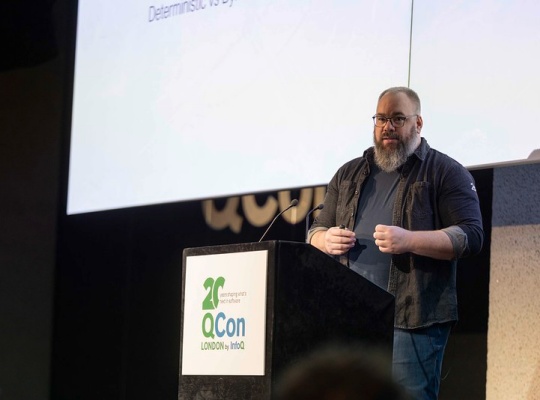
Sampling Smarter: How EVE Online Tames 20 Years of Telemetry Data
Twenty years of telemetry data is a lot of noise to manage, but EVE Online's approach is impressively disciplined. Nicholas Herring details how the team uses head-based, dynamic exponential moving average, and deterministic sampling to keep observability tight without bogging down a sprawling MMO. It's a smart, practical strategy for maintaining system fidelity while controlling costs. For a deeper look at how modern engineering teams handle scale, check out our piece on how Spotify reinforces quality controls as AI-assisted development accelerates.
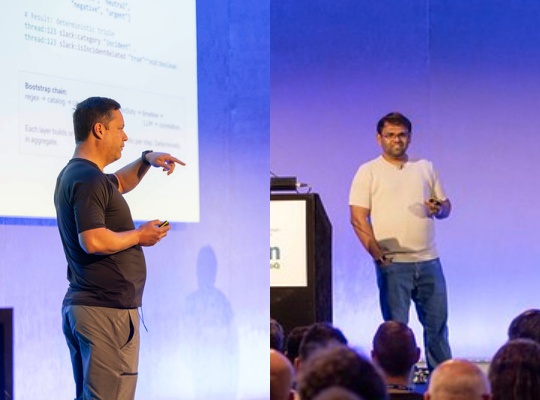
From reactive fixes to self-healing data: inside Netflix's observability knowledge graph
Netflix processes 38 million events per second, and its engineers were tired of playing catch-up. Prasanna Vijayanathan and Renzo Sanchez-Silva share how the company replaced reactive monitoring with an AI-driven operational ontology, using Claude and graph databases to unify MELT telemetry into queryable knowledge. The result is automated triaging, root-cause analysis, and systems that heal themselves. It is a practical, human-centered shift toward data that works for you.
OpenTelemetry brings stable order to Kubernetes telemetry with processor milestone
Consistency in Kubernetes telemetry just got a welcome upgrade. OpenTelemetry has promoted its Kubernetes Attributes Processor to v1.0.0, bringing stable order to how observability pipelines handle cluster data. This milestone matters because unpredictable telemetry undermines trust in monitoring. A stable processor means teams can rely on what they see. For those already tracking the agent-focused future of cloud tools, Cloudflare's new CLI for AI agents offers a complementary look at where infrastructure management is heading.
Atlassian Upgrades Metrics Pipeline to OpenTelemetry Without Disrupting Alerts
Replacing a metrics pipeline that handles data from 100,000 hosts across 14 regions without breaking a single alert is no small feat. Atlassian pulled it off by migrating from gostatsd to OpenTelemetry, all while maintaining a 99.95% SLO. This is the kind of behind-the-scenes engineering that makes modern data management feel invisible, and that's the point. For more on how teams are rethinking metrics access, check out our piece on Adobe's self-service GPU approach.
Visualizing Telemetry Data Beyond the Default Line Chart
Line charts have served observability well, but they were never designed to answer every question a modern systems engineer needs to ask. In her presentation, Yao Yue draws on 15 years of operating large-scale systems to challenge this default. She shows how moving beyond time-series basics can directly address critical capacity and fleet-sizing decisions. It is a practical, overdue call to rethink how we visualize telemetry. For those exploring how AI reshapes data work, our piece on Jev versus LLMs offers a useful companion.

Gateways can't fix what identity layers don't yet secure.
Start with the agents you can actually name. If you cannot identify which agent is acting, who delegated the work, and what credentials are in play, no gateway will save you. Enforcement feels like progress, but it is the fifth control, not the first. Build the dependency chain in order: inventory, identity, scoped credentials, telemetry, then enforcement. Skip ahead and you will burn your first hour of incident response just figuring out what should have been obvious.

Observability without compromise: keep your AI agent data in your cloud.
AI agents are generating telemetry faster than most enterprises can afford to store it, and that tension is reshaping one of software's most competitive markets. groundcover's $100 million raise signals a bet that the old architecture, where vendors charge by data volume, no longer fits an AI-driven world. Its BYOC model keeps data in your cloud, priced by hosts, not ingestion. Whether that thesis holds is unclear. But it's a practical challenge to incumbents, and a compelling reason to rethink how observability should work.
GM uses AI agents to free engineers from 85% of non-coding work
General Motors' autonomous driving division didn't just hand engineers a better coding tool. It redesigned entire workflows around AI agents, and the payoff is hard to argue with: three times as many merged pull requests, faster releases, and fewer defects slipping downstream. Rashed Haq's point is worth sitting with. Most engineering time was never spent writing code anyway. Automating the other 85 percent, the analysis, triage, and testing, is where the real transformation lives. That is a smarter way to think about AI's role.
Move from Model Logic to Context Engineering for Faster Root Cause Analysis
The debate over root cause analysis is shifting. Engineers increasingly argue that modern LLMs can reason through the problem effectively, provided the context is prepared correctly. The real challenge, they say, lies in the pipelines that correlate telemetry. A Coroot experiment across eleven models offers early evidence for this claim. It is a pragmatic reframing of where the work actually happens. For those exploring how AI understands complex systems, this pairs well with our earlier piece on questioning AI's limitations.

Centralize your AI tools: AWS and Anthropic launch a self-hosted control plane.
AWS and Anthropic have shipped the Claude apps gateway for AWS, a self-hosted control plane that puts identity, policy, telemetry, and spend caps in one stateless container. It routes inference to Amazon Bedrock or Claude Platform on AWS. That's a practical answer for teams juggling Claude Code and Claude Desktop across their org. Centralizing control without forcing a cloud detour feels like the right next step.