US
18 stories filed under US on Beyond Market Intelligence. The newest of them: “Federal agencies ordered to remove DeepSeek AI over security concerns”, “U.S. EV sales find their footing with three quarters of steady growth”, and “New policy blocks top tech firms from hiring skilled foreign workers”. The U.S. Three consecutive quarters of steady growth suggest U.S. Acme AI is the next-generation, AI-powered spreadsheet platform built to replace Excel and redefine how analysts, data scientists, and enterprise teams work… The list below is every US story on Beyond Market Intelligence, newest first.

Federal agencies ordered to remove DeepSeek AI over security concerns
The U.S. has ordered federal civilian agencies to remove DeepSeek AI and any third-party services built on its technology, citing national security concerns. It's a decisive move that signals how quickly AI tools are being scrutinized for trust and safety. This isn't just a policy update, it's a reminder that innovation must be paired with responsibility. For a deeper look at how AI is reshaping workflows, explore our related piece on maximizing AI agent performance on Mac Mini.

U.S. EV sales find their footing with three quarters of steady growth
Three consecutive quarters of steady growth suggest U.S. electric vehicle sales have moved past the wobble phase and into something more durable. This isn't a spike; it's a rhythm. Buyers are finding reasons to commit, and the market is responding accordingly. For anyone tracking the shift toward AI-native tools in adjacent industries, this momentum pairs well with our look at how Rivian is advancing data workflows. Progress, it seems, is compounding across sectors.

New policy blocks top tech firms from hiring skilled foreign workers
A new policy blocks top tech firms from hiring skilled foreign workers, suspending companies like Capgemini, Cognizant, HCL, Infosys, Tata, and Wipro from the program. This move reshapes how global talent flows into the industry. For teams already feeling constrained by legacy tools, it adds another layer of complexity.

AM radio mandate moves forward with bipartisan House support
The House just voted to make AM radio standard in new cars, and it's a win for practical resilience. Lawmakers on both sides saw the value in keeping a free, reliable channel for emergency alerts and local connection. It's not about nostalgia; it's about ensuring drivers aren't locked out of vital information. This move feels refreshingly grounded. For more on how tech and transportation are colliding, our piece on Tesla Semi's production ramp-up offers a fitting look at the industry's momentum.

The hidden cost of AI: data centers set to surpass national energy demand.
The AI boom is rewriting America's energy map in real time. Projections now show U.S. data centers guzzling more natural gas by 2035 than Germany and Japan combined. That is a staggering leap, and it should make us pause. This isn't about scaring anyone away from innovation; it's about facing the infrastructure reality head-on. If we're going to empower this digital transformation, we need to plan for the power it demands.
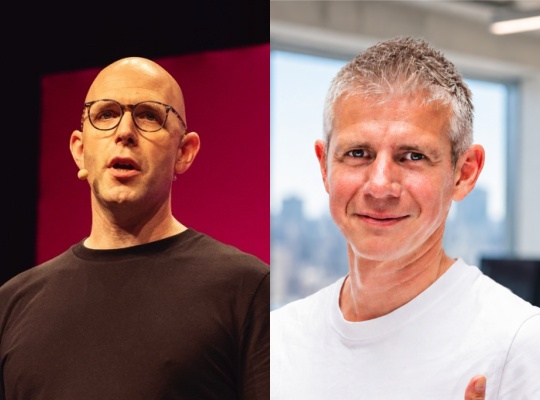
Three Clouds, One Architecture: Engineering Resilient Financial Systems
Form3's journey from a single cloud to a triple active multi-cloud architecture is a masterclass in practical engineering. Ross McFarlane and Kevin Holditch don't just walk through cross-cloud networking and distributed databases with CockroachDB and NATS; they tackle the messy reality of regional disaster recovery expectations across the UK, Europe, and US markets. It's a grounded look at complexity done right. For a deeper dive into scaling infrastructure, our piece on Modal's sandbox rebuild offers a useful parallel.

Discover how AI agents are reshaping app discovery and user engagement
Muse, Meta's AI agent, has quietly claimed the No. 2 spot among US apps, yet its climb feels more like a steady hike than a sprint. Unlike the instant buzz around Meta AI or Threads, this one's gaining ground on momentum, not hype. That's fine. A slower start often builds a sturdier foundation. If you're curious how AI tools like this measure up beyond rankings, our piece on verifying your AI's understanding offers a practical lens. For now, watch Muse. It's earning its place.

Explore how cyber threats expose the fragility of critical water infrastructure.
The confirmation that hackers targeted over 100 US water systems in July is a stark reminder that critical infrastructure remains a prime target. This isn't an abstract threat; it's a direct challenge to public safety. We should treat this warning as a call to action, not a cause for panic. The focus now is on resilience and tightening access controls.

Securing critical infrastructure in an age of targeted cyber threats
Over the last couple of weeks, hackers have breached systems at multiple U.S. water plants, with the Iranian government allegedly behind the wave. It's a stark reminder that critical infrastructure remains a prime target, and the stakes here are nothing less than public safety. What's striking is how much is still unknown, from the full scope of access gained to the intended next steps. This isn't abstract threat talk; it's a real-world vulnerability demanding attention.

New US policy empowers private firms to conduct cyberattacks
For decades, the U.S. held a firm line: private firms do not hack back. That line just vanished. A new order now permits select companies to carry out offensive cyber operations, sweeping aside long-standing policy in one decisive move. It is a bold, pragmatic response to a threat landscape that keeps escalating. We support the intent, but the real test will be in the execution.

Aptoide's return to Google Play opens a new chapter for Android app choice.
After more than a decade away, Aptoide is back on Google Play in the US, and that is a meaningful win for anyone tired of walled-off mobile ecosystems. Court-ordered changes have finally cracked the door open for competing app stores, and Aptoide walked through it. This is what real choice looks like for Android users. For more on how platforms are reshaping what users can build and access, check out Feather's customizable robotics platform.
Choose your NeurIPS destination: Sydney or Atlanta this December
NeurIPS 2026 is pulling the community in two directions, and the choice between Sydney and Atlanta is more than a flight decision. It reflects a broader tension in how we approach research, travel, and opportunity. For US-based attendees, the question is practical, but it also touches on accessibility and the evolving geography of AI. We encourage you to weigh your options carefully. And if you are feeling the pressure of shifting expectations in this field, our piece on "Navigating AI/ML Job Requirements" offers useful context.

Klaviyo bug exposed user passwords to advertisers
Klaviyo users who signed up through the platform may have had their passwords exposed to dozens of advertisers, a bug in the tech giant's website revealed. That is a serious breach of trust for a marketing automation tool. It is a reminder that even established platforms can stumble. We cover similar risks elsewhere, like in our piece on AI agents sharing user images, which highlights how quickly data can slip out of safe hands. For now, Klaviyo customers should change credentials immediately.

LightSpy operators exposed after ordering KFC to their office.
A single slip-up in operational security has tied a China-linked LightSpy campaign to a Chinese company, exposing victims across 13 countries, including the US. The operator's real name and office address surfaced after a KFC order, a mundane detail that unraveled their cover. It's a reminder that even sophisticated spyware relies on human error. For more on how digital tools expose data, see our coverage of AI agents sharing user images. The lesson is clear: vigilance matters, whether you're a target or an operator.

Texas pauses data center growth to rethink energy demands
Texas has long been the default answer for data center developers chasing cheap power and light regulation. But the governor's call for audits signals that even the most business-friendly state has limits. Growth without scrutiny eventually hits a wall, and Texas just found its own. It's a reminder that infrastructure booms don't fail quietly; they strain until someone blinks. For context on how quickly energy demand is reshaping tech decisions, our piece on Crusoe pausing its Boom turbine deployment shows even startups are recalibrating.
The Global Shift in AI Leadership: What It Means for You
The US no longer holds the crown in AI, and that's not a warning, it's an observation worth acting on. Global competitors are closing the gap with faster adoption and bold experimentation, leaving American tech to play catch-up. We've seen how quickly assumptions about AI's limits fall apart, whether it's in training models or questioning what our own tools say back to us. If you're still leaning on legacy systems, this shift should feel like a nudge.

Open source AI knows no borders, only better possibilities.
Arcee, a US open source AI lab, is pushing back on the panic. As Chinese models gain traction among American companies, the debate over their risks has reached a fever pitch. But Arcee's stance is clear: capability and origin are not the same as inherent danger. That distinction matters. We should judge tools on how they are built and used, not on a flag. It is a grounded perspective amid the noise.

New AI Sanctions Target China's Open Models Over IP Concerns
Treasury Secretary Scott Bessent's warning that the U.S. could sanction Chinese open AI models over alleged IP theft sharpens a critical question about how far this administration will go to slow a rival's momentum. It's a bold stance, but the real test lies in whether such pressure genuinely protects innovation or simply walls off progress. For users navigating this landscape, the takeaway is pragmatic: stay informed, stay adaptable.