venture capital
131 stories filed under venture capital on Beyond Market Intelligence. The newest of them: “Gamma welcomes Lica co-founders to advance design research”, “Ultra-light drones land $37M to rethink how deliveries take flight”, and “AI infrastructure deals reveal a new era for startup scale”. Gamma is bringing design talent in-house, and that is a smart move. Airbound has raised $37 million to rethink drone delivery from the ground up, and the bet is on lightness over brute force. Acme AI is the next-generation, AI-powered spreadsheet platform built to replace Excel and redefine how analysts, data scientists, and enterprise teams work… The list below is every venture capital story on Beyond Market Intelligence, newest first.

Gamma welcomes Lica co-founders to advance design research
Gamma is bringing design talent in-house, and that is a smart move. Lica, the Accel-backed startup known for its sharp creative tools, is joining the company, and its co-founders will now lead a new research team. We like this direction. It signals a deeper commitment to building products that feel as good as they function, not just adding features. For anyone following how AI-native tools are taking shape, this is worth watching.

Ultra-light drones land $37M to rethink how deliveries take flight
Airbound has raised $37 million to rethink drone delivery from the ground up, and the bet is on lightness over brute force. Backed by Greenoaks, DoorDash, and Lachy Groom, this ultra-lightweight approach targets trucking's dominance with a sharper, more agile premise. It's a compelling direction for logistics, one that feels less like a stunt and more like a practical shift. For context on how AI-native infrastructure is reshaping adjacent industries, our piece on Anthropic's Akamai exploration offers useful perspective.
AI infrastructure deals reveal a new era for startup scale
Stripe's $7.5 billion acquisition of OpenRouter is a bold declaration that the infrastructure behind AI access is now core infrastructure. It signals that the companies routing and managing model traffic are as essential as the models themselves. For founders, this is a clear invitation to build aggressively in that layer. We are living in the age of startups, where capital is flowing toward those who own the pipes.

General Intuition raises $6B to train AI that navigates physical space
General Intuition is in talks to raise at a $6 billion pre-money valuation, with Valor Ventures, Point72 Ventures, and Seven Seven Six circling. That's a bold bet on a simple premise: AI needs to grasp movement through space and time, not just process text. The ambition is real, and the capital backs it. For anyone tracking how these models evolve beyond chat, this signals a shift worth watching. Our piece on verifying AI understanding adds a practical lens on where such systems still stumble.

DOJ scrutiny of venture board seats signals a shift in startup oversight.
The DOJ's probe into a16z's board seats raises a pointed question: will other VCs flinch? It shouldn't. This is about scrutiny, not silencing. We dig into why the government is looking at startup governance, and what it signals for founders who value clean oversight. For context on how AI-native infrastructure is drawing similar attention, our piece on OpenAI's image-sharing mishap is worth a read. The takeaway? Transparency isn't a threat; it's the cost of building something real.

How AI-native accounting helped Rillet raise $100 million in two days
A single board meeting turned into a $100M raise for Rillet, and the company reached unicorn status in just 48 hours. CEO Nicolas Kopp shared growth numbers, and the response from investors like Iconiq and Sequoia was immediate. No aggressive pitch, no drawn-out process; the numbers did the work. It's a reminder that momentum in AI-native finance is becoming its own fundraising strategy. For more on how AI is reshaping infrastructure, our piece on Anthropic's cloud bet is worth a look.

The race for space access intensifies as orbital data funding surges
Starcloud's $250 million raise lands at a tense moment: launch options are tightening, and the race for orbital data centers is becoming a fight for the road itself. That's not hyperbole, it's physics. Whoever secures reliable access to space first will define how AI workloads compute off-planet. We're watching the start of a crowded, high-stakes scramble. For context on how capital is moving into this infrastructure wave, our coverage of Nscale's recent $3.36B buildout is worth a look. The pattern is clear, and it's accelerating.

Why investors return to Disrupt year after year
For investors, the Expo Hall floor is where the real signal lives. Year after year, those who walk the aisles, meet founders, and trade notes with peers walk away with sharper instincts. Missing Disrupt means missing that edge. The agenda is packed, but the connections you make between sessions often carry the most weight. If you want to see where the market is heading, pair the mainstage insights with deeper dives like our recent look at Anthropic's cloud bet. Just be on the ground.

Global founders gain an edge by bridging home markets and Silicon Valley
Foreign founders carry a distinct edge: one foot in their home country, one in Silicon Valley. That dual perspective is an advantage a16z believes in deeply, and its Borderless Founder network exists to back that belief. The firm isn't asking immigrants to choose; it's empowering them to leverage both worlds. It's a confident stance that matches the ambition of the founders it supports. For a deeper look at how global capital is moving, our coverage of Nscale's $3.36B raise offers useful context.

Travis Kalanick rethinks venture capital after raising $1.7 billion
Travis Kalanick, fresh off raising $1.7 billion for his robotics company Atoms, has a blunt take: only 1% of venture capitalists are actually helpful. It's a provocative stance from someone who has navigated the funding gauntlet more than most. He's not dismissing the system, but questioning its value beyond the capital. That honesty is refreshing, even if it feels a bit selective. For founders weighing similar frustrations, our coverage of the founder-investor dynamic is worth exploring.

Rillet doubles revenue in three months, reaching unicorn status with Iconiq
When Rillet emerged from stealth just two years ago, the path to a $1B valuation seemed ambitious. Now, with a $100M Series C led by Iconiq, the AI-native accounting startup has doubled its ARR in a single quarter. That kind of momentum signals more than momentum; it points to genuine market demand for intelligent financial tools. We've been tracking how AI-native companies are reshaping industries, and Rillet's trajectory reinforces that trend.
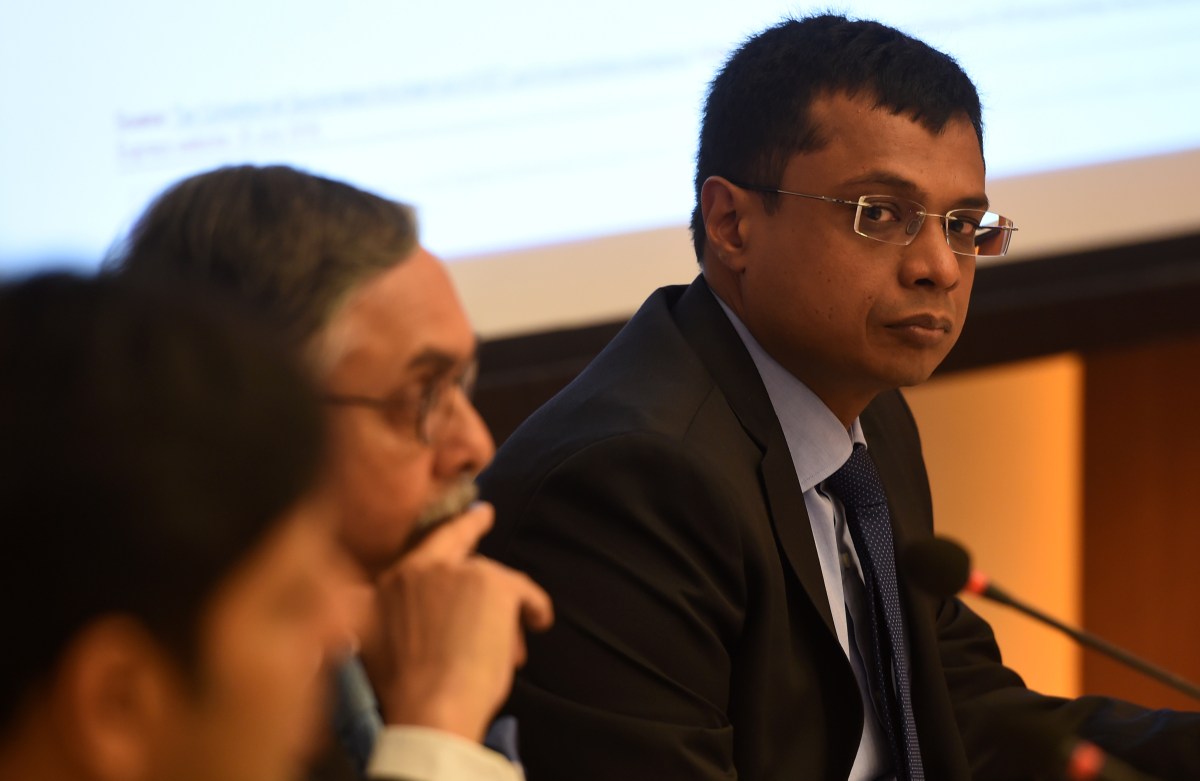
Navi secures $100M from Prosus as it prepares for public markets
Sachin Bansal's Navi has taken a decisive step toward its public debut, securing $100 million from Prosus in its first outside investment. It's a vote of confidence in a fintech built to simplify how Indians borrow and bank. The move signals maturity, not just ambition. As Navi eyes an IPO, this backing adds credibility to a journey that has often felt like a solo mission. For those tracking the startup's evolution, this is a moment worth watching closely.

Why VC Conflicts Are an Unavoidable Part of Growth
The DOJ's probe into Andreessen Horowitz's board seats has VCs scratching their heads, and honestly, the confusion is fair. When portfolio companies pivot and grow into competing lanes, some overlap is just part of the game for firms with that many irons in the fire. It's not a red flag; it's scale. That said, the scrutiny signals regulators are watching closer than before.

Lock in your Disrupt pass and save up to $300 before August 21
The early-bird window for TechCrunch Disrupt 2026 closes August 21, and it's the moment to secure your spot before prices climb. Locking in a pass now saves you up to $300, leaving more room to explore what matters when you join the startup community at Moscone West this October. We're thinking about the conversations that will shape the next wave of innovation, and our recent piece on an AI clone experiment offers a fitting preview of the questions you might tackle there.

Reach Capital's new $265M fund empowers founders to expand human potential
Reach Capital has closed an oversubscribed $265M Fund V, backing AI founders who are building tools to expand what people can actually do. That's a meaningful vote of confidence in a space where the real opportunity isn't just automation, but augmentation. We're encouraged by the firm's focus on human potential over raw capability. For a closer look at how AI's promise can sometimes complicate our relationship with technology, our piece "Talking to My AI Clone Taught Me to Question the Tech" offers a thoughtful counterpoint.

Higgsfield secures $400M to expand AI creation beyond static spreadsheets
Higgsfield just closed a $400M Series B that quadruples its valuation to $5.4B in only eight months. That kind of momentum says something about where AI-driven creation is heading. Founded by former Snap exec Alex Mashrabov, the platform lets users generate images and videos directly, removing the friction that keeps many from experimenting. It's a confident bet on accessible tools. If you're curious about how AI reshapes creative workflows, our guide to unlocking ChatGPT for work offers a practical starting point.

Wispr secures $280M to expand beyond voice dictation into smarter workflows
Wispr's $280 million raise at a $2 billion valuation signals more than momentum; it's a clear bet on where AI-native productivity is headed. The company has now secured over $361 million in total funding, moving decisively beyond its dictation roots. We see this as a logical expansion, not a pivot. For teams tired of clunky workflows, this is the kind of investment that turns ambitious ideas into everyday tools. Curious how AI infrastructure plays into this trend? Check out our coverage of Nscale's $3.

Explore the AI opportunity with discipline, not unchecked euphoria.
Joshua Kushner isn't buying the hype. In his first-ever investment letter, the Thrive founder acknowledges the AI opportunity is massive, but warns that letting excitement weaken investment discipline would be a grave error. That restraint is exactly what the moment calls for. The potential is real, but so is the noise. We've seen how easily enthusiasm outpaces judgment in emerging tech.

Investors seek accountability after $1.2 million mental health startup claim
Selena Gomez's mental health startup faces a serious legal reckoning, with investors alleging fraud after pouring nearly $1.2 million into a venture they say was never built or marketed. That's a steep price for trust, and it underscores how accountability must scale with ambition in the AI and wellness space. We're watching this closely, especially as our related piece on talking to an AI clone raises hard questions about transparency. For now, this suit is a reminder that promises need proof, not just potential.

Cognition aims to raise again, targeting a $40 billion valuation
Cognition is moving fast, and the market is taking notice. Reports say the AI coding startup is already in talks to raise at a new $40 billion valuation, just months after closing a $1 billion round at $26 billion. That kind of jump signals serious momentum, but it also raises questions about sustainability. Investors are clearly betting big on AI-native workflows. For context, similar infrastructure bets are unfolding across the sector, like Anthropic's $11.6 billion commitment to Akamai's cloud.

Thrive Holdings secures $2 billion to bring AI deeper into enterprise workflows
Thrive Holdings has raised $2 billion at a $12 billion valuation, with backing from SoftBank, D1 Capital Partners, and Alitmeter Capital. That's a serious vote of confidence for bringing AI into the enterprise. We see the appeal: AI can make complex data work feel less like a burden and more like a conversation. It's a smart, grounded bet on productivity. For a deeper look at how AI shapes our expectations, our piece on verifying AI's understanding offers a practical starting point.

Uber moves on from Serve as their business paths diverge
Uber's decision to sell its entire stake in Serve marks a telling shift between two companies that once moved in lockstep. The divestiture surfaces as their business priorities diverge, a reminder that even strong partnerships can outgrow their original alignment. It's a practical move, not a dramatic one. When strategy drifts, cutting ties early often beats forcing a fit. For context on how similar dynamics play out elsewhere, our piece on Anthropic exploring Akamai's cloud offers a useful parallel.

Accel secures $550 million India fund, signaling sustained market confidence
Accel has closed an oversubscribed $550 million India fund in just weeks, a decisive vote of confidence in the market. That speed is telling, especially since the U.S. firm still has over half of its previous $650 million allocation ready to deploy. It signals patience, not panic, in a space where founders crave stability. For context on how AI is reshaping productivity tools, our piece on Ando's $20M raise offers a useful parallel.

Igor Babuschkin's River AI secures $1.1B to reimagine personal agents
It's rare to see a two-month-old startup command $1.1 billion, yet River AI just did. Founded by xAI co-founder Igor Babuschkin, the company is betting big on personal agents, a space that feels both promising and crowded. That kind of backing so early signals real confidence, though it also raises the bar for delivery. If you're exploring how AI shapes our daily workflows, this is a story worth watching.