WebAssembly
8 stories filed under WebAssembly on Beyond Market Intelligence. The newest of them: “Watch an AI learn Clash Royale defense in a live browser demo”, “Build a Decentralized Web: Exploring Spritely’s Innovative Architecture”, and “Compile TypeScript to Native Code and Transform Your App Performance”. Watching a policy learn is different from reading about it. Spritely's architecture takes on decentralization's hardest problems with a clear-eyed focus on user agency. Acme AI is the next-generation, AI-powered spreadsheet platform built to replace Excel and redefine how analysts, data scientists, and enterprise teams work… The list below is every WebAssembly story on Beyond Market Intelligence, newest first.
Watch an AI learn Clash Royale defense in a live browser demo
Watching a policy learn is different from reading about it. This live browser demo makes that visible: a 5,629-parameter agent trains with REINFORCE in plain JavaScript, while every rollout runs through the C++ engine compiled to WebAssembly. The chart shows the brute-forced optimum, so the gap between learned behavior and best answer is always in view. One honest detail stands out: Giant vs Cannon traps most runs in a lane placement worth 75% of optimal.
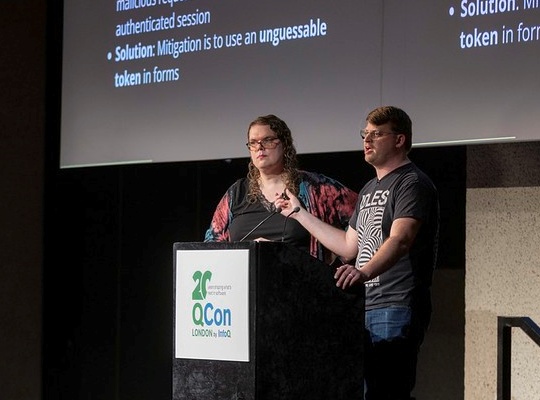
Build a Decentralized Web: Exploring Spritely’s Innovative Architecture
Spritely's architecture takes on decentralization's hardest problems with a clear-eyed focus on user agency. Christine Lemmer-Webber and David Thompson walk through capability-based access control via Goblins, actor-model communication through OCapN, and the trust-building role of petname systems. What stands out is how naturally Scheme, WebAssembly's Hoot, and local-first CRDTs fit together to support peer-to-peer apps without central servers. It's a thoughtful, practical design worth exploring. For broader context on decentralized tooling, our coverage of the Forrester function offers a useful parallel.

Compile TypeScript to Native Code and Transform Your App Performance
Vercel Labs' scriptc takes TypeScript out of the Node.js runtime and compiles it straight to native code. That means faster startup and a lighter memory footprint, though execution speed still lags behind Node. It's experimental, but the direction is compelling for developers who want efficiency without abandoning a familiar language. We're watching this space closely, and if you're curious about similar forward-thinking infrastructure, our piece on Spritely's decentralized architecture is worth a read.
Smaller model, sharper reasoning: 44M parameters trained from scratch on CPU
Three weeks ago, SHADOW-250M proved a 60 MB model could retrieve records from disk. Now, SHADOW-50M pushes the same idea further: 44M parameters, 19.8 MB, and roughly 1,900 tokens per second on a laptop CPU. It reasons over what it retrieves, runs arithmetic through a fixed circuit, and answers from memory without re-reading source text. It loses to larger models on standard benchmarks, and the author says so plainly.

Your Chessboard Analysis, Completely Private and Entirely in Your Browser
ChessInsights AI takes a refreshingly different route: it runs the entire vision pipeline locally, from board detection to piece classification to Stockfish evaluation, with no image ever leaving the browser. That's a meaningful step toward private, real-time analysis. The multi-board support is particularly smart, handling PDFs or broadcast splits where multiple diagrams appear at once. It's practical, privacy-focused, and free. For deeper context on edge-case strategies, our piece on real-world computer vision deployments is worth exploring. This is a solid contribution to in-browser tooling.

Kitesurf lets agents run browser tasks with less overhead, more control.
Cloudflare's Kitesurf takes a leaner path for automated browsing, running browser components in isolated WebAssembly and Rust environments on Workers. It speaks Chrome DevTools Protocol, so Playwright and Puppeteer can drive it without the resource weight of a full Chromium build. That's a practical step for teams juggling heavy workloads. We've seen similar infrastructure bets pay off elsewhere, like Perplexity's CobbleDB migration, and Kitesurf feels like another thoughtful push toward efficiency. It's worth exploring if your automation stack needs a lighter touch.

The browser is the new frontline. Why security hasn't caught up.
The browser has become the enterprise's central operating environment, yet most security architecture still guards the device instead of the session where work, and attacks, actually happen. That gap is growing urgent as AI-assisted hacking accelerates. CloudMosa's Shioupyn Shen argues for a fundamental shift: isolate execution in the cloud, keeping risky code away from endpoints entirely. It's a bet on prevention over detection, and one worth exploring. For more on how AI reshapes foundational tech, see our piece on how LLMs navigate token space.

WebAssembly on the JVM unlocks new potential for server-side innovation
WebAssembly is no longer just a browser story, and Andrea Peruffo is here to prove it. His discussion on the JVM traces the technology's journey from simple interpreters to the speed of JIT compilation, making server-side Wasm a practical option for real workloads. What stands out is the focus on production reality, from edge platforms to modular plugins, rather than abstract potential.