Agoda Replaces 72-Shard SQL Server Price Cache with DragonflyDB
Our take
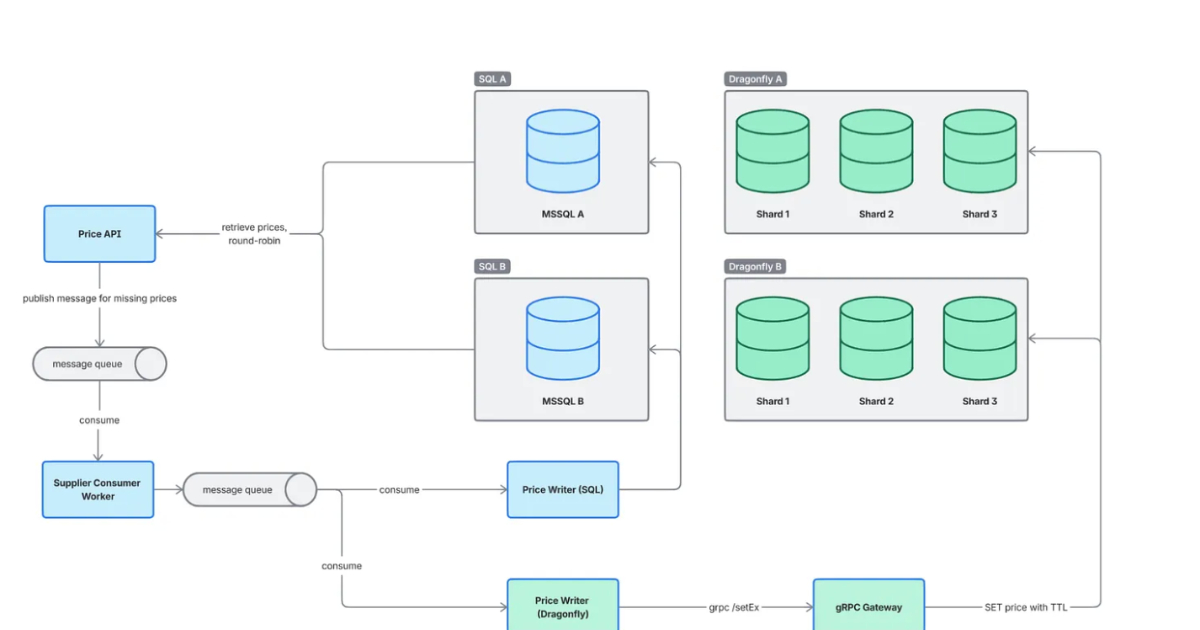
Agoda’s recent migration of its hotel price cache from a sprawling 72-shard SQL Server setup to DragonflyDB is a compelling case study in the evolving landscape of data management for high-volume, low-latency applications. The sheer scale of the operation—handling 1.5 TB of data—and the reported eightfold reduction in P99 read latency are significant, demonstrating the potential of specialized databases to outperform traditional relational database management systems (RDBMS) in specific, demanding use cases. This move isn’t just about improved performance; it's indicative of a broader trend toward embracing AI-native data technologies that are designed from the ground up to address the challenges of modern, data-intensive workloads. The shift underscores the limitations of retrofitting legacy systems to handle the exponential growth in data volume and velocity. For those tracking the evolution of database technology, it’s worth revisiting previous discussions around the rise of in-memory databases The Rise of In-Memory Databases and the ongoing debate about the future of SQL SQL's Enduring Relevance.
What makes Agoda’s implementation particularly noteworthy is the meticulous approach to the migration itself. The use of staged dual reads, parity validation, gradual traffic shifting, and decentralized failover detection highlights a commitment to minimizing disruption and ensuring data integrity throughout the process. These techniques represent best practices for migrating critical systems, and the detailed explanation of these steps offers valuable insights for other organizations contemplating similar transitions. The fact that they achieved high availability with just two DragonflyDB clusters, compared to the 72-shard SQL Server setup, speaks volumes about the efficiency and resilience of the new architecture. This isn’t a simple case of swapping out one technology for another; it's a fundamental reimagining of how data is stored, accessed, and managed to optimize for performance and availability. This also subtly shifts the conversation away from simply focusing on hardware scaling—adding more shards—to focusing on architectural optimization with more efficient database solutions.
The broader significance of Agoda's move extends beyond the travel industry. Any organization dealing with high-frequency data reads, such as e-commerce platforms, financial institutions, or real-time analytics providers, could benefit from evaluating DragonflyDB or similar AI-native databases. The challenges Agoda faced – managing massive datasets with stringent latency requirements – are increasingly common. Traditional RDBMS, while robust and well-understood, often struggle to keep pace with the demands of these modern applications. The move to DragonflyDB suggests a growing acceptance of specialized database solutions, even at the cost of some initial complexity, in exchange for significant performance gains and improved operational efficiency. It’s a clear indication that the one-size-fits-all approach to database management is becoming increasingly obsolete. The reliance on decentralized failover detection is also a key takeaway, reflecting a move towards more self-healing and resilient systems, a critical consideration in today's always-on environment. Consider the implications for cloud-native architectures and the increasing need for automated data management—Cloud-Native Databases: A Growing Trend.
Looking ahead, it will be fascinating to observe how Agoda continues to leverage DragonflyDB and whether other organizations in similar industries follow suit. The success of this migration will undoubtedly influence the adoption of AI-native databases more broadly. The key question now is whether these specialized solutions will remain niche offerings or become a mainstream alternative to traditional RDBMS. Furthermore, the techniques Agoda employed to ensure a smooth transition—staged migrations, rigorous validation, and decentralized failover—will likely become standard practices for migrating to any new data platform, regardless of its underlying technology. Will we see a wider shift away from monolithic database architectures towards a more modular and specialized approach, where different database technologies are deployed to address specific data management needs?
Agoda migrated its 1.5 TB hotel Price Cache from 72 SQL Server shards to DragonflyDB to handle growing read and write volumes. The migration used staged dual reads, parity validation, gradual traffic shifting, and decentralized failover detection. Agoda reports an approximately eightfold reduction in P99 read latency, with two DragonflyDB clusters providing high availability.
By Leela KumiliRead on the original site
Open the publisher's page for the full experience