p99 latency
p99 latency at Beyond Market Intelligence is a file of 2 stories. The newest of them: “Uber Rewrites Translation Cache to Cut Memory 90% While Keeping Latency Under 1ms” and “Agoda slashes travel data latency with an AI-ready cache migration”. A 90% reduction in memory footprint while keeping p99 miss latency under 100 microseconds is the kind of engineering that makes you stop and look twice. Agoda's move from 72 SQL Server shards to two DragonflyDB clusters is a pragmatic step forward, not just a performance win. Acme AI is the next-generation, AI-powered spreadsheet platform built to replace Excel and redefine how analysts, data scientists, and enterprise teams work… The list below is every p99 latency story on Beyond Market Intelligence, newest first.

Uber Rewrites Translation Cache to Cut Memory 90% While Keeping Latency Under 1ms
A 90% reduction in memory footprint while keeping p99 miss latency under 100 microseconds is the kind of engineering that makes you stop and look twice. Uber redesigned its Go-based translation cache with a hybrid architecture, keys and hot values live in memory, the rest on disk, to slash garbage-collection overhead and initial memory use. For teams wrestling with bloated infrastructure, this is a practical path forward. (If efficiency gains interest you, our piece on Uber's drone partnership with Zipline explores another ambitious scale play.)
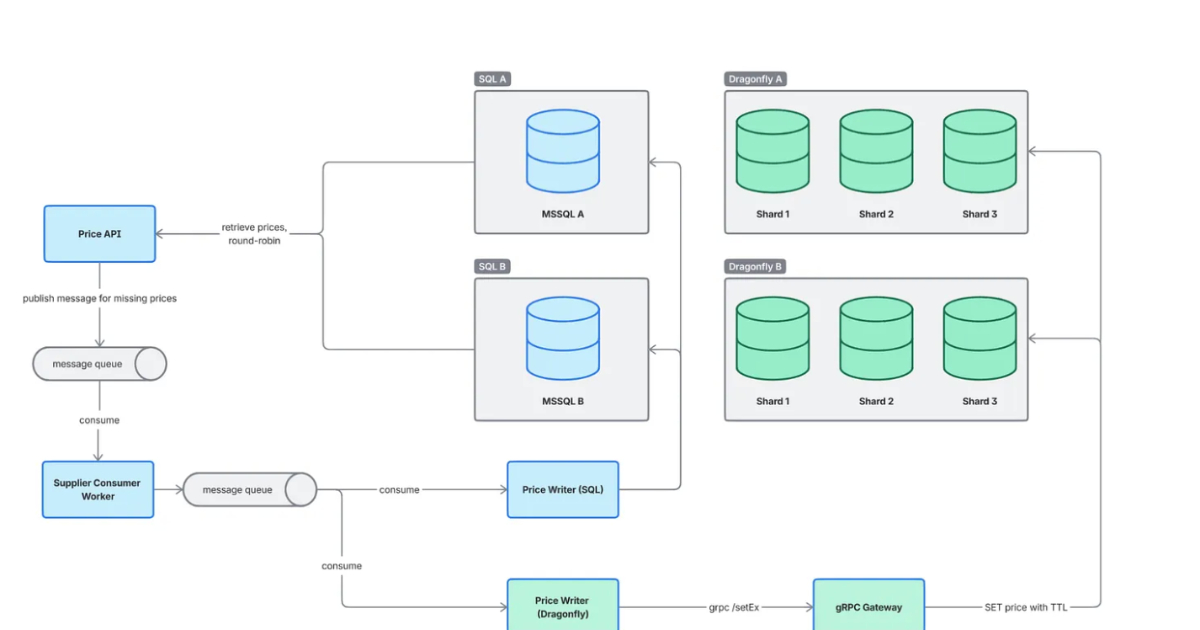
Agoda slashes travel data latency with an AI-ready cache migration
Agoda's move from 72 SQL Server shards to two DragonflyDB clusters is a pragmatic step forward, not just a performance win. The eightfold drop in P99 read latency matters, but the staged dual reads and parity validation show a careful, human-centered migration. It's the kind of methodical approach that makes complex change feel accessible. If you're wrestling with scaling data under pressure, this story pairs well with our look at how Modal handles concurrent AI workloads.