AI synthetic audiences are already here and poised to upend the consulting industry
Our take
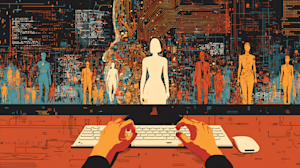
The emergence of synthetic audiences represents a significant turning point in the consulting industry, particularly for firms reliant on understanding and analyzing human behavior. As outlined in the article, this technology allows for the creation of digital personas that can be surveyed almost instantaneously and at a fraction of the cost of traditional methods. This shift not only challenges established players like McKinsey and Nielsen but also presents a compelling opportunity for innovation in market research. For organizations grappling with the slow pace of conventional research, the potential of synthetic audiences offers a glimpse into a future where insights can be gleaned rapidly and affordably, aligning with the pressing demands of today’s fast-paced market. This is reminiscent of the challenges highlighted in other recent discussions, such as in "Market research is too slow for the AI era, so Brox built 60,000 identical 'digital twins' of real people you can survey instantly, repeatedly" which emphasizes the urgency for speed in understanding consumer behavior.
However, the allure of synthetic audiences comes with its own set of challenges. While the efficiency of gathering data is undeniable, questions surrounding the accuracy of these AI-generated insights remain pertinent. The article presents a balanced view of the technology's capabilities, noting that while synthetic audiences can achieve a high degree of accuracy in simulating human responses, they cannot replicate the nuanced understanding that comes from human insight. This raises critical questions for organizations: is the speed of data collection worth the potential trade-off in depth and reliability? As companies increasingly rely on data-driven decision-making, they must navigate these complexities carefully, weighing the benefits of rapid insights against the need for accuracy and contextual understanding.
Moreover, the emotional response of potential users, particularly regarding data security and privacy, underscores a broader hesitance within the industry to fully embrace AI-driven technologies. The article aptly points to the common concern of whether AI will compromise sensitive data, a fear that can hinder innovation and adoption. As organizations continue to store vast amounts of sensitive information in cloud services, it is crucial for them to understand that many of the same companies providing AI tools also have stringent policies to protect user data. This paradox illustrates a larger narrative within the industry: the need for trust in technology must evolve alongside its application in business practices.
Looking ahead, the relationship between traditional consulting firms and emerging AI-driven startups may not be a zero-sum game. The article suggests a possible collaboration that could harness the strengths of both worlds. As firms like WPP cultivate partnerships with nimble startups, the potential for a more integrated approach to market research may emerge. The question now becomes: how will this evolving landscape shape the future of consulting? Will we see a hybrid model that combines the speed and efficiency of synthetic audiences with the strategic depth and insight of traditional research methodologies? As we observe these developments, it will be fascinating to see how organizations adapt to leverage the best of both worlds in their quest to understand and engage with consumers effectively.
There is a war brewing between AI and consulting.
Akin to an armies slow march towards the castle, a new technology is coming to dethrone the expert guessers of Mckinsey, Nielsen, Gartner, Publicis and the rest. Any consulting that involves analyzing people (think all of marketing, research, polling, etc.) will have to reckon with the technology of “synthetic audiences”.
Synthetic audiences aim to generate digital versions of people that can then be surveyed almost instantly and affordably, but not as accurately. Think Tamagochi but with people.
By prompting AI with information about a person, we ask AI to get in their shoes, simulate the thoughts, behaviors, priorities and decisions of real world humans. We can also invent non-specific placeholder people or personas and survey them as though they are real. Various firms have already fielded products in these domains, including startups Electric Twin, Artificial Societies, and Aaru, and even the century-old Dentsu.
What used to take 4 months to survey people, plus two months to create a nice PowerPoint presentation of findings at a total cost of thousands or even tens of thousands, now takes two minutes and costs only a few dollars.
It may seem like I’ve picked my winner. But in this war of tribes, I’m a Romeo, caught between the two warring houses. I work for a large incumbent in this space. From 2023-2025 while working at the London headquarters of WPP, I built similar tools for numerous Fortune 500’s and advised many New York University researchers on the subject.
Companies like WPP with head counts and revenues that rival the populations and GDP’s of small European nations need startups for their speed and high margins, while startups need our distribution.
My advice has always been for unity between these tribes. Considering WPP is partnering with numerous startups, is working tirelessly in building our own tools and building deep connections with hyper scalers, it’s possible I mislead you with the war analogy. This may be a love story after all. But destiny’s bottle of poison is in our hands. These next few years are pivotal and formative.
The future will ultimately be determined by the buyers of these studies. Fortune 500’s, with the largest appetite for market research, often hesitate to include synthetic audiences in their diet. The first question I’m asked in any pitch is "will AI steal my data?" I find this question to be an emotional response. It seems to me like most AI fears are remnants of a 2022 LinkedIn post that burrowed itself into our collective consciousness.
I generally respond to this question with another: “Do you use Microsoft Teams?”
The answer is often "yes." Almost every enterprise stores sensitive data in a cloud service that Google Amazon or Microsoft provides. These are the same companies that provide enterprise AI services, which state in their terms and conditions that they won’t train models with your data. Now, believing this statement is optional, but for that matter believing is voluntary for all things.
Criticisms of accuracy on the other hand, are harder to dispute. The famed venture capital firm Andreessen-Horowitz (a16z) titled its analysis of this budding tech scene as “Faster, smarter, cheaper”.
As the hopeful mediator in this war, I agree synthetic research is faster and cheaper, but is it smarter? Not sure. A seminal paper from Stanford by Park et al. established a benchmark in 2024 proving that AI can simulate human responses to surveys with an average of 85% accuracy.
In fact for certain portions of the general social survey, they replicated answers with more than 90% accuracy. When the model is provided relevant information and is given rich context (like a mini biography of the person) it can guess their actions and thoughts very accurately.
But no prediction can be 100% accurate. A future where human propensities are modeled even better than humans can express their own desires is a possibility. Maybe we’ll live in a future where the movie Minority Report becomes reality. However, this future is too distant to warrant the attention of a business reader and is better suited for Tom Cruise and Steven Spielberg.
What is more interesting to me is what this technology can do at lower accuracies. In my private tests, I’ve seen that with very simple information about a person, such as their age, neighborhood and gender, certain behaviors can be modeled with 72% accuracy.
An argument can be made that these are easy-to-make predictions. Predicting whether a married person will have children is low stakes. This can’t completely replace the unique insight of a strategist.
However, considering how elusive it is to understand and model people. A solution that’s better than random and so attainable poses to make an impact.
Think about the immense scale. The human mind works with a small range of values. We understand when something is twice as fast but we can’t comprehend when something is 175,200 times faster. All of a sudden a journey that took several days becomes becomes several hours, bridges get built, gas stations, entire industries are started.
When improvement isn’t marginal but exponential, it has positive externalities that are impossible to predict even by this article.
What I suggest for all of us is to eat the popcorn and watch the show. No matter what happens, it’ll be fun.
Read on the original site
Open the publisher's page for the full experience
Related Articles
- Market research is too slow for the AI era, so Brox built 60,000 identical 'digital twins' of real people you can survey instantly, repeatedlyIn a world where a viral TikTok video can cause a brand to trend globally in mere hours, the traditional market research cycle — often spanning 12 weeks — is becoming a liability. The lag between a survey question and the answers from a wide (or targeted) pool of respondents has become a primary bottleneck for Fortune 500 decision-makers who are forced to navigate volatile geopolitical and economic shifts with data that is frequently outdated by the time it reaches a slide deck, as industry experts have observed. Brox, a predictive human intelligence startup, recently announced a strategic funding round following a year where they reported 10X revenue growth. Their proposition is as ambitious as it is technical: the creation of a "parallel universe" populated by 60,000 digital twins of real, living human beings and their entire demographic profiles and consumer preferences, allowing enterprises to run unlimited experiments in hours rather than months. “These digital twins are one-to-one replicas of actual, real individuals," said Brox CEO Hamish Brocklebank in a recent video call interview with VentureBeat. "We recruit real people like a normal panel company does, pay them to interview them, and capture all the data around them — fully consent-driven.” The company, currently a lean 14-person operation, is positioning itself as the antithesis of the "insane" research industry. By replacing statistical models with behavioral replicas, Brox aims to transform how the world’s largest banks and pharmaceutical giants anticipate human reactions to high-stakes global and market-shifting events, or narrow, targeted product releases and personnel news, and everything in between. The kinds of surveys and specific questions that Brox asks its digital twins are completely open-ended and can be customized to fit any conceivable business customer's use cases and goals. According to Brocklebank, examples of survey questions include: “What happens if America invades Iran or Greenland? Will depositors at Bank of America put more money into their account or take more money out? Or, in pharmaceuticals, if RFK Jr. says something next week, will that make people more likely to take vaccines or less likely?” Not synthetic people — AI copies of real ones The core differentiator of Brox’s technology lies in the fidelity of its input data. While many competitors in the "digital audience" space rely on purely synthetic identities — generic personas generated by Large Language Models (LLMs ) — Brocklebank argues that these methods inevitably produce "AI slop". Purely synthetic audiences often cluster around a tight distribution of answers, over-indexing for "correct" or "healthy" behaviors (such as eating broccoli) because of inherent biases in the underlying models. Brox’s "Digital Twins" are instead one-to-one behavioral replicas of real individuals who have been recruited and interviewed with exhaustive depth. The process is intensive: Deep Interviews: The company conducts hours of real and AI-driven interviews with each participant. Psychological Depth: The data collection seeks to understand fundamental "decision drivers," including upbringing, relationships, and even marital stability. Data Density: For some twins, Brox maintains up to 300 pages of text data, representing what Brocklebank calls "the deepest per person data set that exists". To solve the "black box" problem common in AI, Brox utilizes a "reasoning chain" for its predictive outputs. When a digital twin predicts a reaction — such as how a $2 billion net-worth individual might respond to a specific interest rate hike — the model introspects and provides a step-by-step explanation for that decision. This allows clients to understand not just what will happen, but the underlying psychology of why it is happening. Scaling the "unscalable" interview The product offering is currently live in the US, UK, Japan, and Turkey. Brox has successfully digitized specific, high-value cohorts that are traditionally difficult for researchers to access. This includes a panel of "high-net-worth" individuals (those worth over $5 million) and specialized medical professionals like dermatologists — including a multibillionaire. However, the largest value for customers is likely in the aggregate mass of all individuals that can be polled en masse and/or segmented across demographics, especially those of medium and lower income levels, whose purchasing power and decision-making is more constrained and whose market- One of the more unique aspects of the Brox platform is its incentive structure. To ensure twins remain up-to-date, real-world counterparts are re-contacted frequently. For high-value individuals who are not motivated by small cash payments, Brox has issued Stock Appreciation Rights (SARs), essentially making these participants "investors" in the company’s success to ensure they continue to provide high-fidelity personal updates. The platform’s use cases currently focus on two primary sectors: Pharmaceuticals: Predicting vaccine hesitancy or how physicians might react to new biologics based on shifting political climates. Finance: Simulating how depositors at major banks might move funds in response to geopolitical events, such as conflicts in the Middle East. As for why go to the trouble of interviewing and digitally cloning real people instead of just creating wholly fictitious, synthetic audience characters and personas using LLMs and other AI models, Brocklebank offered his perspective. “You can create 10,000 truly synthetic digital twins, but the answers will still normalize into a very tight distribution, which is not realistic when you’re actually asking real people," Brocklebank said. By maintaining a pre-built audience of 60,000 twins, the company enables clients to bypass the recruitment phase of research. A large US bank or a global pharma giant can now "query" the digital population and receive a validated analysis in a matter of hours. Pricing and accessibility Unlike traditional research firms that charge on a per-project or per-respondent basis, Brox operates as a high-end Software-as-a-Service (SaaS) platform with enterprise-level commercial licensing. The company avoids the "seat" or "usage" limits that often hinder rapid experimentation within large organizations. Pricing Tiers: Subscriptions are sold as blanket flat fees, starting at a minimum of $100,000 per year. Top-Tier Contracts: For larger deployments involving multiple teams and global data access, contracts scale up to $1.5 million per year. Usage Rights: Clients are granted unlimited usage during the contract period. This allows them to run thousands of simulations without worrying about incremental costs, encouraging a culture of "testing everything" before deployment. From a legal and privacy standpoint, the digital twins are built on a "fully consent-driven" framework. While the twins can be traced back to real human data for internal validation, the platform is designed to provide aggregated behavioral insights that protect the anonymity of the participants while maintaining the predictive power of their digital replicas. Rejecting the rise of Kalshi, Polymarket and 'prediction markets' The tech industry has recently seen a surge in valuations and interest in "prediction markets" like PolyMarket and Kalshi, which allow users to bet on the outcomes of various global events. However, the leadership at Brox maintains a distinct distance from these platforms, citing a "personal disdain" for betting markets from both a moral and intellectual perspective. Brocklebank argues that while betting markets can predict outcomes (e.g., who wins an election), they offer zero utility for business decision-makers because they fail to provide the "why". Knowing there is a 60% chance of a certain candidate winning does not help a company adjust its consumer strategy; knowing why a specific cohort of depositors is feeling anxious does. Investors including Scribble Ventures, Wonder Ventures, and Vela Partners have backed this "human-first" approach to AI, betting that the moat created by deep human data will prove more resilient than the commoditized models of synthetic data providers. As Brox prepares for launches in the Middle East and APAC, the company is moving toward its ultimate goal: simulating the entire world as a "parallel universe" for risk-free decision-making.
- The AI scaffolding layer is collapsing. LlamaIndex's CEO explains what survives.The scaffolding layer that developers once needed to ship LLM applications — indexing layers, query engines, retrieval pipelines, carefully orchestrated agent loops — is collapsing. And according to Jerry Liu, co-founder and CEO of LlamaIndex, that's not a problem. It's the point. “As a result, there's less of a need for frameworks to actually help users compose these deterministic workflows in a light and shallow manner,” Jerry Liu, co-founder and CEO of LlamaIndex, explains in a new VentureBeat Beyond the Pilot podcast. Context is becoming the moat Liu’s LlamaIndex is one of the foremost retrieval-augmented generation (RAG) frameworks connecting private, custom, and domain-specific data to LLMs. But even he acknowledges that these types of frameworks are becoming less relevant. With every new release, models demonstrate incremental capabilities to reason over “massive amounts” of unstructured data, and they’re getting better at it than humans, he notes. They can be trusted to reason extensively, self-correct, and perform multi-step planning; Modern Context Protocol (MCP) and Claude Agent Skills plug-ins allow models to discover and use tools without requiring integrations for every one independently. Agent patterns have consolidated toward what Liu calls a "managed agent diagram" — a harness layer combined with tools, MCP connectors, and skills plug-ins, rather than custom-built orchestration for every workflow. Further, coding agents excel at writing code, meaning devs don’t need to rely on extensive libraries. In fact, about 95% of LlamaIndex code is generated by AI. “Engineers are not actually writing real code,” Liu said. “They're all typing in natural language.” This means the layers between programmers and non-programmers is collapsing, because “the new programming language is essentially English.” Instead of manual coding or struggling to understand API and document integration, devs can just point Claude Code at it. “This type of stuff was either extremely inefficient or just would break the agent three years ago,” said Liu. “It's just way easier for people to build even relatively advanced retrieval with extremely simple primitives.” So what’s the core differentiator when the stack collapses? Context, Liu says. Agents need to be able to decipher file formats to extract the right information. Providing higher accuracy and cheaper parsing becomes key, and LlamaIndex is well-positioned here, he contends, because of its developments with agentic document processing via optical character recognition (OCR). “We've really identified that there's a core set of data that has been locked up in all these file format containers,” he said. Ultimately, “whether you use OpenAI Codex or Claude Code doesn't really matter. The thing that they all need is context.” Keeping stacks modular There’s growing concern about builders like Anthropic locking in session data; in light of this, Liu emphasizes the importance of modularity and agnosticism. Builders shouldn’t bet on any one frontier model, or overbuild in a way that overcomplicates components of the stack. Retrieval has evolved into “agent-plus-sandbox,” as he describes it, and enterprises must ensure that their code bases are tech debt free and adaptable to changing patterns. They also have to acknowledge that some parts of the stack will eventually need to be thrown away as a matter of course. “Because with every new model release, there's always a different model that is kind of the winner,” Liu said. “You want to make sure you actually have some flexibility to take advantage of it.” Listen to the podcast to hear more about: LlamaIndex’s beginnings as a ‘toy project’ with initially only about 40% accuracy; How SaaS companies can tap into complicated workflows that must be standardized and repeatable for average knowledge workers; Why vertical AI companies are taking off and why ‘build versus buy’ is still a very valid question in the agent age. You can also listen and subscribe to Beyond the Pilot on Spotify, Apple or wherever you get your podcasts.