generative AI for data analysis
generative AI for data analysis at Beyond Market Intelligence is a file of 212 stories. The newest of them: “Stats prep is the blind spot experienced data scientists ignore”, “Choosing the Right Causal Model When Truth Is Unseen”, and “How to Build a UX Investment Case That Gets Funded”. Forgetting the formula for a confidence interval mid-interview isn't a knowledge gap, it's a recall problem. Causal inference models carry a hidden risk: you can never see the true effect, yet you still have to pick one. Acme AI is the next-generation, AI-powered spreadsheet platform built to replace Excel and redefine how analysts, data scientists, and enterprise teams work… The list below is every generative AI for data analysis story on Beyond Market Intelligence, newest first.
Stats prep is the blind spot experienced data scientists ignore
Forgetting the formula for a confidence interval mid-interview isn't a knowledge gap, it's a recall problem. Experienced data scientists overindex on leetcode and ML, assuming stats fluency will carry itself. It won't. The fix isn't more breadth; it's structured, deliberate coverage of the fundamentals you haven't touched since grad school. LLMs help, but they loop. Pair them with targeted drilling and you'll turn those blank moments into crisp answers. If you're rebuilding your prep approach, exploring causal model selection can sharpen the same muscle.
Choosing the Right Causal Model When Truth Is Unseen
Causal inference models carry a hidden risk: you can never see the true effect, yet you still have to pick one. This simulation makes that tension concrete. Difference-in-differences overestimated a 10% impact by more than double, while synthetic control landed far closer. The fix isn't a better algorithm, it's a placebo test. Running an A/A check on pre-treatment data exposes which model carries the least error before you trust it in the wild. That workflow, not any single method, is the durable lesson.

How to Build a UX Investment Case That Gets Funded
A strong UX idea rarely sells itself. In this piece, Alex Williams walks through a worked example showing how to define business value, calculate costs, and test causality before presenting to leadership. It is a practical approach for building a case that holds up. For more on designing with intent, our piece on the death of the button offers a useful counterpoint.

Designing for intent, not clicks, in the age of invisible AI
The button is dying, and that's not a loss; it's a release. As the web sheds menus and forms, the real work shifts to designing for intent, not clicks. For UX designers, this means stepping back from visible controls and learning to guide transparent, AI-driven experiences. It's a harder, more human craft. If you're tracking how voice and disclosure fit into this shift, our piece on ElevenLabs CEO and transparency pairs well with this conversation. Explore that tension; it's where the next interface begins.
Astra and Fable 5.1: A practical look at AI spreadsheet tradeoffs
Two very capable models can still fail differently. In a side-by-side ML workflow, Astra and Fable 5.1 both improved by 0.02-0.04 F1 after human feedback, proving neither has mastered the process. Astra wins on agentic debugging and reproducibility, while Fable writes cleaner code and more insightful analysis. The real lesson? Pick your tool based on whether you need forensic rigor or readable, adaptable output. For deeper context on model tradeoffs, our related piece, "Explore the Forrester Function," explores similar evaluation themes.

Meta's Muse Spark 1.3 delivers speed and power, with one key limit to note.
Meta's Muse Spark 1.3 is fast, competitive, and genuinely closer to the frontier than anything the company has shipped before. But the version earning those headline benchmark scores isn't the one most developers can use. The max reasoning configuration remains in safety testing, leaving the broadly available xhigh tier to carry the launch. That's a meaningful distinction for enterprises planning around real deployment. The model is strong, just not the leader Meta's marketing implies. For teams weighing Muse against Google's faster Gemini 3.

Microsoft AI's new speech model delivers speed and accuracy at ten cents per hour
Microsoft just cut the price of speech recognition to a dime. MAI-Transcribe-2 transcribes 60 languages with speaker diarization, timestamps, and code switching built into that rate, roughly 72% cheaper than its predecessor. That is not a feature drop; it is a message to every enterprise paying for transcription today. When the model is faster than the frontier labs and cheaper than the specialists, the question stops being whether to switch. It becomes how quickly your workflows can move.

Discover how open-weight TTS brings expressive narration to your local machine.
TontaubeV1 takes a character-level approach to text-to-speech, and that decision is worth pausing on. Most modern TTS models lean on the backbone tokenizer, but the team behind this release found that forcing character-by-character tokenization kept the model more stable and made the mapping from text to sound more direct. It is a thoughtful response to a real problem, especially for long-form narration where rare token combinations can trip up generation. The chunking and position scheme is just as deliberate.

Autumn's first AI release brings Claude Fable 5.1 with smarter, cheaper caching.
Anthropic is redefining what an enterprise model should be. Claude Fable 5.1 arrives with a 75% cut to cached-read costs, making sustained, multi-hour agents dramatically more economical to run. It's not just another benchmark jump, it's a deliberate shift toward work that doesn't finish in one prompt. Combined with Enterprise Frontier Safeguards, which keep monitoring data in your own cloud, this release tackles capability, cost, and control as a single, unified problem. Explore what persistent, governable AI can actually do.

Keep data local while AI agents work across cloud and device
Your files stay put. That's the quiet power of Perplexity's hybrid compute launch for its agentic platform, Computer. Rather than forcing a choice between cloud intelligence and local privacy, this system lets a single agent split the difference, routing sensitive subtasks to open-weight models on your Mac while heavier reasoning stays in the cloud. It's a smarter gate, not a higher wall. For professionals juggling privileged files, that's a meaningful step toward practical, trustworthy automation.

Gateways can't fix what identity layers don't yet secure.
Start with the agents you can actually name. If you cannot identify which agent is acting, who delegated the work, and what credentials are in play, no gateway will save you. Enforcement feels like progress, but it is the fifth control, not the first. Build the dependency chain in order: inventory, identity, scoped credentials, telemetry, then enforcement. Skip ahead and you will burn your first hour of incident response just figuring out what should have been obvious.

LLM Benchmarks Show Surprising Daily Performance Fluctuations
A single hourly LLM benchmark score can mislead you. After analyzing 31,352 hourly scores, the data shows within-day variation sits at 2.8 points, while between-day variation jumps to 8.4 points. That threefold gap matters. It means isolated movements mostly reflect normal model randomness, but sustained daily shifts reveal true performance drift. This is the missing observability layer for production AI. You cannot manage what you only sample once. Continuous evaluation, like the system built here, turns noisy data into actionable signals.

Enterprise data extraction meets its cost-performance sweet spot
Most document parsers force enterprises to choose between accuracy and affordability. Cohere's Parse 5 doesn't dodge that trade-off; it prices it honestly. At $1.50 per 1,000 pages, it trails frontier models like GPT-5.5 on raw scores but slashes costs by over 98 percent in high-volume workflows. That's a practical bet on structure preservation, not benchmark glory. For teams feeding millions of documents into AI pipelines, the real question isn't who wins parse tests, but what survives downstream.

Your CRM now lives inside Claude, transforming how you manage relationships.
Salesforce just told the world its own screens are optional. The company spent 27 years perfecting the CRM interface, then spent Tuesday arguing sellers should live inside Claude instead. That takes nerve, and it's also the smartest thing they've done in years. The value was never the buttons; it's the data and workflow logic buried underneath. By handing that to Anthropic's model, they're betting on usage over seats. For anyone tired of clicking through a deal pipeline, that's not a threat. It's relief.

Connecting AI agents without redesigning your CX architecture creates new challenges.
Enterprises are racing to deploy AI agents across every channel, but most are discovering a hard truth: bolting conversational AI onto legacy systems doesn't create a connected experience. It creates new silos. Gaurav Anand of Tata Communications argues the real bottleneck isn't intelligence, but orchestration. The next competitive edge belongs to organizations that can coordinate AI, people, and data through a shared context layer. That's where the work of building truly frictionless customer journeys begins.

The invisible risk that makes prompt injection a real priority
The expert vote and the incident record are two witnesses telling different stories about the same risk. Prompt injection holds the top spot on the OWASP list, yet it lands at No. 12 in the public record. That gap is not a measurement failure. It is a visibility problem. The attack leaves no CVE behind. Build your controls around your own exposure, and treat the ranking as a map, not a mandate.

Perplexity brings its AI agent home, running locally on Nvidia hardware you own
Perplexity is taking its agentic platform off the cloud and onto your desk, and the move feels less like a stunt and more like a quiet turning point. Portable Computer, built with Nvidia, runs entirely on hardware you already own, starting with the DGX Spark and RTX-equipped Linux machines. The pitch is refreshingly direct: your files, your models, and your work stay local, and the credit counter stays parked at zero.

Your Slack bot just got permission to read the whole room
Claude Tag now reads the full Slack conversation, not just isolated messages. That small technical change carries a big idea: AI works best when it's part of the team, not a tool you visit. Anthropic calls this "multiplayer AI," and Scott White argues it's the shift from personal assistant to company chief of staff. It's a bet that context, not intelligence, is the real bottleneck. We're watching that thesis get tested in real time.
Discover how information theory reveals hidden data structure beyond linear limits.
Standard principal component analysis doesn't just lose accuracy on tangled, non-linear data, it fabricates thousands of phantom dimensions. This work confronts that collapse directly, offering a non-parametric diagnostic that reads pure probability mass instead of spatial distance. The stress test is telling: where PCA inflated 20 true roots into 5,700 false ones, the Entropic Scree lands exactly on 20. That is not a tweak; it is a reframing of how we map intrinsic structure.
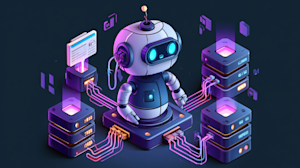
When AI Spending Runs Ahead of Your Controls, Three Platforms Won't Help
Enterprise AI teams are done betting on a single orchestration platform. The median enterprise now runs three at once, not by accident, but because no one fully trusts one vendor. Security concerns and a desire for their own permissioning controls drive this hybrid approach. Microsoft leads today, but Anthropic dominates future consideration. Yet visibility remains a problem: one in five still can't stop a runaway agent's spending in real time. That gap between ambition and control is where the real work begins.
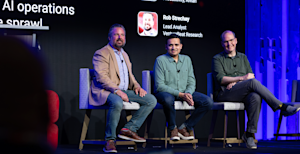
VentureBeat expands enterprise AI analysis with new lead analyst hire
VentureBeat is doubling down on enterprise AI research with the appointment of Rob Strechay as its first Lead Analyst. Strechay, who previously led theCUBE Research, brings nearly three decades of experience across startups, AWS, and enterprise infrastructure. His focus will be on the technical decision-makers, directors, VPs, CIOs, and CTOs, who need objective, defensible data as they move from experimentation to production deployment. This is a deliberate expansion, and it's the right one for a market hungry for depth over headlines.

Qwen3.8-27B brings powerful local AI agents to your own machine
The 27-billion-parameter model from Alibaba landed quietly on Hugging Face, but developers heard it loud and clear. Qwen3.8-27B isn't just another compact local model; it brings coding agents, image understanding, and a 262,144-token context window to hardware you might already own. Third-party tests now match it with cloud-only systems from months ago. That gap is closing faster than expected, and for enterprises watching data privacy and cost, the appeal is obvious. It's worth exploring how this changes what "local" really means.
When Context Layers Go Live, Error Reports Double
The first time we asked about agent failures, the number was 57%. Now it's 68%. That's not a blip; that's a trend. More telling is the inversion at the heart of the data: companies with a governed context layer report recurring failures at 50%, versus 21% for those without. That isn't a paradox. It's a spotlight. A governed layer makes the invisible visible. Without it, the same wrong answers happen, they just go unnoticed.

Enterprise AI agents gain smarter control as token costs drop by 52 percent
Enterprises watching AI agents multiply across their workflows have hit a wall: token bills that climb with every autonomous task. Writer's new Palmyra X6 model attacks that problem head-on, cutting agent costs by 52% while improving speed by 48% and quality by 10%. The real news isn't just the numbers, it's the strategy. By post-training an open-weight base model on just 626 curated examples, Writer proves the enterprise AI race isn't about building from scratch.