Baptists and Bootleggers: The Hidden Coalition Behind ‘Data-Driven’ Decisions
Our take
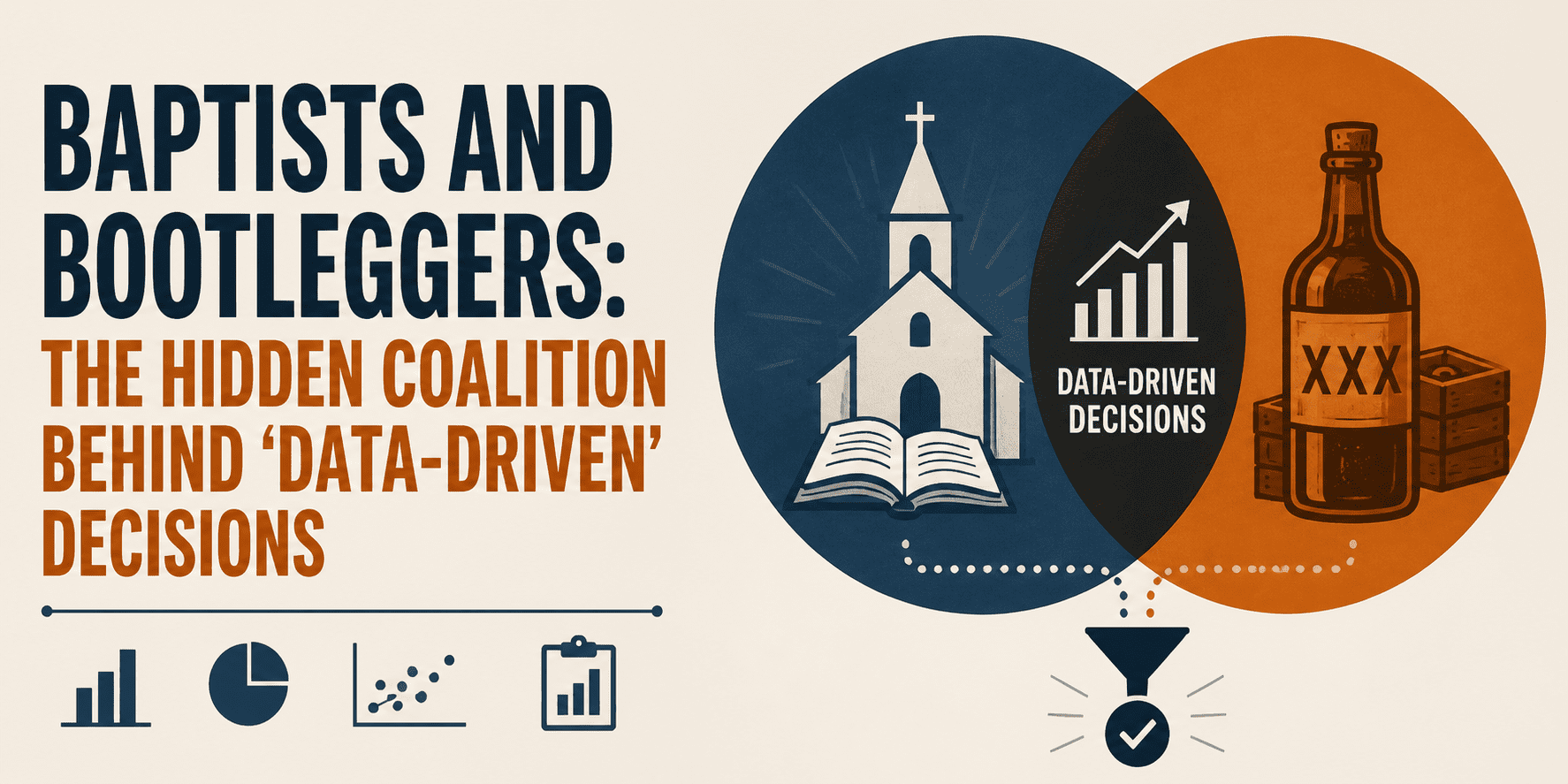
The recent piece “Baptists and Bootleggers: The Hidden Coalition Behind ‘Data‑Driven’ Decisions” cuts to the heart of a paradox that many of us encounter when we try to move beyond the spreadsheet‑centric past. On one side sits genuine curiosity—a willingness to let the data speak and to uncover insights that were previously hidden. On the other, a more entrenched agenda, where decision‑makers already know the answer they want and simply hunt for a number to confirm it. This clash is not new, but it becomes especially stark as AI‑native spreadsheet platforms promise to make data work feel effortless. The danger is that the same tools that could democratize analysis also amplify confirmation bias if we do not pause to question our own motives. Readers who have followed our coverage of the emerging AI ecosystem will recognize the stakes: as we explained in How AI Agents Will Transform Data Science Work in 2026, the next wave of intelligent assistants will surface patterns faster than ever, but they will not replace the human judgment that determines whether a pattern is meaningful or merely a convenient narrative. Likewise, the practical challenges of linking data across workflows—illustrated in Order form that references data from a table—show that the technology is only as good as the intent behind its use.
Why does this matter now? Because the “bootlegger” mindset often masquerades as data‑driven rigor while preserving legacy power structures that resist true transformation. When executives cherry‑pick metrics to justify pre‑decided strategies, they reinforce the very inefficiencies that AI‑enhanced spreadsheets aim to dissolve. The result is a feedback loop: the more the tool is used to confirm bias, the less confidence users have in its capacity to deliver fresh insight, and the more they revert to familiar, manual workarounds. This not only stalls productivity gains but also erodes trust in the broader promise of AI‑assisted decision making. In practice, teams may find themselves building elaborate dashboards that look impressive yet simply echo the assumptions they were meant to challenge. The hidden coalition of “baptists” (the advocates of data integrity) and “bootleggers” (the opportunists) therefore becomes a subtle barrier to the future‑focused workflow we champion.
The editorial takeaway is clear: we must shift from a defensive posture—where data is used to protect existing choices—to an exploratory stance that treats every dataset as a starting point for discovery. This requires embedding a culture of questioning into the very fabric of spreadsheet interaction. Simple practices, such as prompting users to articulate the problem before loading a model, or automatically surfacing alternative hypotheses alongside the primary result, can transform a tool from a confirmation engine into a true partner for insight. Moreover, transparent provenance tracking—showing who generated a figure, why, and with what assumptions—helps surface hidden agendas before they crystallize into decisions. By making the process visible, we empower teams to move beyond “I already know the answer” and toward “What does the data really suggest?”
Looking ahead, the real test will be whether organizations can institutionalize this mindset as AI capabilities become more embedded in everyday workflows. Will the next generation of spreadsheet assistants incorporate built‑in checks that flag potential bias, or will they simply accelerate the speed at which we confirm our preconceptions? The answer will shape not only productivity but also the credibility of data‑driven leadership in an increasingly complex business landscape. As we continue to explore and discover, the question remains: how will you ensure that the numbers you trust are guiding you forward, not merely reinforcing what you already believe?
Read on the original site
Open the publisher's page for the full experience